
AAA renters insurance typically costs between $10 and $30 a month in the US markets where it is widely quoted, but that figure reflects American club pricing and does not transfer directly to other regions. A locally comparable contents policy, for example, often runs between R400 and R900 per month for R500,000 to R800,000 of cover. Your real premium depends heavily on sum insured and location, so a personalised quote is the only reliable way to know your number.
TL;DR:
- Your sum insured is the biggest pricing lever; inventory each room at current replacement value, because guessing low can leave you short after a claim.
- Replacement cost valuation pays for a new equivalent item, while indemnity deducts wear and depreciation; valuable jewelry or art may need a separate policy listing.
- Standard renters cover includes belongings, personal liability, and temporary housing after an insured loss, but it excludes the building and may cap individual item payouts.
- AAA membership can be required or earn a discount only in certain markets, so confirm local eligibility and savings before expecting a lower premium.
- Request two or three quotes with identical sums insured and excesses, then compare exclusions and sublimits rather than headline premiums alone.
Table of Contents
- Typical cost overview for renters and home contents insurance
- Factors that most affect your premium
- How AAA membership and similar membership models affect cost and eligibility
- What standard renters policies cover, exclusions and typical excesses
- How to get an accurate quote and reduce your premium
- A practical take on choosing renters cover
- How Rental Income Insurance supports landlords beyond renters cover
- FAQ
- Sources
Typical cost overview for renters and home contents insurance
Renters insurance pricing sits on a sliding scale, and the figures quoted in international reviews rarely match what you will see on a local quote. Cost depends mainly on how much you are insuring and where you live, which is why two renters with similar flats can receive very different premiums.
A useful local benchmark: a typical home contents policy covering R500,000 to R800,000 of contents costs around R400 to R900 per month, depending on suburb, security measures and the excess you choose. Separately, broader market research on South Africa’s renters insurance sector reports an average premium per policy, which is worth weighing alongside insurer-specific quotes rather than treated as a fixed number.
Three rough scenarios help turn this into something usable:
- A renter with minimal cover (basic electronics and clothing, low sum insured) tends to land at the bottom of the typical range.
- A mid-range renter with standard furniture, appliances and a moderate sum insured sits closer to the middle of that band.
- A renter with higher-value contents, such as extra electronics or designer items, pushes toward the upper end and may need scheduled cover for individual items.
South African home contents cover for R500,000 to R800,000 of contents averages roughly R400 to R900 a month, a useful anchor when you are sense-checking any quote you receive.
Factors that most affect your premium
Your sum insured, the total replacement value of everything you want covered, is the single biggest lever on price. Walk through each room, estimate what it would cost to replace your belongings new, and insure to that figure rather than guessing low to save on premium, since underinsuring can leave you short when you claim.
Beyond sum insured, insurers weigh a handful of concrete variables:
- Your suburb or postcode risk profile, including local crime statistics, raises or lowers the base rate.
- Visible security features such as alarms, burglar bars and armed response typically earn a discount.
- The type of building you live in (freestanding home versus a secured block) affects baseline risk.
- Add-ons for portable possessions, like laptops or jewellery taken outside the home, add to the premium.
- Your voluntary excess and claims history shift the price in opposite directions: a higher excess usually lowers premium, while a recent claims history usually raises it.
Pro Tip: Photograph your belongings room by room before you request a quote. It makes calculating an accurate sum insured far quicker and gives you a ready reference if you ever need to claim.
How AAA membership and similar membership models affect cost and eligibility
AAA operates through regional motoring and lifestyle clubs, and in the markets where it sells renters insurance, membership can sometimes be a requirement for access or can unlock a modest discount. That structure is not universal. Membership-linked insurance models vary significantly by region, and a discount that applies in one market may not exist, or may work completely differently, elsewhere.
Rather than assuming a membership perk carries over, check the specifics with whichever insurer or agent you are speaking to:
- Does this product require membership to purchase, or is membership optional?
- Is any advertised discount a fixed percentage or a flat reduction?
- Does the discount apply to renters contents cover specifically, or only to other product lines?
- Is the membership itself available in your region, and what does it cost?
Treat membership as a possible bonus to factor into a quote, never as a guaranteed saving you can bank on before you have confirmed it in writing.
What standard renters policies cover, exclusions and typical excesses
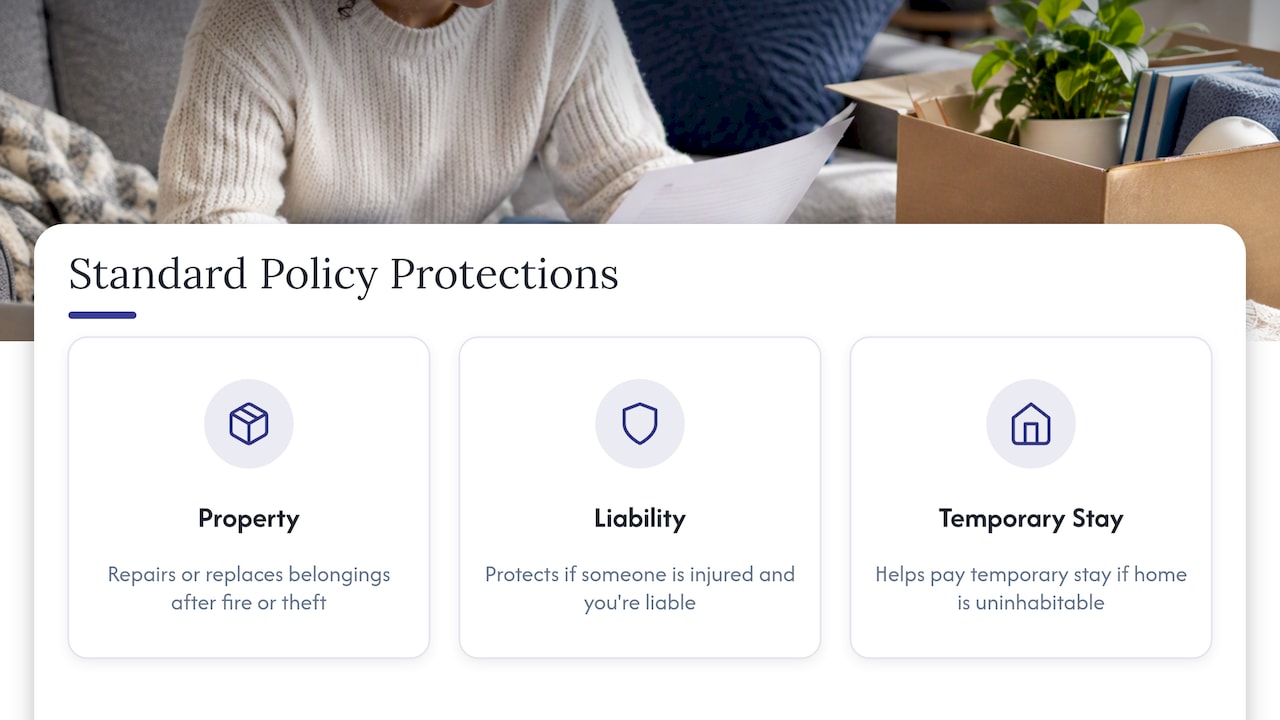
A standard renters or contents policy generally bundles three core protections. Personal property cover pays to repair or replace your belongings after an insured event, such as fire or theft. Personal liability cover protects you if someone is injured in your rented home and holds you responsible. Loss of use cover contributes toward temporary accommodation if your rented home becomes uninhabitable.
Two details change how much you actually recover. Replacement cost valuation pays what it costs to buy a new equivalent item, while indemnity valuation deducts for wear and depreciation, so replacement cost cover usually costs more but pays out more generously. High-value items such as jewellery or art often need to be scheduled individually, since standard cover caps single-item payouts.
Common exclusions include gradual wear and tear, intentional damage, and losses linked to unpaid rent or neglect. Contents cover protects movable belongings and specifically excludes the building itself, which is a landlord’s responsibility, not yours as a tenant. Raising your voluntary excess, the amount you pay out of pocket before cover kicks in, is one of the most reliable ways to lower your monthly premium.
How to get an accurate quote and reduce your premium
Getting a quote that reflects your real situation starts with gathering the right information before you call or apply online.
- List your belongings and estimate a realistic sum insured based on replacement value, not purchase price.
- Have your exact address or suburb ready, since location materially affects the quoted premium.
- Note any security measures in place, such as alarms or secure parking, since these can reduce your rate.
- Gather your claims history from the past few years, as insurers factor this into pricing.
- Confirm your membership status, if applicable, and ask whether it affects eligibility or price.
- Request quotes from two or three insurers and compare like-for-like cover, not just the headline premium.
- Read the policy schedule closely for exclusions, excess amounts and any sub-limits before you commit.
Pro Tip: Ask each insurer to quote the same sum insured and the same excess. It is the only way to compare premiums fairly rather than comparing apples to oranges.
Beyond the quote itself, raising your voluntary excess, improving home security, bundling policies with the same insurer, dropping add-ons you do not need, and scheduling your highest-value items separately are all practical ways to bring the number down without leaving yourself underinsured.
A practical take on choosing renters cover
The headline AAA figures that circulate online are a decent starting point for conversation, not a number you should expect to see on your own quote. What actually moves your premium is sum insured, location and security, and no amount of browsing international reviews changes that. Before signing anything, confirm the insurer is registered with the Financial Sector Conduct Authority, get a personalised quote, and weigh any membership discount as a nice extra rather than the deciding factor.
— Coert
How Rental Income Insurance supports landlords beyond renters cover
Renters insurance protects a tenant’s belongings, but it does nothing for you if you are the one holding the lease risk as a landlord. That is where our cover is built differently: we focus on protecting your rental income itself, not just contents inside the property.

Our relevant products include:
- Rental Income Insurance, which safeguards your income against tenant non-payment and absconding, priced at 3.5 to 5% per month.
- Eviction Insurance, covering legal fees tied to the eviction process when a tenancy breaks down.
- Residential and Commercial Rental Insurance, tailored to the property type you own and let.
If you are a landlord rather than a tenant, a standard contents policy will not cover lost rent, legal costs or an absconding tenant, which is exactly the gap our cover is built to close. You can request a tailored quote and get a price that reflects your property and your risk.
This article is general information, not a substitute for advice from a qualified financial advisor. Consult a qualified financial professional about your own circumstances before acting on anything here.
FAQ
What is the average cost of renters insurance?
Average cost varies widely by market and sum insured, but a locally comparable contents policy for R500,000 to R800,000 of cover runs roughly R400 to R900 per month. Figures quoted for AAA specifically often reflect US club pricing, so always confirm with a direct quote for your region.
Does AAA membership reduce my renters insurance premium?
In the markets where AAA sells renters cover through regional clubs, membership can sometimes be required or can unlock a discount, but this is not universal. Always ask the specific insurer whether a membership discount applies to the policy you want before assuming it carries over to your region.
What does a standard renters policy typically cover?
A standard policy usually bundles personal property cover, personal liability cover and loss of use cover for temporary accommodation. It typically excludes the building itself and often limits payouts on high-value items unless they are scheduled separately.
How can I lower my renters insurance premium?
Raising your voluntary excess, improving home security with alarms or secure access, and insuring to an accurate rather than inflated sum insured are the most reliable ways to bring your premium down. Bundling policies with one insurer and removing unnecessary add-ons can also help.
How do I know an insurer is legitimate before buying a policy?
Check that the provider is registered with the Financial Sector Conduct Authority before purchasing any policy, since legitimate insurers must hold this registration. This single check protects you from unregulated or fraudulent providers regardless of which product you are buying.
Sources
- Best home contents insurance South Africa 2026 | King Price
- Financial Sector Conduct Authority (FSCA)
- South Africa renters insurance market outlook (6Wresearch)