
Over a quarter of South African rental applicants are now flagged as high risk, putting landlord income at real risk. Property investors face growing uncertainty, where one missed rent payment can quickly jeopardize returns. Protecting your rental income demands more than luck or gut instinct. Learn proven steps to reduce risk, lock in steady payments, and keep your investment secure against today’s rental market challenges.
Table of Contents
- Step 1: Assess Tenant Risk and Screen Thoroughly
- Step 2: Draft and Enforce Robust Lease Agreements
- Step 3: Obtain Comprehensive Rental Income Insurance
- Step 4: Implement Strict Payment Monitoring Systems
- Step 5: Respond Promptly to Payment Issues and Defaults
Quick Summary
| Key Point | Explanation |
|---|---|
| 1. Thorough Tenant Screening Is Essential | Collect detailed documentation to assess tenant risk, including credit checks and references from previous landlords. |
| 2. Create Custom Lease Agreements | Draft legally sound leases addressing payment terms, responsibilities, and property usage to avoid disputes. |
| 3. Invest in Comprehensive Rental Insurance | Secure policies that cover tenant defaults, property damage, and loss of income to protect your investment. |
| 4. Implement Strong Payment Monitoring | Utilize technology for tracking payments, sending reminders, and documenting interactions regarding late payments. |
| 5. Respond Quickly to Payment Issues | Establish a protocol for addressing missed payments promptly to protect financial stability and tenant relationships. |
Step 1: Assess Tenant Risk and Screen Thoroughly
Screening tenants thoroughly is your first line of defence against potential rental income losses. According to recent research from REI, an alarming 26% of rental applicants are classified as high-risk, which means implementing a robust screening process is more critical than ever for protecting your investment.
To effectively assess tenant risk, start by collecting comprehensive documentation. Request and verify proof of income through recent payslips or bank statements, ensuring the potential tenant earns at least three times the monthly rental amount. Contact previous landlords for references that confirm consistent rent payment history and responsible tenancy. Run a thorough credit check to understand their financial reliability and look for any past evictions or legal judgments. As African News Agency highlights, modern AI-driven screening tools can expedite this process and help landlords quickly identify potential red flags.
Warning: Never skip background checks or rely solely on first impressions. A charming personality does not guarantee financial responsibility. Consider requesting a guarantor for tenants with limited credit history or slightly higher risk profiles. This extra layer of protection can provide additional security and peace of mind for your rental investment.
Step 2: Draft and Enforce Robust Lease Agreements
Crafting a comprehensive and legally sound lease agreement is your strategic shield against potential rental disputes and income losses. As highlighted by University of Pretoria Repository, lease contracts must address potential power imbalances and ensure fair treatment for both landlords and tenants.
Begin by creating a detailed lease agreement that covers all critical aspects of tenancy. Include precise terms regarding rental payment schedules, late payment consequences, security deposit conditions, maintenance responsibilities, and specific rules about property usage. Academic Oxford emphasizes the importance of clearly defined terms to ensure legal enforceability. Your lease should explicitly state rental amount, payment date, acceptable payment methods, and consequences for non-payment. Specify utility responsibilities, repair protocols, and any restrictions on property modifications or subletting.
Warning: Never use generic template agreements without customising them to your specific property and local regulations. Consider having a legal professional review your lease agreement to ensure it provides maximum protection. For landlords seeking additional guidance, our key items for a complete lease agreement can help you create a comprehensive and protective document that safeguards your rental income and property investment.

Step 3: Obtain Comprehensive Rental Income Insurance
Protecting your rental investment requires strategic financial planning, and comprehensive rental income insurance is your ultimate safeguard against potential financial losses. REI research highlights the increasing risks in the rental market, with a significant proportion of applicants now classified as high-risk, making insurance more critical than ever for landlords.
Start by thoroughly researching insurance options that provide extensive coverage for tenant defaults, property damage, and unexpected vacancies. As African News Agency suggests, landlords must adopt comprehensive measures to protect against financial uncertainties. Look for policies that cover rent loss, legal expenses, and potential eviction costs. Compare different insurance providers, examining their claim processes, coverage limits, and specific tenant protection clauses.
When selecting a policy, ensure it addresses multiple risk scenarios and offers flexible terms that align with your specific property and tenant profile.
Warning: Dont simply choose the cheapest option. Comprehensive coverage requires careful consideration of your unique rental situation. For a detailed approach to selecting the right protection, our guide on how to insure rental income can help you navigate the complexities of rental income insurance and make an informed decision that truly safeguards your investment.
Step 4: Implement Strict Payment Monitoring Systems
Creating a robust payment monitoring system is crucial for protecting your rental income and minimizing financial risks. REI research underscores the growing challenges in the rental market, highlighting the necessity of proactive payment tracking for landlords dealing with an increasing proportion of high-risk tenants.
Leverage technology to streamline your payment monitoring process. As African News Agency suggests, modern AI-driven tools can revolutionize how landlords track and manage rental payments. Implement a digital payment system that sends automatic reminders before the due date, tracks payment history, and generates instant alerts for late or missed payments. Consider using bank transfer tracking, digital payment platforms, or specialized property management software that provides real-time financial reporting. Establish a clear communication protocol for following up on late payments, including a structured sequence of written warnings, phone calls, and formal notices.
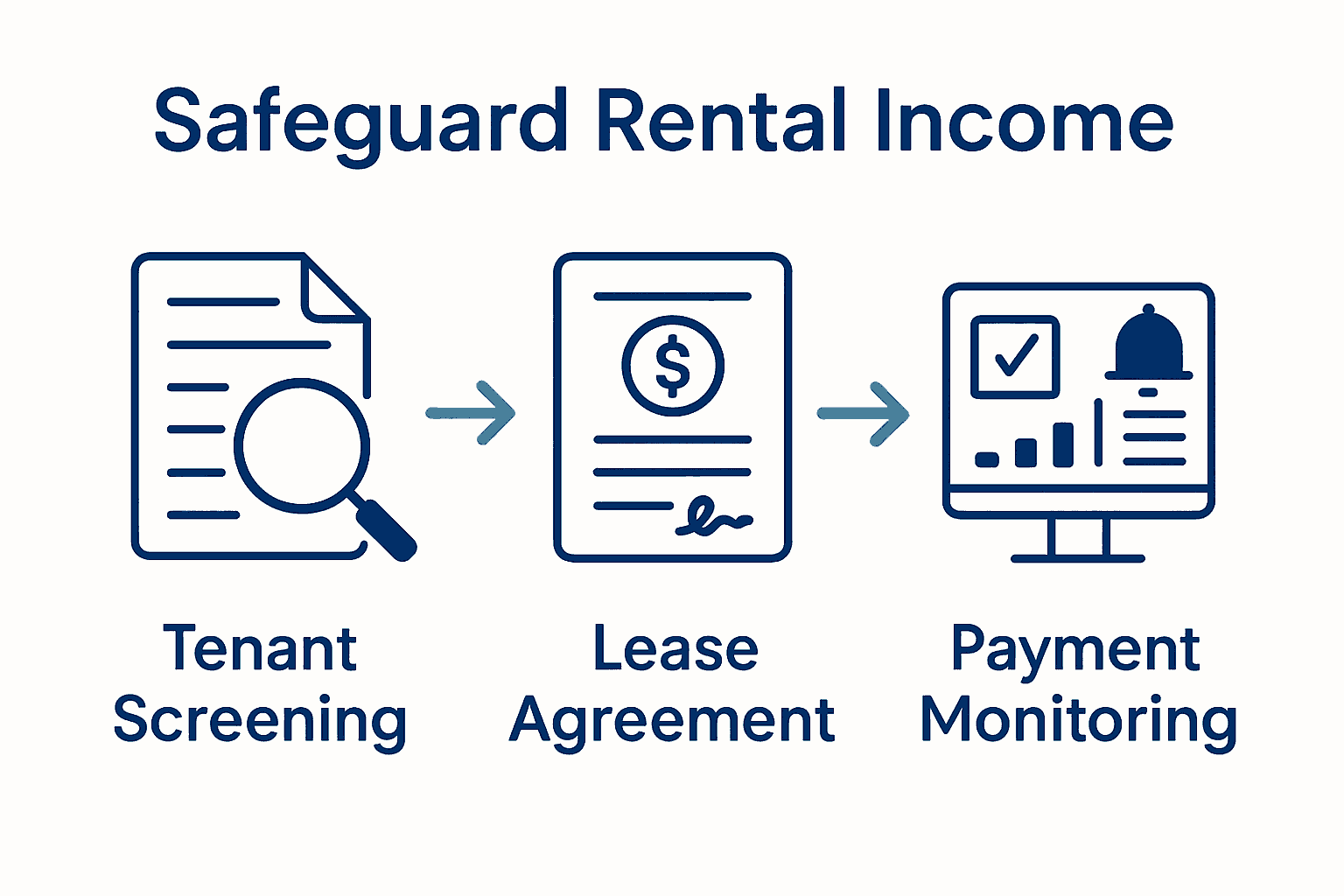
Warning: Consistency is key in payment monitoring. Develop a standardized approach that treats all tenants equally and documents every interaction. Dont let personal relationships or sympathy compromise your financial protection. For landlords seeking a comprehensive approach to managing rental payments, our guide on assessing rental coverage can provide additional strategies to safeguard your rental income and maintain professional tenant relationships.
Step 5: Respond Promptly to Payment Issues and Defaults
Quick and strategic action is your best defence when tenants start missing rental payments. REI research emphasizes the critical nature of addressing payment issues swiftly in a market increasingly populated by high-risk tenants, where delayed responses can significantly escalate financial vulnerability.
Establish a clear and systematic approach to handling payment defaults. As African News Agency suggests, proactive management is key to maintaining financial stability. Develop a structured communication protocol that includes immediate written notification within 24 hours of a missed payment, followed by a phone conversation to understand the tenant’s situation. Document every interaction meticulously and be prepared to initiate formal legal proceedings if payments remain outstanding. Consider offering a short term payment plan that allows tenants to catch up while protecting your financial interests, but set strict parameters that prevent repeated delays.
Warning: Never allow emotional considerations to override financial protection. While understanding a tenants temporary difficulties is important, your primary responsibility is safeguarding your rental income. For landlords seeking comprehensive strategies in managing tenant defaults, our guide on assessing rental coverage provides additional insights into protecting your investment and maintaining professional boundaries.
Protect Your Rental Income with Confidence Today
The challenges of managing rental properties are clear in the article How to Protect Rental Income Your Earnings Now It highlights the risks of tenant non-payment early lease termination and the essential need for thorough screening and swift responses to defaults These issues can cause real anxiety and financial strain for landlords seeking stable returns Your goal is to secure your rental income while avoiding costly disputes and losses This is where Rental Income Insurance becomes an invaluable ally
Our coverage is specifically designed to guard you against the very challenges detailed in the article From tenant defaults to unexpected vacancies you can have peace of mind knowing your investment is protected Take control of your rental business and reduce stress with comprehensive rental income protection offered by Rental Income Insurance We encourage you to explore how easy it is to safeguard your earnings by visiting our main site today

Don’t leave your rental income to chance Act now and protect your property’s financial future Learn more about how we help landlords just like you by visiting Rental Income Insurance and discover your personalised coverage options for maintaining steady, secure rental income
Frequently Asked Questions
How can I assess tenant risk effectively?
To assess tenant risk effectively, collect necessary documentation, such as recent payslips or bank statements, and verify income at least three times the monthly rent. Contact previous landlords for references and conduct a credit check to identify any financial red flags.
What should I include in a lease agreement to protect my rental income?
A lease agreement should include specific terms about rent payment schedules, late payment penalties, security deposit rules, and maintenance responsibilities. Ensure it covers all critical aspects to minimize disputes and legally protect your rental income.
How can I obtain comprehensive rental income insurance?
Research different insurance options that cover tenant defaults, property damage, and unexpected vacancies. Look for policies with flexible terms that align with your specific rental profile, ensuring you select one that comprehensively protects against multiple risks.
What steps should I take to monitor rental payments effectively?
Implement a digital payment system that sends automatic reminders before due dates and tracks payment history regularly. Establish a clear communication protocol to follow up on late payments with documented interactions to maintain professionalism.
How should I respond if a tenant misses a payment?
If a tenant misses a payment, contact them within 24 hours with written notification and follow up with a phone call to understand the situation. Document all communications and consider setting up a short-term payment plan, ensuring clear conditions are established to prevent future delays.
What can I do to protect my rental income from potential losses?
To protect your rental income, conduct thorough tenant screenings, draft robust lease agreements, and obtain comprehensive rental income insurance. Implement strict payment monitoring systems and respond promptly to payment issues to minimize financial risks.