
Over 60 percent of british landlords have faced late or missed rental payments at some point. Managing these situations quickly can be the difference between a minor setback and a serious financial challenge. If you are responsible for rental property, knowing how to respond gives you control and helps protect your income. This practical guide shares clear steps for british landlords to recover missed rent while maintaining strong, professional relationships.
Table of Contents
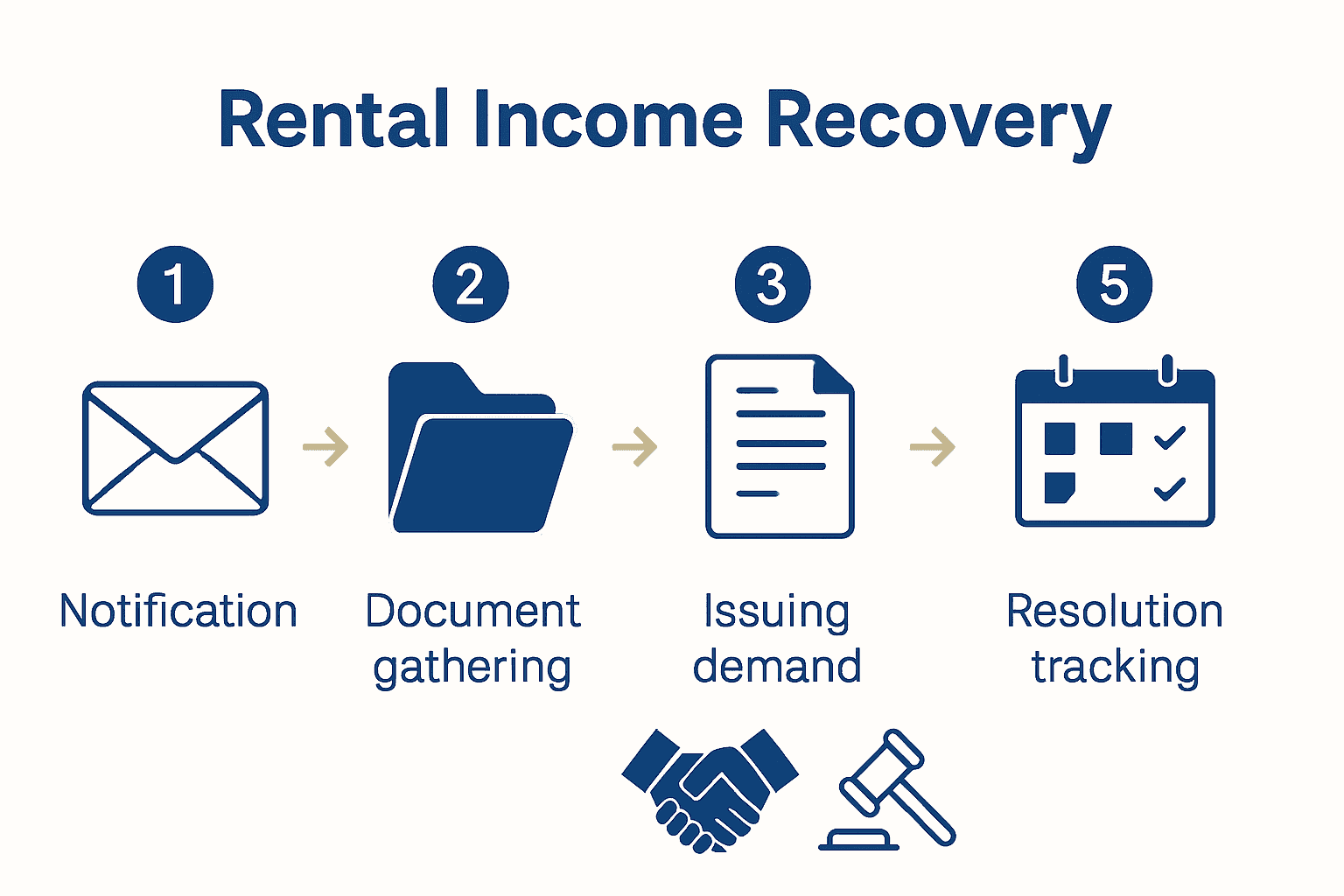
- Step 1: Assess Missed Rental Payments And Notify Tenants
- Step 2: Gather Required Lease And Communication Records
- Step 3: Initiate Formal Demand And Negotiate Payment
- Step 4: Escalate To Legal Action Or Mediation
- Step 5: Verify Resolution And Restore Rental Income
Quick Summary
| Key Point | Explanation |
|---|---|
| 1. Assess missed payments quickly | Promptly assess missed rental payments and issue a formal demand to the tenant to protect your income. |
| 2. Gather comprehensive documentation | Collect all relevant records, including lease agreements and payment histories, for clearer conflict resolution later. |
| 3. Initiate formal demand professionally | Draft a respectful demand letter outlining the missed payment and exact resolution timeframe to encourage repayment. |
| 4. Consider mediation before legal action | Use mediation services to facilitate resolution, helping both parties reach an agreement without going to court. |
| 5. Monitor compliance post-resolution | After resolving disputes, track adherence to new terms and ensure timely future payments to prevent further issues. |
Step 1: Assess missed rental payments and notify tenants
When a tenant misses a rental payment, swift and strategic action becomes critical for protecting your rental income. According to Landlords Association, landlords should promptly assess rental arrears and issue a formal written demand, granting a specific period for payment resolution.
The first step involves carefully documenting the missed payment by reviewing your rental agreement and checking payment records. Calculate the exact amount outstanding, including any late fees specified in your original contract. Prepare a detailed written communication that clearly states the missed payment amount, the original due date, and a reasonable deadline for rectifying the situation. Your notification should be professional, factual, and provide clear instructions on how the tenant can resolve the outstanding balance.
As recommended by VDM Law, if the tenant does not settle the arrears within the specified period, you may need to consider initiating legal proceedings. However, many payment disputes can be resolved through clear communication and a structured approach to rental income recovery.
Pro Tip: Always maintain copies of all written communications and payment records for potential future legal requirements.
In the next section, we will explore the formal legal steps you can take if the initial notification does not result in payment resolution.
Step 2: Gather required lease and communication records
Compiling comprehensive documentation is crucial when addressing rental payment issues. As recommended by JHC, reviewing your original lease agreement helps establish clear obligations and rights for both parties during a potential dispute.
Begin by collecting all relevant documents systematically. This includes your original signed lease agreement, payment receipts, bank statements showing rent transactions, written communications with the tenant about payments, and any maintenance requests or correspondence related to the rental property. M-T emphasises that maintaining written records serves as critical evidence if a rental conflict emerges.
Organise these documents chronologically and ensure they are easily accessible.
 Create digital and physical copies for comprehensive record keeping. Your documentation should clearly demonstrate payment history, communication attempts, and the specific terms outlined in the original lease agreement.
Pro Tip: Consider using a dedicated folder or digital filing system to keep rental documents organised and retrievable.
With 7 Key Items for a Complete Lease Agreement Essentials List as your reference, ensure your documentation covers all critical aspects of the rental arrangement. In the next section, we will discuss how to formally communicate with your tenant about missed payments.
Step 3: Initiate formal demand and negotiate payment
Formal communication is your next critical step in rental income recovery. VDM Law recommends initiating a structured approach that begins with a comprehensive letter of demand, which clearly outlines the outstanding rent and provides a specific timeframe for resolution.
Craft a professional written demand that includes precise details such as the total amount owed, original payment due date, and a reasonable deadline for settling the outstanding balance. Your communication should be factual, respectful, and unambiguous about the potential consequences of continued non payment.
This letter serves as an official record and demonstrates your commitment to resolving the issue through proper channels before considering more aggressive legal actions.
When negotiating with the tenant, remain open to potential payment plans or arrangements that could help them catch up on missed rent. This approach shows willingness to work collaboratively while still protecting your financial interests. Be prepared to discuss flexible options such as partial payments or temporary adjusted schedules that can help the tenant meet their obligations.
Pro Tip: Always document all communication attempts and proposed solutions in writing to protect your legal standing.
If negotiation attempts are unsuccessful, you may need to prepare for more formal legal proceedings in the subsequent stage of rental income recovery.
Step 4: Escalate to legal action or mediation
When previous negotiation attempts fail, landlords must carefully consider their next steps in rental income recovery. Polity highlights the Rental Housing Tribunal as an excellent first option, offering free mediation and arbitration services that provide a cost effective alternative to costly court proceedings.
Mediation presents an opportunity to resolve disputes collaboratively with a neutral third party facilitating communication. During this process, both the landlord and tenant can discuss outstanding issues, explore potential payment solutions, and work towards a mutually acceptable resolution. If mediation proves unsuccessful, SD Law recommends pursuing legal action through the Magistrate’s Court or High Court to recover unpaid rent or obtain necessary eviction orders.
Prepare comprehensive documentation including all communication records, lease agreements, and evidence of payment defaults before initiating legal proceedings. This preparation will strengthen your case and demonstrate the systematic approach you have taken to resolve the rental income dispute.
Pro Tip: Consult with a legal professional specialising in rental property disputes to understand the most appropriate course of action for your specific situation.
Should legal proceedings become necessary, the next step involves filing formal documentation and preparing for potential court hearings.
Step 5: Verify resolution and restore rental income
Private Property emphasises the critical importance of documenting and monitoring agreements after resolving a rental dispute. Your primary objective in this stage is to ensure that the mutually agreed terms are implemented and your rental income stream is effectively restored.
Carefully review the agreed resolution, confirming that all conditions are clearly understood and documented by both parties. This includes verifying the specific payment schedule, any adjusted rental terms, and the timeline for bringing rental payments back to standard. JHC recommends maintaining a positive relationship by ensuring both parties adhere strictly to the newly established terms.
Implement a structured follow up process to track compliance. This might involve setting up payment reminders, scheduling check in conversations, and maintaining detailed records of all transactions. Consistent monitoring will help prevent future disputes and demonstrate your commitment to a professional landlord tenant relationship.
Pro Tip: Use Claim Rental Insurance Process: Step by Step for Landlords as a reference to understand additional protective measures for your rental income.
Should any new complications arise, you will now be well prepared to address them systematically and professionally.
Secure Your Rental Income with Confidence Today
Missing rental payments and lengthy recovery processes can place a huge strain on landlords. As the article highlights, managing rent arrears involves careful documentation, clear communication, and sometimes even legal action. These challenges put your financial stability at risk and can cause significant stress. Protecting your rental income from tenant non-payment and unexpected disputes is critical to preserving your investment and peace of mind.

Explore how Rental Income Insurance provides a powerful safety net tailored to South African landlords. Our cover safeguards you against non-payment, early lease termination, and tenant absconding. Act now to stop the uncertainty before it threatens your rental cash flow. Discover practical solutions and take control with Rental Income Protection. Visit our site to learn more and protect your investment today.
Frequently Asked Questions
What should I do first when a tenant misses a rental payment?
Start by assessing the missed rental payments and notifying the tenant with a formal written demand. Document the amount owed and specify a clear deadline for resolution, such as within 7 days.
How can I effectively gather the necessary records for a rental payment dispute?
Compile all relevant documents including the signed lease agreement, payment receipts, and any written communications with the tenant. Organise these documents chronologically and ensure they are easily accessible for review.
What should I include in a formal demand letter for missed rent?
Your formal demand letter should include the total amount owed, the original due date, and a specific deadline for payment. For clarity, also mention the consequences if the debt remains unpaid by the deadline set.
What are the steps to take if negotiation with the tenant fails?
If negotiations do not yield results, you may escalate the issue to mediation through a rental housing tribunal or pursue legal action via the Magistrate’s Court. Prepare comprehensive documentation to support your case, demonstrating your efforts to resolve the dispute amicably.
How can I ensure compliance with new rental payment terms after a dispute?
After resolving a dispute, closely monitor the agreed payment schedule and keep detailed records of all transactions. Implement a follow-up process, such as sending reminders or scheduling regular check-ins with the tenant to ensure ongoing compliance.
Recommended
- Smart Ways to Protect Rental Income for South Africans – Rental Income Insurance
- Income Protection Methods for Landlords in South Africa – Rental Income Insurance
- Complete Guide to Rental Income Security in South Africa – Rental Income Insurance
- Understanding Common Tenancy Issues for South African Landlords – Rental Income Insurance