
Multi peril insurance for landlords is rental income protection that covers tenant non payment, early lease termination, absconding, eviction legal fees and related losses. It is not agricultural multi peril crop insurance, which is a different product entirely. As a specialist provider, we built Rental Income Insurance around exactly this landlord need.
TL;DR:
- Check how your policy defines absconding, what rent benefit cap applies, and whether losses from preexisting disputes or unrelated property damage are excluded.
- Claims usually begin only after a waiting period, and insurers may require the signed lease, payment history, dated tenant notices, court orders, and legal invoices.
- The core policy costs 3.5% to 5% of insured rent monthly; landlords with limited reserves should consider a lower excess and longer payment cap.
Table of Contents
- What does a multi peril rental income policy cover?
- How do claims and payouts actually work?
- What shapes the cost of rental income protection?
- Does insurance replace tenant screening and arrears management?
- Why work with a rental income insurance specialist
- Get a quote or check your cover with Rental Income Insurance
- FAQ
- Sources
What does a multi peril rental income policy cover?
A rental income policy is built to keep rent flowing even when a tenancy goes wrong. The core protections typically include:
- Tenant non payment: rent arrears cover that pays out when a tenant stops paying.
- Early lease termination: compensation when a tenant breaks the lease before the agreed term ends.
- Absconding: cover for the income lost when a tenant vacates without notice or a forwarding address.
- Eviction legal fees: the legal costs of recovering a property, which can escalate quickly through a formal court process under the PIE Act.
- Unlettable property damage: cover for loss of rent where the premises cannot be occupied, included in some policies.
Most policies cap the benefit, either as a set number of months of rent or until an eviction order is enforced, whichever comes first. An excess, the portion you carry yourself before the insurer pays, applies on most claims and reduces the premium when set higher.
Exclusions matter just as much as inclusions. Policy wording usually narrows cover to losses caused directly by the insured peril, so a dispute that predates the policy, or damage unrelated to non payment, may fall outside the claim. This is policy wording to read carefully rather than a weakness unique to any one insurer.
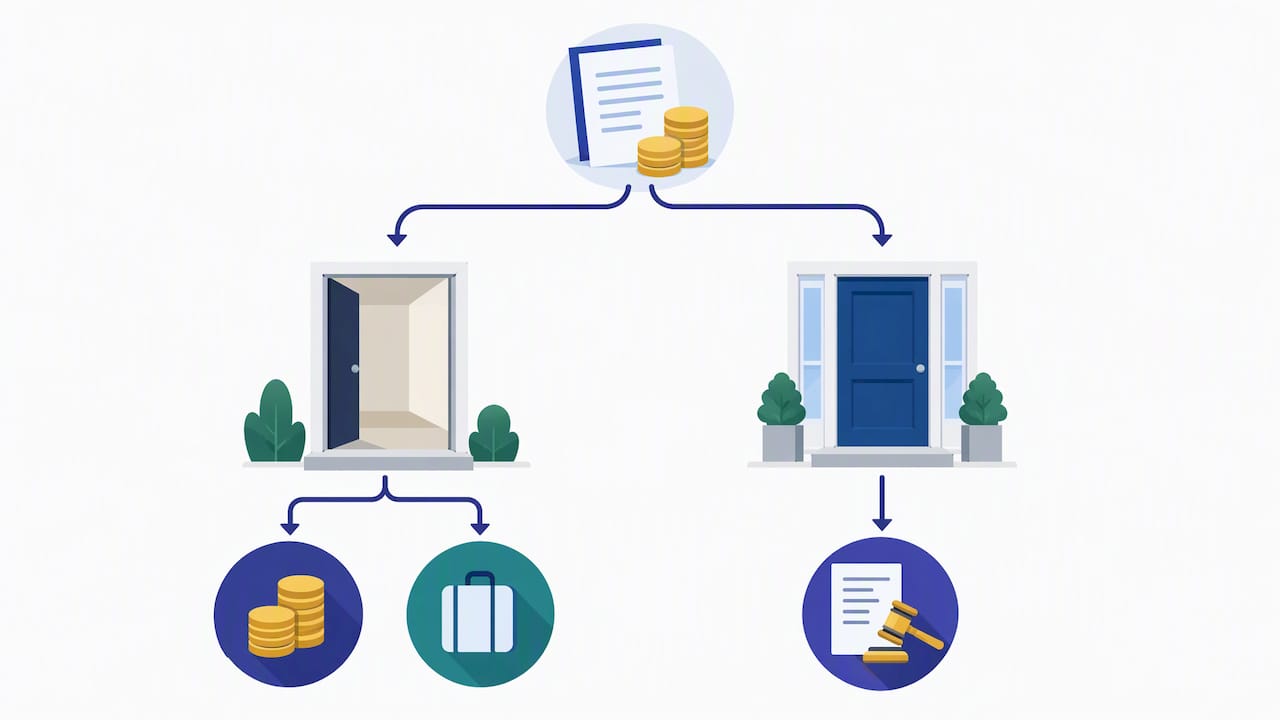
Two scenarios show how this plays out. A tenant who stops paying and vacates without notice typically triggers both the non payment and absconding sections of cover. A tenant who remains in occupation but disputes arrears, requiring a court order before funds or possession are recovered, draws on the eviction legal costs section as well.
Pro Tip: Ask for the policy’s definition of “absconding” in writing before you buy. Insurers vary on how many missed payments or days of silence qualify.
How do claims and payouts actually work?
Insurers build in a waiting period before a claim becomes payable, usually counted from the first missed rent payment. That gap exists to confirm the non payment is genuine rather than a single late transfer, but it also means landlords should budget for a short cash flow shortfall before any payout arrives.
To support a claim, insurers generally ask for:
- A signed copy of the lease agreement.
- A full payment history showing the arrears pattern.
- Written notices sent to the tenant, with dates.
- Any tribunal or court order related to the dispute.
- Invoices for legal costs incurred during eviction.
Causation sits behind most claim decisions. Insurers and ombud guidance on exceptions, exclusions and waiting periods apply a proximate cause test: the dominant cause of the loss has to be the insured peril, not an unrelated or excluded event. Where policy wording is ambiguous, it is generally read in the policyholder’s favour, which is why clear documentation from day one strengthens any claim.
Tenant arrears sat around seventeen percent in the final quarter of 2025, with tenants spending a large portion of income on debt servicing, according to PayProp’s analysis of tenant risk. That level of financial pressure is a large part of why rental income protection has become a standard line item for landlords rather than an afterthought.
What shapes the cost of rental income protection?
Premiums are not one size fits all. The main inputs insurers weigh include:
- The rent amount insured: higher monthly rent means a higher sum insured and premium.
- The payment period cap: cover for six months of arrears costs less than cover for twelve.
- The excess you choose: a higher excess lowers the premium but increases what you pay before a claim kicks in.
- Claims history: a portfolio with frequent claims typically attracts a higher rate.
- Property type: commercial tenancies carry different risk profiles to residential ones.
- Tenant screening requirements: insurers may ask for proof of affordability checks before binding cover.
Add-ons such as a legal fee top up or property damage extension increase the premium but widen the safety net during a drawn out eviction.
As a general rule, landlords with a single property and thin cash reserves benefit from a lower excess and a longer payment cap, even at a higher premium. Landlords with a larger portfolio and stronger reserves can often absorb a higher excess and save on premium across multiple units.
Does insurance replace tenant screening and arrears management?
Rental income insurance is a financial backstop, not a substitute for good tenant management. The two work best together. Before a loss ever reaches a claim, landlords should keep up with:
- Affordability checks: verifying income against the proposed rent, not just a credit score.
- Debt burden verification: checking total debt servicing, since high debt pressure is a strong predictor of future arrears.
- Automated arrears reminders: a fast nudge to a tenant who has just missed a payment.
- Routine inspections: catching problems with the property or occupancy early.
- Prompt escalation: moving to formal notice and legal process without unnecessary delay once arrears build.
Rising tenant debt pressure makes this more than a box ticking exercise. PayProp’s research on tenant debt levels points to screening that looks beyond a simple credit score and towards a fuller picture of a tenant’s financial commitments. Portfolio underwriting specialists apply a similar logic at scale, as explained in this rent roll underwriting overview from Brookmont Capital Ventures, where income continuity risk is assessed property by property.
Pro Tip: Pair every new lease with an automated arrears reminder set to trigger the day after a missed payment. Early contact resolves many cases before they become claims.
Combining data driven screening with a rental income policy reduces both the frequency and the size of claims over time, which keeps premiums more manageable across a portfolio.
Why work with a rental income insurance specialist
We built our cover specifically around the risks landlords face daily: tenant non payment, early lease termination and absconding, with eviction legal support built into the claims process rather than treated as an afterthought. Our tailored residential and commercial products reflect the fact that a single family home and a commercial unit carry different risk patterns, and cover is priced and structured accordingly.
When comparing any provider, ask three things: exactly which perils the policy includes, how long the waiting period runs before a claim becomes payable, and what documentary evidence the insurer requires to process a claim quickly. A provider who answers all three clearly, in plain language, is one worth taking seriously.
— Coert
Get a quote or check your cover with Rental Income Insurance

Protecting your rental income starts with an accurate quote, and that takes only a few details: your monthly rent, a copy of the lease, the tenancy start date and the number of units you want covered. From there we can match you to the right product, whether that is straightforward Rental Income Insurance at 3.5% to 5% per month of the insured rent, or a tailored Residential Rental Insurance or Commercial Rental Insurance policy for a larger or mixed portfolio.
Before you commit, confirm the waiting period and the exact inclusions on your quote. These two details affect your experience of a claim more than almost anything else in the policy.
| What you need ready | Why it matters |
|---|---|
| Monthly rent amount | Sets the sum insured and premium |
| Signed lease copy | Confirms tenancy terms for underwriting |
| Tenancy start date | Establishes the policy’s cover window |
| Number of units | Determines whether single or group cover applies |
- Request a tailored quote through our request a quote page.
- Read more about what a policy includes on our rental income insurance explainer.
FAQ
What is multi peril insurance in the context of rental property?
In a landlord context, multi peril insurance refers to rental income protection that covers tenant non payment, early lease termination, absconding and the legal costs of eviction. It is a different product from agricultural multi peril crop insurance, which covers farming risks and is not related to rental property at all.
How is multi peril insurance different from general liability insurance?
Multi peril rental income insurance protects your rent flow when a tenant stops paying, leaves early or disappears, while general liability insurance covers claims for injury or damage caused to third parties on your property. The two address entirely different risks and are usually bought as separate policies.
How long does a rental income insurance claim take to pay out?
Payout timing depends on the waiting period in your policy and how quickly you can supply the required documentation, such as the lease, payment history and any court order. Claims with clear, dated evidence of non payment or absconding tend to move through the proximate cause review faster than disputed ones.
Can I claim for eviction legal costs under a rental income policy?
Yes, most rental income policies include cover for the legal fees incurred during a formal eviction process, which can be substantial given the procedural steps required under the PIE Act. Check your specific policy wording, since the cap on legal cost cover varies between products.
What does Rental Income Insurance cost?
Our core Rental Income Insurance is priced at 3.5% to 5% per month of the insured rent, depending on the cover level and risk profile you choose. Other products, including Eviction Insurance and Commercial Rental Insurance, are quoted individually through our request a quote page.
Sources
- Agents should rethink tenant risk as debt pressure mounts — PayProp
- Exceptions, exclusions and waiting periods — Office of the Ombud
- Practice guidelines: evictions in terms of the PIE Act — Department of Justice