
Managing rental properties in South Africa often comes with worries about missed payments or sudden lease terminations. Understanding the meaning of key policy terms is crucial for protecting your income and maintaining fair relationships with tenants. From mandatory mediation requirements set out by the Extension of Security of Tenure Act to the frameworks found in government-supported housing schemes, these rules shape your rights and responsibilities. This guide decodes the most important policy language so you can confidently safeguard your rental earnings and property interests.
Table of Contents
- Essential Policy Terms For Landlords Defined
- Types Of Rental Income Protection Policies
- Key Features And Coverage Explained
- Legal Duties And Landlord Responsibilities
- Common Exclusions And Risk Considerations
Key Takeaways
| Point | Details |
|---|---|
| Mandatory Mediation Requirement | Landlords must engage in mediation before eviction proceedings, fostering fair dispute resolution. |
| Understanding Rental Income Protection Policies | Landlords should be familiar with various protection policies, including default and vacancy coverage, to safeguard their financial interests. |
| Legal Responsibilities | It is crucial for landlords to adhere to legal obligations regarding property maintenance and tenant rights to avoid disputes and ensure compliance. |
| Risk Management Awareness | Landlords must identify common exclusions in their policies and incorporate strategic management practices to protect against financial vulnerabilities. |
Essential Policy Terms for Landlords Defined
Navigating rental property management in South Africa requires a comprehensive understanding of critical policy terms that protect both landlords and tenants. These terms establish legal frameworks, define rights, and create clear expectations for rental agreements. Landlord-tenant regulations have evolved significantly to ensure fair and balanced property relationships.
Key policy terms every South African landlord must understand include:
- Mandatory Mediation: Before pursuing eviction, landlords must engage in mediation processes
- Fair Compensation: Determining appropriate financial terms in property transactions
- Tenure Rights: Legal protections for both property owners and occupants
- Public Interest Considerations: Balancing individual property rights with broader societal needs
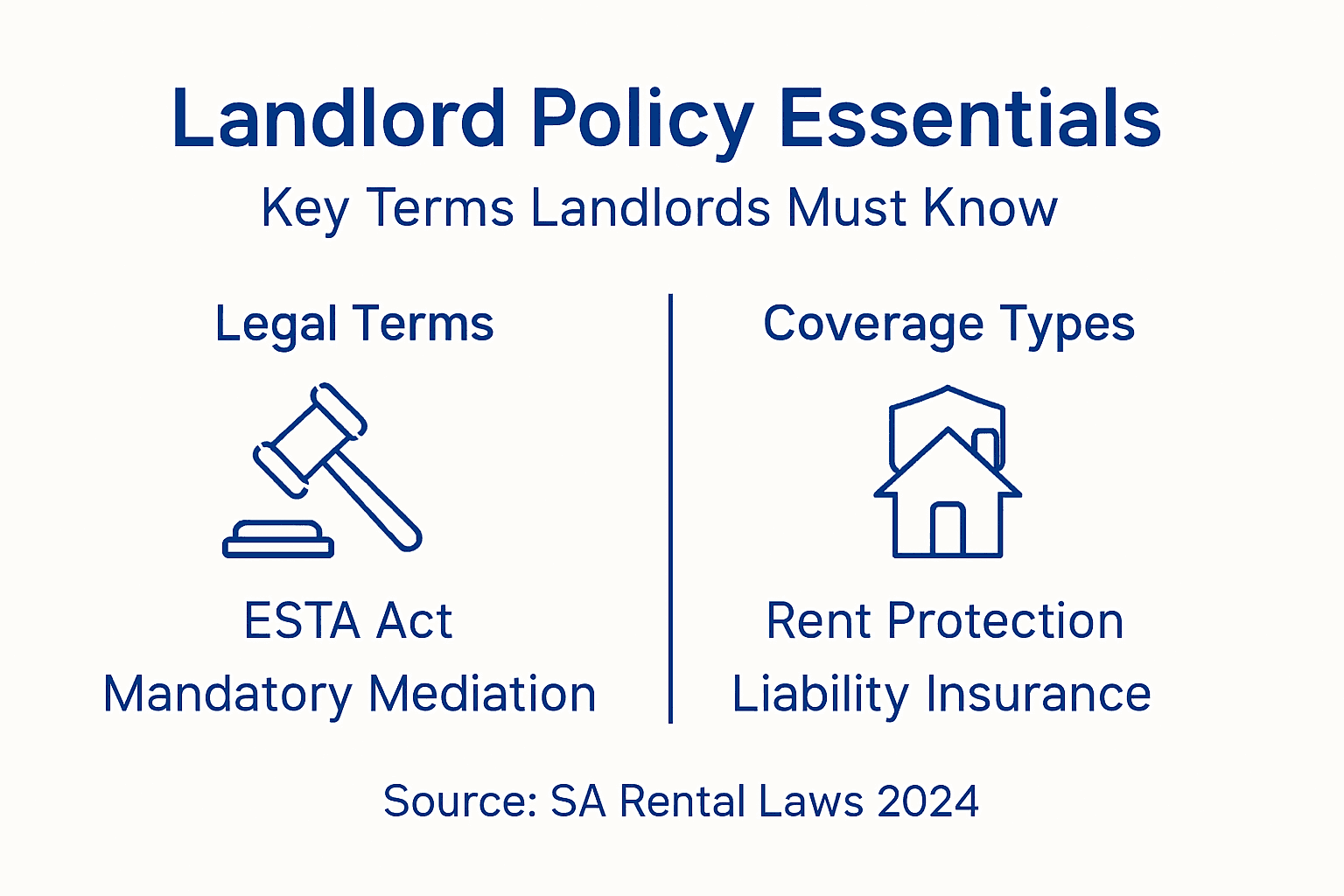
The Extension of Security of Tenure Act (ESTA) provides critical guidelines for landlords. This legislation ensures that property rights are balanced with occupant protections, requiring landlords to follow specific legal procedures when managing tenant relationships. Expropriation frameworks further define the parameters within which landlords can manage their properties.
The following table summarises how prominent South African landlord policies impact both landlords and tenants:
| Policy/Term | Landlord Impact | Tenant Impact |
|---|---|---|
| Mandatory Mediation | Requires dispute negotiation before court action | Increases protection against unfair eviction |
| Fair Compensation | Ensures financial return is regulated | Prevents overcharging for rent |
| Tenure Rights | Clarifies property reclaim procedures | Guarantees legal occupancy |
| Public Interest Considerations | Balances property rights with law changes | Increases tenant stability |
| Security of Tenure Act (ESTA) | Sets clear legal guidelines for eviction | Reinforces long-term tenure rights |
Mediation Process Requirements:
- Initiate direct communication with tenants
- Attempt negotiated resolution before legal action
- Document all communication attempts
- Follow prescribed legal timelines
Pro Tip: Always document rental agreements meticulously and understand your legal obligations to prevent potential disputes.
Types of Rental Income Protection Policies
Rental income protection policies in South Africa represent critical financial safeguards for property owners, offering comprehensive strategies to mitigate potential financial risks associated with property leasing. Social housing programmes provide foundational frameworks for understanding these protective mechanisms, highlighting the importance of structured rental management.
The primary types of rental income protection policies include:
- Default Coverage Policies: Protect against tenant non-payment
- Vacancy Protection Policies: Compensate for periods without tenant occupancy
- Legal Expense Policies: Cover legal costs related to tenant disputes
- Comprehensive Rental Insurance: Combines multiple risk protections
Government-supported initiatives play a significant role in rental income protection. Community Residential Programmes demonstrate how institutional frameworks can provide additional security for landlords by creating stable housing environments and regulated tenant interactions.

This table contrasts common rental income protection policies for landlords:
| Policy Type | Primary Focus | Example Scenario |
|---|---|---|
| Default Coverage | Non-payment by tenant | Missed monthly rent |
| Vacancy Protection | Unoccupied property | Delay between tenancies |
| Legal Expense Cover | Dispute-related costs | Eviction legal fees |
| Comprehensive Insurance | Multiple risks combined | Non-payment plus damage |
Key Policy Characteristics:
- Define specific coverage parameters
- Establish clear claim procedures
- Specify financial compensation limits
- Outline tenant and landlord responsibilities
Effective rental income protection requires understanding nuanced policy details and potential risk scenarios.
Pro Tip: Thoroughly review policy exclusions and carefully document all tenant interactions to maximise your protection coverage.
Key Features and Coverage Explained
Understanding the comprehensive features and coverage of rental income protection policies is crucial for South African landlords seeking financial security. Government housing programmes provide valuable insights into the essential elements that protect both property owners and tenants, establishing a robust framework for rental management.
Key features of rental income protection policies typically include:
- Income Replacement Coverage: Compensates for lost rental payments
- Legal Protection: Covers expenses related to tenant disputes
- Vacancy Loss Protection: Provides financial support during unoccupied periods
- Property Damage Coverage: Safeguards against tenant-related property destruction
Comprehensive Protection Elements:
- Detailed risk assessment procedures
- Clear claim submission processes
- Precise financial compensation mechanisms
- Comprehensive documentation requirements
Social housing regulations demonstrate the importance of strategic coverage, highlighting how professional management and regulatory oversight can mitigate rental income risks. These frameworks offer landlords critical insights into developing robust protection strategies.
Effective rental income protection balances comprehensive coverage with precise risk management techniques.
Pro Tip: Regularly review and update your insurance policy to ensure it reflects current market conditions and potential emerging risks.
Legal Duties and Landlord Responsibilities
Landlords in South Africa operate within a complex legal framework that demands strict adherence to numerous responsibilities and obligations. Rental Housing Act regulations establish comprehensive guidelines that protect both property owners and tenants, ensuring fair and transparent rental relationships.
Key legal responsibilities for landlords include:
- Property Maintenance: Keeping the rental property in habitable condition
- Lease Agreement Clarity: Providing detailed, written lease documentation
- Tenant Rights Protection: Respecting occupancy and privacy regulations
- Financial Transparency: Clear communication about deposits and rental terms
- Legal Compliance: Following prescribed eviction and dispute resolution procedures
Critical Legal Obligations:
- Deliver property in good, safe condition
- Maintain property structural integrity
- Provide proper notice for any lease modifications
- Follow legal eviction protocols
Mediation requirements demonstrate the evolving landscape of landlord responsibilities, emphasising negotiation and fair treatment over arbitrary actions. These frameworks reflect South Africa’s commitment to balanced property rights and social justice.
Legal responsibilities extend beyond mere property ownership to creating fair, sustainable housing environments.
Pro Tip: Consult a legal professional annually to ensure your lease agreements and practices remain compliant with current South African housing regulations.
Common Exclusions and Risk Considerations
Rental income protection requires a nuanced understanding of potential risks and policy limitations that could impact financial security. Risk management frameworks provide critical insights into identifying and mitigating potential vulnerabilities in rental property investments.
Common policy exclusions typically encompass:
- Intentional Property Damage: Losses caused by deliberate tenant actions
- Municipal Rate Defaults: Unpaid municipal charges not covered by standard policies
- Non-Disclosed Material Facts: Risks arising from tenant misrepresentation
- Natural Disaster Limitations: Specific environmental risks outside standard coverage
- Contractual Breach Scenarios: Losses from fundamental lease term violations
Key Risk Assessment Considerations:
- Comprehensive tenant background screening
- Regular property condition assessments
- Detailed documentation of lease agreements
- Proactive maintenance strategies
Risk Management and Compliance Programmes emphasise the importance of systematic risk evaluation and mitigation strategies. Understanding these exclusions allows landlords to develop robust protection mechanisms that address potential financial vulnerabilities.
Effective risk management transcends insurance coverage, requiring proactive and strategic property oversight.
Pro Tip: Conduct an annual comprehensive review of your rental income protection policy to ensure alignment with current market risks and property conditions.
Secure Your Rental Income by Understanding Essential Policy Terms
Managing rental properties in South Africa involves navigating complex policy terms like mandatory mediation, tenure rights and fair compensation. These challenges can put your rental income at risk through tenant non-payment or unexpected disputes. Protect yourself against these common pain points with tailored solutions designed to cover risks such as early lease termination, vacancy periods and legal expenses.

Don’t leave your investment exposed to uncertainty. At Rental Income Insurance, we understand the legal duties and financial risks landlords face. Our rental income protection plans provide crucial safeguards against loss caused by tenant defaults or property damages. Act now to ensure your rental income is fully protected and benefit from peace of mind backed by comprehensive cover. Visit https://rentalincomeinsurance.co.za to start securing your property today.
Frequently Asked Questions
What is mandatory mediation for landlords?
Mandatory mediation requires landlords to engage in a negotiation process with tenants before pursuing eviction actions through the courts. This step is aimed at resolving disputes amicably.
How does the Extension of Security of Tenure Act (ESTA) protect landlords and tenants?
The ESTA provides legal guidelines that ensure property rights are balanced with protections for occupants, detailing the procedures landlords must follow in managing tenant relationships and evictions.
What types of rental income protection policies are available to landlords?
Landlords can choose from various rental income protection policies, including default coverage, vacancy protection, legal expense policies, and comprehensive rental insurance, each designed to mitigate different financial risks.
What are the key legal responsibilities a landlord must uphold?
Landlords must maintain their properties in habitable condition, provide clear lease agreements, respect tenant rights, ensure financial transparency, and comply with legal eviction and dispute resolution procedures.
Recommended
- Landlord Liabilities – Why They Matter in South Africa – Rental Income Insurance
- Legal Requirements for Landlords – Why Compliance Matters – Rental Income Insurance
- 7 Rental Agreement Essentials for South African Landlords – Rental Income Insurance
- Legal Compliance for Landlords – Protecting Your Income – Rental Income Insurance
- Landlord Cleaning Responsibilities in Los Angeles Rentals
- Asbestos Removal for Landlords in England: Legal Duties Explained | AIB Solutions LTD