
Rent defaults disrupt your cash flow and create legal headaches that no landlord wants to face. In South Africa’s complex rental landscape, preventing these issues requires more than hope; it demands a strategic approach grounded in legal compliance and proactive management. This guide walks you through the essential steps to screen tenants effectively, draft enforceable lease agreements, maintain open communication, and handle defaults legally. You’ll learn practical strategies that protect your rental income while building stronger landlord-tenant relationships. Whether you’re managing one property or a portfolio, these actionable insights will help you minimise risk and maintain steady income throughout 2026 and beyond.
Table of Contents
- Understand The Legal Framework For Rent Default Prevention In South Africa
- Prepare Thoroughly With Comprehensive Tenant Screening And Solid Lease Agreements
- Execute Proactive Property Management And Communication Strategies
- Verify Issues And Enforce Your Rights Legally When Defaults Occur
- Protect Your Rental Income With Specialist Insurance Solutions
- Frequently Asked Questions
Key takeaways
| Point | Details |
|---|---|
| Thorough tenant screening | Comprehensive checks reduce default risk by identifying reliable tenants before they move in. |
| Legal lease agreements | Properly drafted contracts protect your rights and provide clear enforcement mechanisms. |
| Proactive communication | Regular contact with tenants helps resolve payment issues before they escalate to defaults. |
| Regular property maintenance | Well-maintained properties reduce disputes and keep tenants satisfied, lowering default rates. |
| Legal eviction procedures | Following South African law strictly prevents costly mistakes and protects your interests. |
Understand the legal framework for rent default prevention in South Africa
South African law provides clear procedures and remedies for landlords dealing with tenants who fail to fulfil their obligations. Three key pieces of legislation govern your rights and responsibilities: the Rental Housing Act 50 of 1999 (RHA), the Consumer Protection Act 68 of 2008 (CPA), and the Prevention of Illegal Eviction from and Unlawful Occupation of Land Act 19 of 1998 (PIE Act). Understanding these laws isn’t optional; it’s your foundation for legally protecting your rental income.
The RHA establishes minimum standards for lease agreements and requires specific information to make your contract legally enforceable. Your lease must clearly state the rental amount, payment terms, deposit details, maintenance responsibilities, and breach consequences. Without these elements, you may struggle to enforce your rights when defaults occur. The CPA adds another layer of protection by mandating that landlords provide 20 business days’ written notice to remedy any breach before cancelling a fixed-term residential lease.
When rent defaults happen despite your prevention efforts, the PIE Act requires a court order to evict a tenant legally. Self-help measures like changing locks, disconnecting utilities, or removing tenant belongings are illegal and expose you to criminal charges and civil claims. The legal process may feel slow, but it protects both parties and ensures you maintain your reputation and avoid penalties.
Key legal requirements you must follow include:
- Written lease agreements containing all RHA-mandated information
- 20 business days’ notice to remedy breaches before lease cancellation
- Court order obtained through proper PIE Act procedures for eviction
- No self-help eviction tactics under any circumstances
- At least one calendar month’s written notice for month-to-month lease termination
Understanding landlord compliance in South Africa gives you confidence to act decisively when problems arise. With the legal groundwork clear, next we explore preparation steps you can take to minimise defaults from the outset.
Prepare thoroughly with comprehensive tenant screening and solid lease agreements
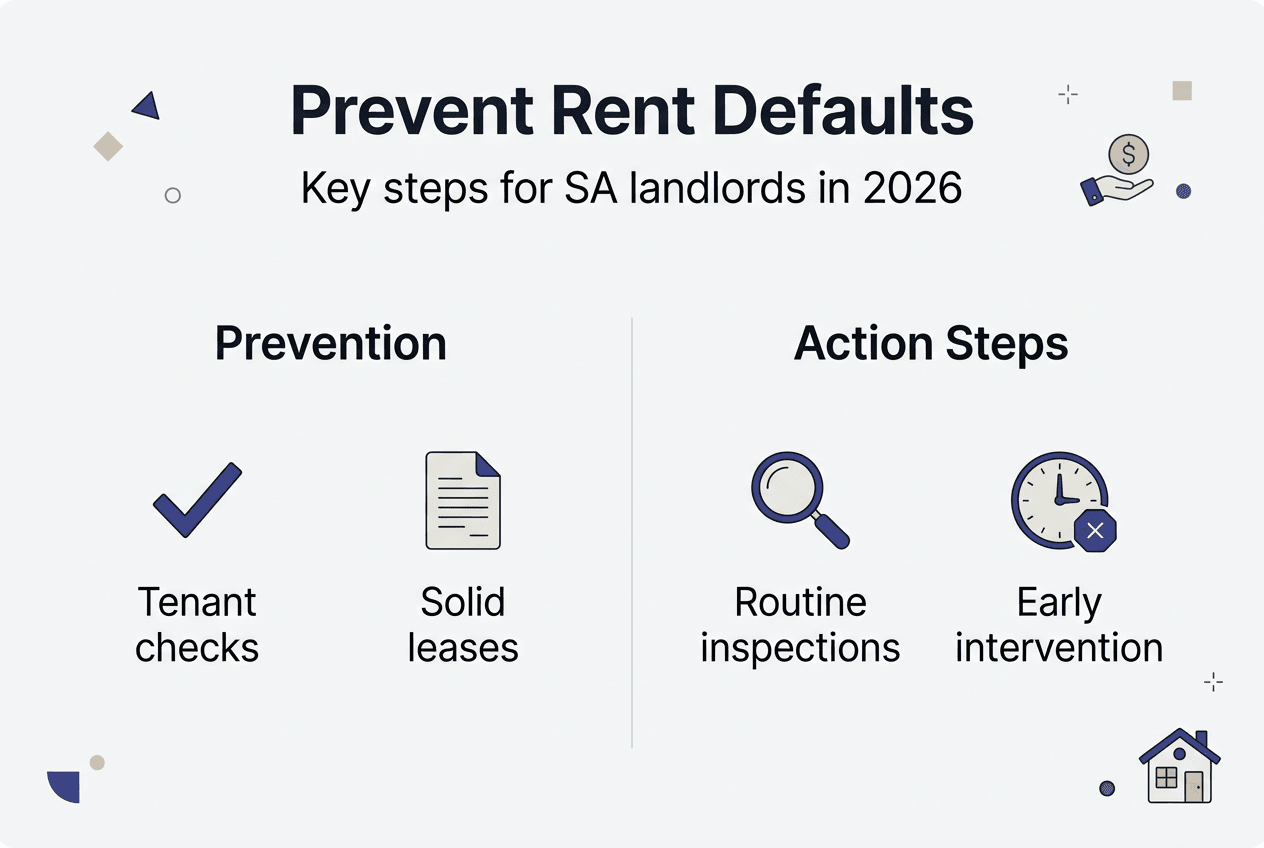
Preventing rent defaults starts before your tenant ever moves in. Comprehensive tenant screening represents your first and most powerful defence against future payment problems. Screening lowers default incidents by up to 70%, according to the South African Property Owners Association, making it one of the highest-return activities you can invest time in as a landlord.
Effective tenant screening involves multiple verification steps that paint a complete picture of your prospective tenant’s reliability. Start with a credit check to reveal their payment history and current debt obligations. Employment verification confirms stable income that supports the rental amount. Previous landlord references provide insights into their behaviour as tenants, including payment punctuality and property care. Identity document verification ensures you’re dealing with the right person and protects against fraud.
Your screening process should include these essential steps:
- Credit bureau check revealing payment history and debt levels
- Employment verification confirming income stability and amount
- Previous landlord references discussing payment and behaviour patterns
- Identity document verification preventing fraud and confirming details
- Affordability assessment ensuring rent doesn’t exceed 30% of gross income
Once you’ve selected a reliable tenant, your lease agreement becomes the legal backbone of your relationship. A well-drafted lease agreement can reduce disputes by up to 70% when it clearly outlines expectations and consequences. Your contract must specify the lease duration, exact rental amount and due date, deposit amount and conditions, maintenance responsibilities for both parties, and detailed breach consequences including the eviction process.
Essential elements your lease agreement must contain include:
- Lease duration with start and end dates clearly stated
- Rental amount, due date, and accepted payment methods
- Deposit amount, holding conditions, and return procedures
- Maintenance duties split between landlord and tenant
- Breach consequences including notice periods and eviction steps
- Late payment fees and grace periods if applicable
- Property use restrictions and occupancy limits
Pro Tip: Regularly update your tenant screening criteria and communicate openly with applicants to spot potential risks early. Screening isn’t a one-time checkbox; it’s an ongoing commitment to protecting your investment by selecting tenants who respect their obligations and communicate honestly about their circumstances.
Once tenants are screened and leases signed, the next focus is managing tenancy actively to prevent issues escalating.
Execute proactive property management and communication strategies
Active property management separates landlords who rarely face defaults from those constantly chasing rent. Your ongoing actions during tenancy either strengthen the landlord-tenant relationship or create friction that leads to payment problems. Regular property maintenance and inspections lower tenant-related property damage by 40% and reduce rent defaults by 30%, according to South African property management surveys.
Quarterly property inspections serve multiple purposes beyond spotting maintenance issues. They demonstrate your commitment to property standards, provide opportunities to address tenant concerns before they escalate, and create documentation of property condition over time. Schedule these inspections with proper notice, conduct them professionally, and follow up promptly on any maintenance needs you identify. Tenants who see you maintaining the property feel more obligated to maintain their end of the agreement.
Technology transforms rent collection from a manual hassle into an automated system that reduces late payments significantly. Landlords using online payments and automated reminders experience a 25% reduction in late payments, according to PayProp surveys. Digital payment portals make it convenient for tenants to pay on time, send automatic reminders before due dates, create transparent payment records, and reduce excuses about forgotten payments or lost cheques.

Payment flexibility represents another powerful tool for preventing defaults without sacrificing your income. When tenants face temporary financial hardship, offering adjusted payment arrangements often prevents a complete default. Payment flexibility reduces eviction proceedings by 20%, fostering better tenant relations and protecting your long-term rental income. Consider instalment plans for large arrears, adjusted due dates matching tenant pay cycles, or temporary rent reductions with clear repayment terms.
Follow these steps for proactive tenancy management:
- Schedule quarterly property inspections with proper tenant notice
- Implement online rent payment portals with automated reminders
- Maintain regular communication through calls, messages, or emails
- Offer payment flexibility options when tenants face temporary hardship
- Document all interactions and agreements in writing
- Address maintenance requests promptly to maintain tenant satisfaction
Pro Tip: Maintain open communication channels to detect tenant difficulties early and negotiate solutions before defaults occur. A five-minute phone call when rent is three days late often prevents a three-month default that requires legal action. Your willingness to listen and work with tenants during genuine hardship builds loyalty and increases the likelihood they’ll prioritise your rent even when money is tight.
Your tenant non-payment risk reduction strategies should include both preventive measures and early intervention tactics. Understanding the rent recovery process helps you act quickly when prevention efforts aren’t enough. After executing these management practices, you need to know how to verify and enforce your rights if rent defaults still happen.
Verify issues and enforce your rights legally when defaults occur
Despite your best prevention efforts, some tenants will default on rent. How you respond determines whether you resolve the situation efficiently or create costly legal problems for yourself. A 20 business days’ written notice is required to remedy breaches before cancelling a lease under the CPA, giving tenants a fair opportunity to correct the default while protecting your legal position.
Your notice must be in writing, specify the exact breach, state the remedy required, provide the 20 business days timeframe, and warn of lease cancellation if the breach isn’t remedied. Deliver this notice via registered mail or hand delivery with proof of receipt. Keep copies of all correspondence, as documentation becomes critical if you proceed to eviction. Never rely on verbal warnings or informal text messages as your legal notice; courts require proper written documentation.
The temptation to take matters into your own hands can be strong when facing non-payment, but unlawful eviction methods like changing locks or disconnecting utilities expose landlords to claims and criminal charges. South African law strictly prohibits self-help eviction tactics, regardless of how justified you feel. You must obtain a court order and follow the PIE Act eviction process to lawfully remove a tenant.
Lawful versus unlawful landlord actions:
- Lawful: Issuing written 20 business days’ notice to remedy breach
- Unlawful: Changing locks or denying tenant access to the property
- Lawful: Applying to court for an eviction order under the PIE Act
- Unlawful: Disconnecting water, electricity, or other essential services
- Lawful: Documenting all communications and maintaining proper records
- Unlawful: Removing or disposing of tenant belongings without court order
- Lawful: Claiming damages through proper legal channels
- Unlawful: Physically intimidating or harassing tenants to force them out
| Eviction step | Legal requirement | Common mistake | Consequence of mistake |
| — | — | — |
| Breach notice | 20 business days written notice | Verbal warning only | Notice invalid, restart process |
| Remedy period | Allow full notice period | Proceeding before period expires | Court dismisses application |
| Court application | Apply for eviction order | Self-help eviction tactics | Criminal charges, tenant claims |
| Court order | Obtain and serve order | Evicting without court order | Illegal eviction, heavy penalties |
| Sheriff execution | Sheriff executes eviction | Landlord forcibly removes tenant | Assault charges, damages claims |
Pro Tip: Document all communications and maintain proper records to support legal actions if disputes escalate. Create a dedicated file for each tenancy containing the signed lease, all notices sent and received, payment records, inspection reports, and correspondence. This documentation proves invaluable in court and often convinces tenants to comply when they see you’re serious about following proper procedures.
Understanding the rent default legal process and knowing how to enforce lease clauses legally protects your interests without exposing you to liability. With these enforcement steps in mind, let’s see how you can protect your rental income beyond prevention and management.
Protect your rental income with specialist insurance solutions

Even the most diligent landlord cannot eliminate rent default risk entirely. Economic downturns, job losses, and unexpected tenant circumstances can derail the most carefully screened tenancy. Rental income insurance provides a financial safety net that complements your prevention strategies, ensuring you maintain cash flow even when defaults occur. This protection covers losses from tenant non-payment, property damage beyond normal wear and tear, and legal costs associated with eviction proceedings.
Think of rental income insurance as your backup plan when prevention efforts aren’t enough. You’ve invested time and money into screening tenants, drafting solid leases, and maintaining your property. Insurance protects that investment by covering the gaps that even excellent management cannot prevent. It offers peace of mind knowing that a single problematic tenant won’t devastate your finances or force you to sell your investment property.
Exploring your coverage options through a rental income insurance quote helps you understand the specific protections available for your situation. The rental income protection guide explains policy features, claim processes, and how insurance integrates with your existing risk reduction strategies. This combination of prevention, active management, and financial protection creates a comprehensive approach to safeguarding your rental income in 2026 and beyond.
Frequently asked questions
How can landlords effectively prevent rent defaults?
Conduct comprehensive tenant screening before every tenancy, including credit checks, employment verification, and previous landlord references. Draft legally compliant lease agreements that clearly outline payment terms, breach consequences, and eviction procedures. Maintain proactive communication with tenants to identify financial difficulties early and offer payment flexibility when appropriate. Regular property maintenance reduces disputes and keeps tenants satisfied, lowering the likelihood of defaults.
What are the legal steps required before evicting a tenant for non-payment?
Issue a written 20 business days’ notice specifying the breach and required remedy, as mandated by the Consumer Protection Act. If the tenant fails to remedy the breach within this period, you may cancel the lease but must still obtain a court order before eviction. The PIE Act requires all evictions to proceed through the court system, with no exceptions for self-help measures. Follow proper legal procedures strictly to avoid criminal charges and civil claims.
How often should landlords perform tenant screening and property inspections?
Screen all prospective tenants comprehensively before signing any lease agreement, updating your criteria regularly to reflect current best practices. Conduct property inspections at least quarterly to identify maintenance needs, document property condition, and maintain positive tenant relationships. More frequent inspections may be warranted for new tenants or properties with previous issues. Your rental risk management checklist should include both initial screening and ongoing monitoring activities.
What communication and payment strategies help prevent defaults?
Maintain regular, proactive contact with tenants rather than communicating only when problems arise. Implement online payment portals with automated reminders to make timely payments convenient and reduce forgotten due dates. Offer flexible payment arrangements when tenants face temporary financial hardship, such as instalment plans or adjusted due dates matching their pay cycles. These tenant non-payment risk reduction strategies demonstrate your willingness to work with tenants whilst protecting your income.
Does rental income insurance replace the need for tenant screening?
No, rental income insurance complements rather than replaces thorough tenant screening and active property management. Insurance provides financial protection when defaults occur despite your prevention efforts, but reducing default frequency through proper screening saves you time, stress, and claim history impacts. The most effective approach combines rigorous screening, proactive management, legal compliance, and comprehensive insurance coverage to protect your rental income from multiple angles.