
Managing rent defaults remains one of the most pressing challenges facing South African landlords in 2026. Recent data shows arrears rates at 16.9% in Q2 2025, marking an all-time low, yet tenants in default still owe roughly three quarters of their monthly rent. This creates serious cash flow disruptions for property owners who depend on consistent rental income. Understanding how to manage and minimise rent defaults through legal compliance, proactive communication, and strategic financial protection is essential for safeguarding your investment. This guide walks you through proven strategies to handle rent defaults effectively whilst protecting your rental income.
Table of Contents
- Understanding Rent Default Challenges In South Africa
- Preparing To Manage Rent Defaults: Legal Framework And Landlord Obligations
- Executing Effective Rent Default Management Strategies
- Verifying Outcomes And Improving Future Rent Default Management
- Protect Your Rental Income With Expert Insurance Solutions
- Frequently Asked Questions
Key takeaways
| Point | Details |
|---|---|
| Legal process matters | Follow formal notice procedures and court processes to avoid illegal eviction penalties |
| Early intervention works | Proactive communication and mediation resolve disputes faster and cheaper than eviction |
| Insurance provides safety | Rent guarantee products offset income loss and legal costs when defaults occur |
| Provincial variations exist | Default rates differ significantly across regions, requiring localised risk assessment |
| Tenant vulnerability affects outcomes | Courts consider financial hardship under PIE Act, extending timelines for vulnerable tenants |
Understanding rent default challenges in South Africa
Rent defaults pose a persistent threat to landlords’ financial stability despite recent improvements in arrears statistics. Current arrears rates stand at 16.9%, the lowest level recorded, yet tenants who fall behind typically owe between 73% and 77% of their monthly rent. This means that even with fewer tenants defaulting, those who do create substantial income gaps that can cripple landlords relying on rental payments to cover bond repayments, rates, and maintenance costs.
Economic pressures continue to drive tenant vulnerability in 2026. Rising living costs, stagnant wages, and increasing debt-to-income ratios make it harder for tenants to prioritise rent when facing competing financial demands. Job losses, medical emergencies, or unexpected expenses can quickly push otherwise reliable tenants into arrears. Understanding these underlying financial stressors helps landlords anticipate risks and respond with appropriate strategies rather than reactive panic.
Provincial variations in default rates reveal significant geographical risk factors. Whilst national averages hover around 17%, certain provinces experience rates as high as 20% to 24%, particularly in economically challenged regions like the Free State. Landlords operating in multiple locations must adjust their risk assessments and management approaches based on local economic conditions, employment trends, and tenant demographics.
Tenant behaviour patterns during default situations vary widely. Some tenants communicate openly about financial difficulties and seek payment arrangements, whilst others avoid contact entirely, hoping the problem resolves itself or disappears. A minority deliberately withhold rent whilst continuing to occupy the property, knowing eviction takes months. Recognising these behavioural patterns early allows landlords to tailor their response strategies effectively.
“The key to managing rent defaults successfully lies in understanding both the legal framework and the human element behind each case. Every default situation requires balancing firm enforcement of your rights with practical consideration of tenant circumstances.”
Several factors contribute to the complexity of managing defaults:
- Tenants may face genuine temporary hardship versus chronic inability to pay
- Legal protections for vulnerable tenants extend timelines and complicate evictions
- Recovery rates remain low even after successful eviction proceedings
- Landlords bear ongoing costs for rates, bonds, and maintenance during arrears periods
- Emotional stress and time investment drain resources beyond pure financial loss
Understanding why tenants default on rent in South Africa provides crucial context for developing effective prevention and management strategies. Additional insights into South African tenant arrears patterns reveal broader economic trends affecting rental markets nationwide.
Preparing to manage rent defaults: legal framework and landlord obligations
Navigating rent defaults requires strict adherence to South African legal procedures. Landlords who attempt shortcuts or self-help remedies face serious legal consequences, including criminal charges and civil liability. The law provides clear pathways for addressing non-payment, but these pathways demand patience and proper documentation.
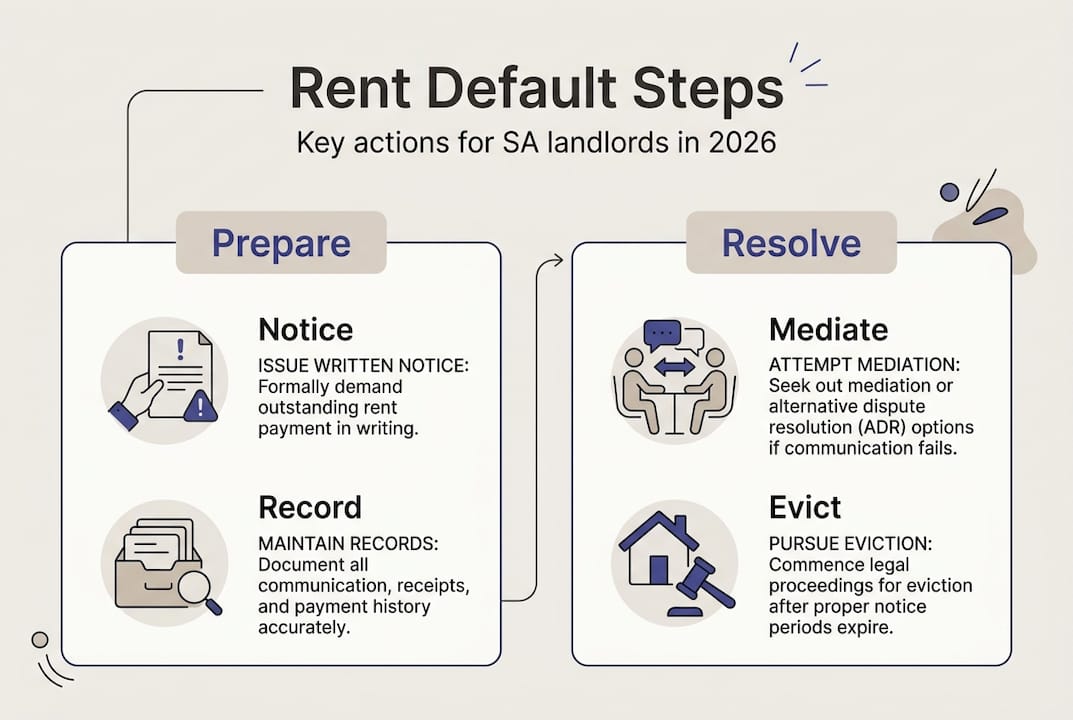
The formal process begins with informal communication, followed by escalating legal steps:
- Send a friendly reminder when rent becomes overdue, documenting the communication
- Issue a formal letter of demand if payment remains outstanding, allowing 7 to 20 business days for remedy
- Serve notice of lease cancellation if the tenant fails to pay within the specified period
- File an eviction application with the Rental Housing Tribunal or Magistrate’s Court
- Obtain a court order before taking possession of the property
- Arrange for sheriff execution of the eviction order if the tenant refuses to vacate
Each step requires specific documentation and timing. Missing a procedural requirement can invalidate your entire case, forcing you to restart from the beginning whilst the tenant continues occupying your property rent free. Keep meticulous records of every communication, payment, notice, and court filing.
The Rental Housing Tribunal offers a faster, cheaper alternative to Magistrate’s Court for straightforward eviction cases. Tribunal processes typically resolve within weeks rather than months, and filing fees remain minimal compared to court costs. However, tribunals have limited jurisdiction and cannot award monetary judgments beyond basic rent arrears.

Eviction timelines vary dramatically based on case complexity and tenant cooperation. Unopposed evictions through the tribunal may conclude within three to six months from initial default to physical removal. Contested cases involving vulnerable tenants or procedural challenges can stretch to 12 to 18 months or longer, during which the landlord receives no rental income.
The Prevention of Illegal Eviction and Unlawful Occupation of Land Act (PIE Act) governs all evictions in South Africa. This legislation requires courts to consider tenant circumstances, particularly vulnerability factors like children, elderly occupants, disability, or lack of alternative accommodation. Courts may grant extended timelines or impose conditions on eviction orders to protect vulnerable tenants, further delaying landlords’ income recovery.
Pro Tip: Document every interaction with defaulting tenants through written communication (email, SMS, registered mail). Verbal conversations hold little weight in court proceedings, whilst written records create an indisputable timeline proving you followed proper procedures and gave the tenant adequate opportunity to remedy the breach.
Illegal eviction methods carry severe penalties. Landlords cannot change locks, remove tenant belongings, cut utilities, or use intimidation to force tenants out. Such actions constitute criminal offences and expose landlords to damages claims that far exceed the value of unpaid rent. Only a court order executed by the sheriff provides lawful eviction authority.
Understanding the rental income recovery process in South Africa helps landlords set realistic expectations about timelines and costs. Learning how to prevent rent defaults through key steps reduces the likelihood of facing these lengthy legal procedures in the first place.
Executing effective rent default management strategies
Proactive management strategies significantly reduce both the frequency and severity of rent defaults. Landlords who implement systematic approaches to tenant communication, monitoring, and financial protection experience fewer disruptions and faster resolutions when defaults occur.
Early intervention proves crucial for successful default management. Contact tenants immediately when rent becomes overdue, before the situation escalates. A simple reminder call or message often resolves oversights or temporary cash flow timing issues. Many tenants appreciate the prompt communication and respond by prioritising rent payment to maintain a positive landlord relationship.
Mediation offers a powerful alternative to eviction for resolving disputes. The Rental Housing Tribunal favours mediation over adversarial proceedings, encouraging landlords and tenants to negotiate payment arrangements, temporary rent reductions, or other mutually acceptable solutions. Successful mediation preserves the tenancy relationship, maintains income flow (even if reduced), and avoids the substantial costs and delays of formal eviction.
Regular monitoring of tenant financial health provides early warning signs of potential default. Changes in payment patterns, requests for payment extensions, or visible lifestyle changes may indicate growing financial stress. Addressing these signals proactively through open conversation can prevent small issues from becoming major arrears.
Provincial risk assessment helps landlords adjust their strategies based on local conditions. Properties in high-default regions warrant more stringent tenant screening, larger security deposits, or mandatory rent guarantee insurance. Understanding geographical patterns allows you to calibrate your risk management approach appropriately.
Insurance products provide critical financial protection against default losses. Tenant default insurance and rent guarantee insurance offset lost rental income during arrears periods and eviction proceedings. These products prove especially valuable given that recovery rates fall below 40% and legal costs often exceed R15,000 per eviction.
Pro Tip: Combine insurance coverage with proactive tenant screening and regular communication. Insurance protects against financial loss when defaults occur, but preventing defaults through careful tenant selection and relationship management remains your most cost-effective strategy. Use insurance as your safety net, not your primary defence.
Key strategies for minimising default impact include:
- Establishing clear payment expectations and consequences in the lease agreement
- Offering multiple convenient payment methods to reduce friction
- Building rapport with tenants to encourage open communication about financial difficulties
- Creating formal payment plan templates for tenants experiencing temporary hardship
- Maintaining adequate cash reserves to cover short-term income gaps
- Networking with other landlords to share intelligence about problem tenants
| Strategy | Cost | Timeline | Effectiveness |
|---|---|---|---|
| Early communication | Minimal | Immediate | High for oversights |
| Mediation via tribunal | Low (R100-R500) | 2-4 weeks | Moderate to high |
| Formal eviction | High (R15,000+) | 3-18 months | Certain but slow |
| Rent guarantee insurance | Medium (monthly premium) | Ongoing | High income protection |
Developing relationships with legal professionals who specialise in landlord-tenant law provides access to expert guidance when complex situations arise. Having a trusted attorney or conveyancer on retainer ensures you receive accurate advice quickly, avoiding costly procedural mistakes that delay resolution.
Verifying outcomes and improving future rent default management
Continuous improvement in default management requires systematic tracking of outcomes and adaptation of strategies based on results. Landlords who treat each default case as a learning opportunity develop increasingly effective approaches over time, reducing both frequency and financial impact of future incidents.
Tracking key performance indicators reveals patterns and improvement opportunities. Monitor metrics such as average days to first payment after default, percentage of cases resolved through mediation versus eviction, total income lost per default incident, and legal costs incurred. These data points highlight which strategies work best for your property portfolio and tenant demographic.
Comparing different intervention approaches across multiple properties or tenants provides valuable insights. Did early aggressive legal action produce better outcomes than patient negotiation? Did insurance coverage prove cost-effective relative to premiums paid? Which tenant screening criteria best predicted payment reliability? Systematic comparison answers these questions with evidence rather than assumptions.
Adapting strategies to changing economic conditions ensures continued effectiveness. The rising debt-to-income ratios facing South African tenants in 2026 suggest landlords should expect continued pressure on tenant payment capacity despite historically low arrears rates. Proactive adjustments to screening criteria, deposit requirements, or insurance coverage levels position you ahead of emerging risks.
Staying informed about landlord insurance trends in South Africa helps you leverage new products and coverage options as they become available. Insurance markets evolve rapidly, offering increasingly sophisticated solutions for specific landlord challenges. Regular policy reviews ensure your coverage remains aligned with your actual risk profile.
Building a comprehensive rental income protection strategy integrates multiple defensive layers:
- Rigorous tenant screening to select financially stable occupants
- Clear lease terms establishing payment obligations and consequences
- Proactive communication maintaining positive landlord-tenant relationships
- Early intervention systems triggering action at first signs of payment difficulty
- Legal compliance ensuring all actions withstand court scrutiny
- Insurance coverage protecting against income loss when defaults occur
Documenting lessons learned from each default case creates institutional knowledge that improves future decision making. Maintain a confidential case file noting what worked, what failed, unexpected complications, and how you would handle similar situations differently. This knowledge base becomes invaluable as your portfolio grows.
Networking with other landlords through industry associations provides access to collective wisdom and emerging best practices. Other property owners face identical challenges and often discover innovative solutions worth adopting. Professional associations also offer training, legal updates, and advocacy that benefit all members.
Regular review of legal developments ensures compliance with changing regulations. Rental housing law evolves through new legislation, court precedents, and regulatory interpretations. Staying current prevents inadvertent violations that could undermine your legal position in default proceedings.
| Improvement area | Review frequency | Key questions |
|---|---|---|
| Tenant screening criteria | Annually | Are current criteria predicting payment reliability accurately? |
| Insurance coverage | Annually | Does coverage match actual risk exposure and premium cost? |
| Communication protocols | Quarterly | Are tenants responding positively to current approach? |
| Legal procedures | As needed | Do current templates and processes comply with latest regulations? |
Sustainable rental income protection requires balancing assertive enforcement of your rights with practical recognition of market realities. Overly aggressive approaches damage your reputation and reduce tenant quality, whilst excessive leniency invites exploitation. Finding the right balance for your specific market and tenant demographic optimises long-term financial outcomes.
Protect your rental income with expert insurance solutions
Whilst legal knowledge and proactive management strategies form the foundation of effective default management, comprehensive insurance coverage provides the financial safety net every landlord needs. Even the most diligent screening and communication cannot eliminate all default risk in today’s challenging economic environment.

Rental Income Insurance specialises in protecting South African landlords against the financial devastation of tenant non-payment, early lease termination, and absconding. Our tailored policies ensure you continue receiving income even when tenants default, covering both lost rent and legal costs associated with eviction proceedings. We understand the unique challenges facing property owners in 2026 and design our products to address real-world risks you face daily. Don’t let a single defaulting tenant jeopardise your entire investment portfolio. Request a quote for rental income insurance today and discover how affordable peace of mind can be. Our expert team will assess your specific risk profile and recommend coverage options that align with your portfolio size, tenant demographics, and budget constraints.
Frequently asked questions
How long does eviction take in South Africa?
Unopposed evictions typically take three to six months from initial default to physical removal. Contested cases involving vulnerable tenants or procedural challenges can extend to 12 to 18 months or longer, during which landlords receive no rental income whilst continuing to pay bond instalments and rates.
Can I evict a tenant without a court order?
No, all evictions in South Africa require a court order under the PIE Act. Self-help remedies like changing locks, removing belongings, or cutting utilities constitute illegal eviction and expose landlords to criminal charges and substantial damages claims that far exceed unpaid rent value.
What are the benefits of rent guarantee insurance?
Rent guarantee insurance pays your monthly rental income when tenants default, typically covering three to six months of lost rent plus legal costs for eviction proceedings. This protection proves invaluable given recovery rates below 40% and average legal costs exceeding R15,000 per eviction. Learn more about tenant default insurance options available to South African landlords.
Are mediation services free via Rental Housing Tribunal?
Rental Housing Tribunal filing fees remain minimal, typically between R100 and R500 depending on province and case type. Mediation services through the tribunal cost significantly less than Magistrate’s Court proceedings or private attorneys, making them the most cost-effective option for straightforward default cases.
What happens if a tenant is vulnerable under the PIE Act?
Courts must consider vulnerability factors including children, elderly occupants, disability, or lack of alternative accommodation when granting eviction orders. Judges may extend timelines, impose conditions like providing relocation assistance, or require landlords to explore all alternatives before eviction, significantly delaying income recovery.
How can I prevent rent defaults before they occur?
Rigorous tenant screening, clear lease terms, proactive communication, and early intervention at first signs of payment difficulty significantly reduce default frequency. Combining these preventive measures with insurance coverage creates comprehensive protection against both the likelihood and financial impact of tenant non-payment.
Recommended
- Prevent rent defaults: key steps for SA landlords in 2026 – Rental Income Insurance
- Rental Income Recovery Process: South African Landlords Guide – Rental Income Insurance
- Rent Default Explained: Safeguarding Landlord Income – Rental Income Insurance
- How to Minimise Rental Risks for South African Landlords – Rental Income Insurance
- Examples of rental agreements: key clauses for 2026 | Nomora