
Why early lease breaks happen and what every landlord must know
Early lease termination occurs when a tenant ends a fixed-term agreement before its agreed expiry date. For South African landlords, this means unexpected vacancy, lost rental income, and potential legal disputes. Understanding the common causes, your legal position, and how to protect yourself is the first step to staying in control.
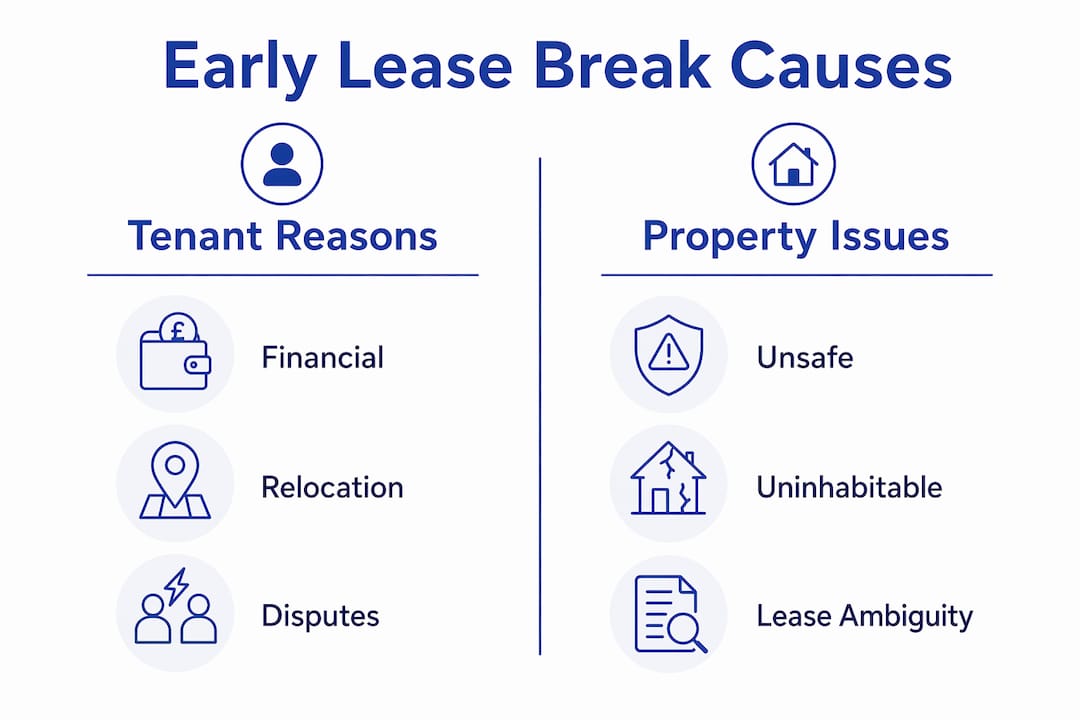
The most common reasons tenants leave early:
- Financial hardship or sudden job loss
- Relocation for employment or family reasons
- Unsafe or uninhabitable property conditions such as electrical faults or structural defects
- Relationship breakdown or change in household size
- Disputes arising from unresolved maintenance issues
Key legal protections you must know:
- Section 14 of the CPA entitles tenants who are natural persons to cancel a fixed-term lease on 20 business days’ written notice, while still owing all outstanding rent and a reasonable cancellation penalty
- The Rental Housing Act governs landlord and tenant obligations, including property habitability standards
- A landlord must give a tenant 20 business days’ written notice to remedy a breach before cancelling the lease or pursuing eviction
- The CPA does not apply to leases with juristic entities or landlords not letting in the ordinary course of business
How to protect your rental income:
- Draft clear early termination and penalty clauses in every lease
- Screen tenants thoroughly before signing
- Maintain open communication throughout the tenancy
- Act immediately on any notice received, including advertising the property
- Consider rental income insurance to cover income gaps from early breaks
Table of Contents
- Detailed causes of early lease termination and how landlords can respond
- Protect your rental income with Rentalincomeinsurance
- Key takeaways
Detailed causes of early lease termination and how landlords can respond
Financial hardship and job relocation
These are the two most frequent personal reasons tenants break leases in South Africa. A tenant who loses their job or receives a transfer to another city has little choice but to give notice. While the CPA gives them the right to exit on 20 business days’ notice, they remain liable for outstanding rent and a reasonable cancellation penalty reflecting your actual, unavoidable losses.

Many landlords mistakenly believe they can charge a flat penalty regardless of how quickly they re-let. The CPA requires that penalties reflect genuine loss, such as rent lost until a new tenant is secured, re-letting costs, and related expenses. Document your marketing efforts from the moment you receive notice. This protects your claim and demonstrates reasonable mitigation.
Unsafe or uninhabitable property conditions
Unsafe property conditions such as electrical hazards, plumbing failures, or structural defects can legally justify a tenant terminating their lease under the Rental Housing Act. This is one of the most preventable causes of early termination. Regular inspections and prompt maintenance responses remove the tenant’s legal basis for this type of exit.
Pro Tip: Conduct a joint inspection with your tenant at the start of every lease and attach a signed defects list as an annexure. This protects you from disputed claims later and reduces the risk of habitability-based early breaks.
Weak or vague lease agreements
Lease agreements without clearly defined early termination and penalty clauses leave you exposed. A well-drafted lease should specify notice periods, financial obligations, and how penalties are calculated. Vague reinstatement clauses create disputes at exit. Consult a legal practitioner to ensure your agreement aligns with both the CPA and the Rental Housing Act.
Poor communication and unresolved disputes
Early, transparent communication between landlord and tenant often resolves potential termination disputes before they escalate. Legal experts note that parties who communicate openly frequently agree to extend notice periods until a new tenant is found, avoiding contentious penalties altogether. A simple monthly check-in can surface problems early enough to act on them.
Local market conditions
South Africa’s rental market is sensitive to economic shifts, load-shedding impacts on property habitability, and urban migration patterns. In cities like Johannesburg and Cape Town, tenant turnover tends to rise during economic downturns. Understanding your local vacancy rates helps you price penalties fairly and manage landlord legal expenses when disputes arise. Commercial lease contexts carry similar exposure, as explored in guidance on avoiding lease traps in other markets.
Financial loss calculation and recovery
Your recoverable losses after an early break typically include rent lost during the vacancy period, advertising costs, and reasonable re-letting fees. Calculate these from the date the tenant vacates to the date a new tenant begins paying rent. Only once a replacement tenant is secured can the full penalty be finalised. Keep all receipts and marketing records as evidence for both legal claims and insurance purposes.
Protect your rental income with Rentalincomeinsurance

Early lease breaks are an unavoidable part of property ownership, but the income gap they create does not have to fall entirely on you. Rentalincomeinsurance offers early lease termination cover designed specifically for South African landlords, protecting you against the rental income loss that follows an unexpected tenant exit. Whether the cause is financial hardship, relocation, or a disputed habitability claim, we help you stay financially secure while you find your next tenant.
Request a quote today and protect the income your property was built to generate.
Watch this short video to see how rental income insurance works for South African landlords:
Key takeaways
Early lease breaks in South Africa are governed by the Consumer Protection Act and the Rental Housing Act, and landlords who understand both the causes and the legal framework can protect their income through clear lease terms, prompt action, and rental income insurance.
| Point | Details |
|---|---|
| CPA notice requirement | Tenants may exit fixed-term leases on 20 business days’ written notice but remain liable for outstanding rent and reasonable penalties. |
| Penalties must reflect real loss | Cancellation fees must cover actual costs such as lost rent and re-letting expenses, not arbitrary flat amounts. |
| Habitability is preventable | Regular maintenance removes the legal basis for unsafe-property early termination claims under the Rental Housing Act. |
| Act immediately on notice | Advertise the vacancy at once and document all marketing efforts to support your financial recovery claim. |
| Insurance closes the income gap | Rental income insurance covers the period between a tenant’s early exit and a new tenancy beginning. |
Recommended
- Lease termination procedure: a guide for SA landlords – Rental Income Insurance
- Legal requirements for South African landlords: Essential guide – Rental Income Insurance
- Industry terms in residential leasing: SA landlord guide – Rental Income Insurance
- Early Lease Termination Insurance: Protect 2-3 Months’ Rent – Rental Income Insurance