
TL;DR:
- Standard home insurance in South Africa does not cover short-term rental activities, risking claim denial or policy voidance. Specialized landlord insurance offers cover for rent loss, tenant damage, and legal liabilities, with longer indemnity periods essential for eviction timelines. Proper disclosure of rental use and thorough documentation are crucial for successful claims and legal compliance.
Standard home insurance does not protect you as a South African landlord letting a property as a vacation or short-term rental — and in many cases, the insurer can void your entire policy, including claims for events completely unrelated to the rental activity itself.
Two facts matter immediately. First, industry commentary warns that using a property for short-term lets alters the risk profile and can void personal cover, leading to potential denial of claims such as for fire, burst geysers, or theft because the declared use was incorrect.
TL;DR — act now:
- ✅ Check your current policy wording for the words “use”, “commercial”, and “unoccupancy” today.
- ✅ Request a specialist rental income protection quote before your next guest checks in.
Table of Contents
- Does home insurance for vacation rentals work with a standard policy?
- What does specialist short-term rental cover actually include?
- What exclusions and waiting periods should you watch for?
- How does a rental income claim work in South Africa?
- What drives the cost of rental income protection?
- How do you choose the right vacation rental insurance policy?
- Practical steps to reduce tenant non-payment risk alongside insurance
- How does South African tenancy law affect your insurance claim?
- Step-by-step: how to get covered quickly
- Key takeaways
- Why landlords underestimate the cover gap
- Rentalincomeinsurance: specialist cover for South African landlords
- Authoritative South African sources to consult
Does home insurance for vacation rentals work with a standard policy?
It rarely does. When you let a property to paying guests, you are effectively running an accommodation business — and most personal homeowner policies are written for private residential use only. The moment the insurer’s risk assessor classifies your property as income-generating, the standard policy terms no longer apply cleanly.

Two scenarios illustrate how quickly this goes wrong. A guest slips and injures themselves on your Airbnb property: your personal liability cover may not respond because the guest is not a social visitor. A fire breaks out during an unauthorised short-term let: the insurer discovers the property was listed on a booking platform and declines the structural claim entirely. Neither outcome is hypothetical — both follow directly from standard policy wording on “use” and “commercial activity.”
Check whether your insurer classifies your property as “business” or “domestic.” That single word in your schedule determines whether you have cover at all.
What does specialist short-term rental cover actually include?
Landlord insurance is a distinct product category, and specialist short-term rental or hospitality policies go further still. A well-structured package for a South African vacation rental typically includes:
- ✅ Rent guarantee / loss of rental income — covers tenant or guest non-payment
- ✅ Early lease termination — compensates you when a tenant leaves before the agreed end date
- ✅ Malicious tenant or guest damage — beyond fair wear and tear
- ✅ Public liability — guest injury or third-party property damage
- ✅ Contents cover — for fully furnished lets
Indemnity periods typically cover a short to moderate duration. A shorter indemnity period means the policy pays out a limited amount of lost rent per claim event. Choosing a longer period costs more in premium but protects you through a lengthy eviction or re-letting process. For early lease termination cover, the indemnity period is especially important — evictions in South Africa rarely resolve in under six weeks.
| Cover type | Standard home policy | Landlord policy | Short-term rental/hospitality policy | Rent guarantee add-on |
|---|---|---|---|---|
| Building structure | ✅ | ✅ | ✅ | ❌ |
| Loss of rental income | ❌ | Often ✅ | ✅ | ✅ |
| Guest public liability | ❌ | Limited | ✅ | ❌ |
| Malicious tenant damage | ❌ | ✅ | ✅ | ❌ |
| Early lease termination | ❌ | Sometimes | ✅ | ✅ |
| Reservation refund liability | ❌ | ❌ | Sometimes | ❌ |
What exclusions and waiting periods should you watch for?
Insurers commonly exclude cover where the policyholder misdeclared the property’s use — so the first exclusion is one you create yourself by not disclosing rental activity upfront. Beyond that, the most common policy limits are:
- Unoccupied periods exceeding 30–60 consecutive days
- Guest reservation refunds and platform cancellation liabilities
- Damage caused by wilful or intentional acts
- Municipal or utility arrears (not an insured loss)
- Failure to report a claim within the required timeframe
Qualifying conditions add another layer. Some insurers require a tenant to have occupied the property for a minimum period before a default claim is eligible. Others require two full months of missed rent before paying out. Per-incident caps and maximum indemnity periods further limit what you receive. For a full breakdown, see rental income protection exclusions explained.
Red flag: If your policy wording does not explicitly name “short-term rental use” or “holiday accommodation” as a covered use, assume it is excluded. Ask your insurer or broker for the specific clause reference — not a verbal assurance.
Also note: some policy extensions explicitly exclude refund liabilities for guests when bookings are cancelled through platforms. Never assume a platform’s host guarantee replaces insurance.
How does a rental income claim work in South Africa?
To claim successfully, you must prove a legitimate insured event and the resulting loss of rental income. Insurers expect a clear paper trail before they assess a payout.
- Report the claim — notify your insurer as soon as the default or damage event occurs, within the policy’s required timeframe.
- Submit your lease — a signed tenancy agreement confirming the rental amount and term.
- Provide a rent ledger — showing the arrears clearly, month by month.
- Attach formal demand correspondence — written notices sent to the tenant demanding payment.
- Include sheriff or court documentation — if eviction proceedings were initiated, provide the application, court order, and sheriff’s return.
- Show evidence of mitigation — proof that you attempted to re-let the property during the vacancy period.
- Await assessment — the insurer reviews documents, may request additional evidence, then issues a decision or settlement offer.
Preserve every WhatsApp message, email, and formal notice. Missing paperwork is the most common reason claims are declined — not the event itself.
What drives the cost of rental income protection?
Price depends on five core factors: location and local crime statistics, property value and contents sum insured, tenancy type (short-term versus long-term), the indemnity period you choose, and your claim history.
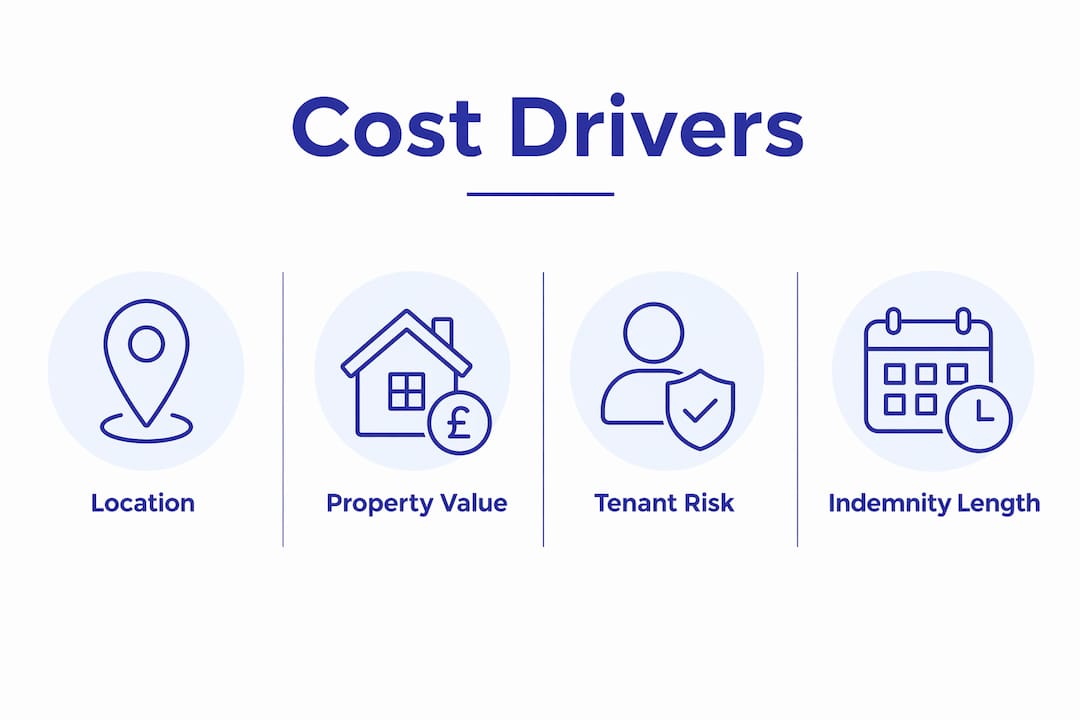
Indemnity period length has a direct and material effect on premium. Moving from a one-month to a three-month indemnity period can noticeably increase your annual cost, but it also protects you through the full South African eviction timeline, which routinely exceeds six weeks. Load shedding and power surges have added a further layer of underwriting scrutiny — some insurers require surge protection or specific clauses before they will cover electrical damage. If you hold multiple properties, a multi-property landlord policy can consolidate cover and reduce administrative friction at claim time.
Pro Tip: Installing a monitored alarm, surge protection, and a secure access system — and documenting all three — frequently reduces underwriting friction and can lower your premium. Insurers view these as evidence of active risk management.
How do you choose the right vacation rental insurance policy?
Prioritise policies that explicitly name short-term rental use as a covered activity and include rent guarantee or loss-of-rental cover as a core benefit, not an optional add-on. Use this checklist when comparing options:
- ✅ Declared use matches your actual letting activity (short-term, holiday, furnished)
- ✅ Indemnity period is long enough to cover a realistic eviction timeline
- ✅ Waiting period before default claims are eligible is clearly stated
- ✅ Malicious damage limit is sufficient for your furnishings and fittings
- ✅ Public liability limit covers guest injury adequately
- ✅ Contents cover is included if the property is let furnished
- ✅ Premium structure is transparent (flat fee or percentage of monthly rent)
For a side-by-side view of available options, the rental insurance comparison for landlords is a useful starting point. A specialist broker such as StappInsurance can advise whether to add a rental property extension to an existing policy or buy a dedicated hospitality policy.
Questions to ask your insurer or broker:
- Does the policy wording explicitly cover short-term or holiday letting?
- What is the waiting period before I can claim for rent default?
- What documents will you require if I need to make a claim?
- Is tenant screening a condition of cover?
- What is the cooling-off period after binding cover?
Practical steps to reduce tenant non-payment risk alongside insurance
Insurance is a backstop. Reducing the frequency of claims protects your premium and your relationship with your insurer.
- ✅ Screen tenants rigorously — credit checks, income verification, and references
- ✅ Collect a security deposit linked to a documented condition report
- ✅ Include a clear early-termination clause with a defined fee in your lease
- ✅ Conduct routine inspections and keep written records
- ✅ Use automated rent collection to create a clear payment ledger
- ✅ Prepare a furnished-rental inventory before each tenancy
For short-term lets, consider using a professional property manager. Their documented processes — check-in reports, guest ID verification, platform reviews — give underwriters confidence and reduce the likelihood of a disputed claim. Practical risk reduction strategies are worth reviewing before you bind cover.
How does South African tenancy law affect your insurance claim?
Insurers expect landlords to follow the legal eviction process — failure to do so can jeopardise a claim, even where the non-payment is genuine and well-documented.
In South Africa, obtaining an eviction order requires a formal application to the Magistrate’s Court or High Court under the Prevention of Illegal Eviction from and Unlawful Occupation of Land Act (PIE Act). The process involves serving notice on the tenant, a court hearing, and a sheriff executing the order. Each step generates documentation that insurers use to verify the timeline and legitimacy of the claim. Where the indemnity period is short, delays in the legal process can mean the cover expires before the property is vacant.
Consult a property attorney for complicated evictions or where the claim timeline depends on the legal process moving quickly. For guidance on the lease termination procedure in South Africa, specialist resources are available.
This article is general information, not legal or financial advice. Confirm current rules with a qualified professional for your specific situation.
Step-by-step: how to get covered quickly
The quickest route is to gather key documents, confirm the cover features you need, and request a quote from a specialist in rental income protection.
- Gather your documents — signed lease(s), rent payment history, property photos, and your current policy schedule.
- Prepare screening and security records — tenant credit checks, deposit receipts, alarm certificates.
- Request multiple quotes — use the policy checklist questions above when speaking to each insurer or broker.
- Review exclusions and indemnity period — do this with a broker or adviser before signing anything.
- Bind cover and store your policy wording — keep a digital and physical copy; note the claim notification deadline.
The single most useful document to attach to a quote request is your signed tenancy agreement. It confirms the rental amount, term, and use — the three things underwriters check first. Request a quote directly through Rentalincomeinsurance’s quote page to start the process today.
Binding cover online is fast, but always request the full policy wording in writing before paying your first premium. A verbal summary is not a contract.
Key takeaways
Standard home insurance does not cover vacation rental use in South Africa — specialist rental income protection is the only reliable way to safeguard your income against tenant non-payment, early lease termination, or absconding.
| Point | Details |
|---|---|
| Standard policies fail vacation rentals | Personal homeowner cover is typically voided when a property is used for short-term or holiday letting. |
| Indemnity period matters | Choose a period of at least two months to cover South Africa’s typical eviction timeline. |
| Evidence is everything | Insurers require a rent ledger, formal demand letters, and court or sheriff documentation before paying a claim. |
| Exclusions to check | Watch for waiting periods, unoccupied-period clauses, and reservation refund exclusions before binding cover. |
| Rentalincomeinsurance | Provides specialist rental income protection for South African landlords — request a quote before your next letting. |
Why landlords underestimate the cover gap
Most landlords who discover their standard policy does not cover vacation rental use find out at the worst possible moment: mid-claim. The assumption that “home insurance is home insurance” is understandable — the terminology is genuinely confusing, and many insurers do not proactively flag the gap when you renew. What strikes me most, having reviewed how these claims unfold, is that the denial is rarely about the event itself. The fire was real. The damage was real. The insurer simply had grounds to decline because the declared use was wrong from the start.
The lesson is not to distrust insurers. It is to be precise about what you tell them. Declare the use accurately, choose a policy written for that use, and keep the documentation that proves you followed the legal process. Those three habits resolve the vast majority of claim disputes before they start.
Rentalincomeinsurance: specialist cover for South African landlords
This is a promotional section. Rentalincomeinsurance specialises in rental income protection for South African landlords — covering tenant non-payment, early lease termination, and absconding, with dedicated claims support throughout the process.
What Rentalincomeinsurance offers:
- ✅ Rent guarantee cover for non-paying tenants
- ✅ Early lease termination protection
- ✅ Claims support and document review guidance
- ✅ Cover designed specifically for the South African rental market
If any section of this guide has raised questions about your current cover, the right next step is straightforward: request a quote and let a specialist review your situation. You can also visit Rentalincomeinsurance for a full overview of available products before you decide.
Authoritative South African sources to consult
These sources are worth reviewing for policy wording detail, eviction procedure, and industry guidance specific to South Africa.
- Indwe — Airbnbs, rentals and insurance: are you protected as a landlord? — industry commentary on how rental use affects personal cover
- Private Property — Landlord insurance: protect your rental investment — practical guide to landlord policy features and claim requirements
- Local Money — Landlord insurance: protecting your rental investments — overview of landlord-specific products including rent guarantee options
- MUA — Rental property cover vs alternative accommodation cover — explains the difference between policy extension types
- Incompass Insurance — Short-term rental / Airbnb — specialist broker guidance on hospitality and short-term rental policies
- iSure — Landlord house insurance vs house owners insurance — clarifies the structural distinction between policy types
- Rentalincomeinsurance — What is rental income insurance? — explains rent guarantee and related products in plain language
For complex evictions or where a claim depends on the legal process timeline, consult a qualified property attorney. Preserve all proof of arrears, formal notices, and court documents from the outset — not after the claim is lodged.
Watch our short guide for landlords:
Recommended
- Best landlord insurance for SA rentals: 2026 guide – Rental Income Insurance
- Vacation rental property insurance for SA landlords – Rental Income Insurance
- Insurance claim checklist: secure your SA rental income – Rental Income Insurance
- Best rental property insurance for SA landlords – Rental Income Insurance