
“Car rental protection” here means one thing: insurance that protects your rental income when tenants stop paying, break their lease early, abscond, or force you into eviction and legal costs. If you rely on rent to cover a bond, or your household income would take a real hit from two or three months of non‑payment, this cover is worth having. The next step is straightforward: request a quote or check your lease for eviction and legal‑cost clauses before anything goes wrong.
Key Takeaways
Rental income insurance protects landlords from tenant non‑payment, early termination, absconding and eviction costs, but payout limits and exclusions vary sharply by policy.
| Point | Details |
|---|---|
| Know your cover | Standard policies address non‑payment, early termination, absconding, and eviction or legal fees. |
| Match cover to exposure | Single‑property landlords reliant on rent for a bond need higher payout caps than diversified portfolios. |
| Check exclusions first | Wear and tear, undisclosed tenants, and inadequate screening are common reasons claims get rejected. |
| Keep meticulous records | Notices, rent statements, and correspondence logs speed up both evictions and insurer decisions. |
| Compare before you buy | Rentalincomeinsurance covers non‑payment, early termination, absconding and legal fees, with quotes available on request. |
Table of Contents
- What does car rental protection actually cover?
- Which landlords actually need this cover?
- What rental income insurance won’t pay for
- How does a rental income claim actually work?
- How do you choose the right policy?
- Build protection into your lease, not just your policy
- Should you get rental income insurance?
- Why this protection changes how landlords sleep at night
- How Rentalincomeinsurance protects your rent when things go wrong
- Sources
What does car rental protection actually cover?
Rental income insurance is built around the moments a tenancy goes wrong. Standard policies typically respond to five situations: tenant non‑payment, early lease termination, absconding, eviction and legal fees, and in some cases property damage where it’s specified in the policy.
Picture three common claims. A tenant stops paying rent in month four, you follow the notice process, and the policy pays out the missed months while the matter works through the courts. A tenant breaks the lease with two months left and disappears, leaving you without rent and without a deposit large enough to cover the gap, so the policy steps in for lost rental income. Or a tenant refuses to leave after a valid notice, forcing a Magistrate’s Court eviction, and the legal fees you’d otherwise carry alone are reimbursed.

Pro Tip: Providers often advertise cover worth around 2–3 months’ rent for early termination or a fixed eviction benefit. Treat these as illustrative figures only. The real number sits in the policy wording, so always confirm the payout cap before you sign.
For a fuller breakdown of how these benefits interact, the complete guide to rental income protection walks through sample clauses and typical structures.
Which landlords actually need this cover?
Not every landlord carries the same risk. Rental income insurance earns its premium fastest for:
- Individual landlords using rent to cover a bond or a significant slice of household income
- Owners with a single rental unit, where one non‑paying tenant means zero income rather than a dent in a wider portfolio
- Short‑term or high‑turnover lettings, where tenant vetting happens more often and the odds of a bad match rise
- Landlords letting to businesses or tenants with variable cashflow, where a good month can be followed by three bad ones
Portfolio landlords and body corporates weigh this differently. A ten‑unit portfolio can usually absorb one non‑paying tenant without a crisis, but a single‑property landlord cannot. Commercial leases also tend to carry longer notice periods and bigger arrears before anyone notices a problem, which raises the stakes on both sides.
Pro Tip: Match your cover limit to how exposed you actually are. A landlord with one bonded property should lean toward higher payout caps and shorter waiting periods than someone managing a diversified portfolio.
What rental income insurance won’t pay for
Every policy has edges, and knowing them before you claim saves you a rejected application later. Common exclusions include:
- Ordinary wear and tear on the property
- Deliberate damage caused by the landlord (yes, this is checked)
- Arrears that arise from unlawful occupation the landlord failed to act on promptly
- Tenants who were never disclosed to the insurer at policy start
- Fraud, misrepresentation, or false information on the original application
- Losses linked to inadequate tenant screening, where insurers can argue the risk was foreseeable
Beyond exclusions, watch for structural limits: waiting periods before cover activates, a maximum number of months payable per claim, and caps that apply per lease or per property rather than across your whole portfolio.
Pro Tip: Before buying, run every policy document past a short checklist: What’s the waiting period? What’s the maximum payout? Does the cap reset per property or per year? A policy that looks generous on the marketing page can read very differently in the schedule of benefits. The exclusions explained page is a useful starting point for comparing wording.
How does a rental income claim actually work?
Claims move in a fairly predictable sequence, and most delays come from missing paperwork rather than the insurer dragging its feet.
- Notice the missed payment and act immediately rather than waiting to see if the tenant catches up.
- Send a written notice of breach, as a well‑drafted lease should already specify the process for late payment.
- Allow the statutory remedy period, generally at least 20 business days, before escalating further.
- Lodge the claim with your insurer alongside supporting documents.
- If the tenant doesn’t remedy the breach, apply for an eviction order through the Magistrate’s Court, since self‑help eviction is not lawful and the sheriff must enforce any order.
- Continue supplying updates to your insurer as the legal process runs its course.
Insurers typically ask for the signed lease, rent statements, proof of bank deposits, copies of every written notice, a correspondence log, and any court filings or sheriff reports once eviction proceedings begin.
The timeline varies more than most landlords expect. The remedy period alone runs roughly three to four weeks, Magistrate’s Court scheduling can add several more, and legal costs are often payable upfront and only reimbursed once judgment is granted. Budget for that cashflow gap even with cover in place. For a fuller operational walkthrough, see handling unpaid rent step by step.
How do you choose the right policy?
Comparing policies on premium alone is how landlords end up under‑insured. Compare on the features that determine whether a claim actually pays out when you need it.
| Feature to check | Why it matters |
|---|---|
| Cover scope | Confirms whether non‑payment, early termination, absconding and eviction costs are all included, not just one or two |
| Waiting period | Determines how soon after buying the policy you can claim |
| Payout limit | Sets the maximum months’ rent or fixed sum you’ll actually receive |
| Eviction and legal fees | Clarifies whether legal costs are reimbursed upfront or only after judgment |
| Excess or co‑payment | Affects how much of each claim comes out of your own pocket |
| Optional extras | Covers property damage, deposit shortfalls, or portfolio‑wide limits |
Before signing, ask the insurer or broker directly: What exactly triggers cover, a missed payment or a formal notice? How is “eviction cost” defined, and does it include sheriff fees? How many months’ rent does the maximum payout represent? Does a tenant’s deposit reduce what you’re paid?
Watch for red flags too: vague promises of “pay on demand” with no described process, fuzzy definitions of tenant non‑payment, unusually short notice periods, a long exclusions list, or a claims process nobody can explain clearly over the phone. For deeper comparisons across products, the comparison guide to tenant default insurance is a useful reference point.
Build protection into your lease, not just your policy
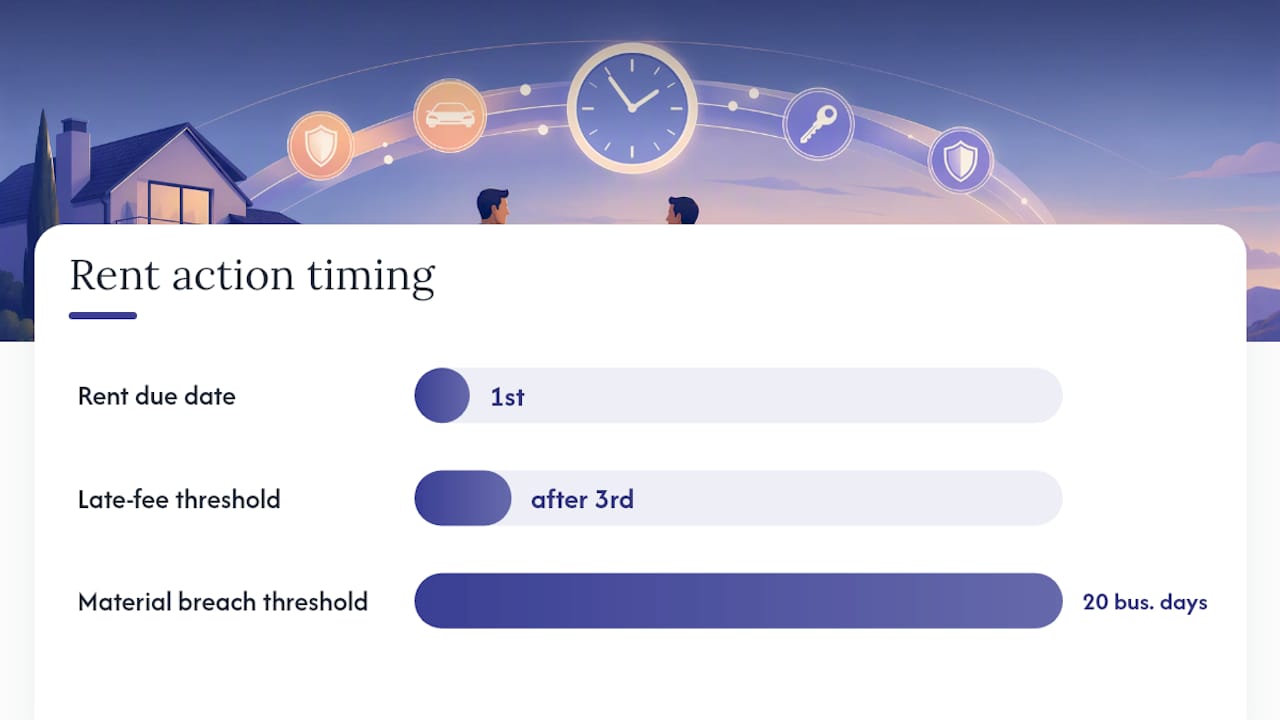
Insurance works best alongside a lease that does its job. A written lease that clearly states the rent due date, bank details, late payment consequences and eviction process strengthens both your legal position and any future claim. A simple clause to adapt: “Rent is due on the 1st of each month into [account details]. Payment received after the 3rd incurs a late fee of R[amount]. Non‑payment beyond 20 business days after written notice constitutes a material breach.”
Pair that clause with everyday habits:
- Screen every tenant with credit checks, reference calls and proof of income
- Keep a written lease for every tenancy, never a verbal agreement
- Log every notice, call and email in one place
- Automate rent reminders so late payment is caught on day one, not day twenty
- Complete a move‑in inventory and handle deposits formally
Pro Tip: Thorough documentation of missed payments and correspondence carries real weight in tribunals and courts, and insurers lean on exactly the same records when deciding a claim. The habits that win an eviction case are the same ones that get a payout approved faster.
Should you get rental income insurance?
If your rent covers a bond, or a single bad tenant would strain your finances, this cover is a sound decision rather than an optional extra. The value isn’t just the payout. It’s the certainty that eviction and legal costs won’t sit entirely on your shoulders while a court process runs its course. Before buying, request the full policy wording and compare how each insurer defines eviction costs and non‑payment. That single comparison matters more than the headline premium.
Why this protection changes how landlords sleep at night
Most landlords I’ve come across only think seriously about rental income insurance after their first bad tenant, not before. That’s the wrong order. The landlords who fare best treat this cover the way they treat the lease itself: a foundation, not an afterthought.
What stands out across the cases I’ve followed is how often claims succeed or fail on paperwork alone, not on the merits of the situation. A landlord with a messy notice history and no correspondence log struggles even with a legitimate claim. One with a clean record moves through the process far faster.
How Rentalincomeinsurance protects your rent when things go wrong
Rentalincomeinsurance is built specifically for the gap general landlord insurance leaves open: the months of rent you lose while a tenant dispute or eviction runs its course. Cover extends to tenant non‑payment, early lease termination, absconding, and the legal and eviction fees that follow, all under one policy rather than stitched together from separate products.

Claims support includes guidance on the documentation insurers actually need, so you’re not learning what a court filing or correspondence log should look like after a tenant has already stopped paying. If you’re ready to see what cover would look like for your property, request a tailored quote and compare it against your current lease’s eviction and legal‑cost clauses before your next tenancy begins.
Sources
For deeper detail on the legal process behind evictions and claims, Property24’s guide to handling a non‑paying tenant and Rawson’s guide to late or missed rent payments are both worth reading in full.
- How to handle a non‑paying tenant legally and effectively – Renting, Advice
- How to Handle Late or Missed Rent Payments Legally as a Landlord in South Africa
This article is general information, not a substitute for advice from a qualified financial advisor. Consult a qualified financial professional about your own circumstances before acting on anything here.
Recommended
- Non-payment protection: Safeguard your rental income – Rental Income Insurance
- What collision damage protection means for landlords, not renters – Rental Income Insurance
- Car rental damage protection: your 2026 guide – Rental Income Insurance
- Premium rental income protection: what landlords must ask – Rental Income Insurance