
A lease-to-own agreement lets you rent a home now and secure the right (or sometimes the obligation) to buy it later. The deal usually hinges on a few precisely written terms: an option fee, rent credits and the conveyancing process that finally transfers the title into your name. Used well, it can help someone who cannot yet qualify for a mortgage work towards ownership, but the legal and financial risks are real if the contract is loose.
TL;DR:
- Lease-to-own agreements typically last between 12 and 36 months, during which the purchase price remains fixed to protect both parties from market fluctuations.
- An upfront option fee of 1% to 3% of the purchase price is common, but its treatment and whether it credits toward the final sale vary depending on contract wording.
- Clear documentation of rent credits, maintenance responsibilities, and supporting annexures are critical to enforceability and protecting your interests.
- Default risks include tenants losing accumulated credits or landlords facing costly evictions, emphasizing the importance of thorough record-keeping and legal clarity.
- Laws governing these agreements involve the Alienation of Land Act, Rental Housing Act, and Consumer Protection Act, with conveyancer involvement essential for enforceability.
Table of Contents
- How lease-to-own agreements are structured
- Key terms, clauses and documents to look for
- Money matters: fees, credits and conveyancing costs
- Main risks to tenants and landlords
- How the law treats rent-to-own agreements
- Negotiating the deal: a contract checklist
- Protecting rental income during a lease-to-own arrangement
- A professional view on when lease-to-own makes sense
- A brief note on landlord protection options
- FAQ
- Sources
How lease-to-own agreements are structured
A lease-to-own deal is not one document. It is usually three agreements working together, and each one does a different job. The first is an option to purchase, which gives the tenant the right, but not always the obligation, to buy the property at an agreed price within a set window. The second is a standard lease agreement, covering rent, maintenance and occupation. The third is a sales agreement, which only comes into effect once the option is exercised.
Terms commonly run for 12 to 36 months, giving the tenant time to save, repair their credit record or qualify for a bond. The purchase price is typically fixed at the outset, which protects the buyer if property values rise but can work against the seller in a falling market, and vice versa.
Money moves in two main ways during the lease period:
- An option fee is paid upfront, often non-refundable, which secures the right to buy later.
- Monthly rent may include a portion treated as a rent credit, set aside against the eventual purchase price.
If the tenant decides to exercise the option, the sales agreement activates and the process starts to look like a normal property transaction: a sales pack is prepared, a conveyancer is appointed, and transfer costs, rates clearance and bond registration (if applicable) are settled before the title deed changes hands. According to Property24’s overview of rent-to-own structures, this three-agreement model is the standard shape of the transaction in the local property market. Our guide to what a lease agreement covers explains the occupation side of this arrangement in more detail.
Key terms, clauses and documents to look for
The paperwork decides whether a lease-to-own deal protects you or exposes you. Before signing anything, check for these elements.
- Option to purchase versus instalment sale. An option gives the tenant a choice to buy; an instalment sale or lease-purchase arrangement can create a binding obligation, which changes the legal remedies available if things go wrong.
- Option fee treatment. The contract should state the exact amount, whether it is refundable, and whether it counts towards the purchase price if the option is exercised.
- Rent-credit mechanics. Look for a clear formula for how much of each rent payment becomes a credit, how it is recorded, and what happens to accumulated credits if the deal falls through.
- Supporting annexures. A thorough agreement attaches a title deed extract, a current rates and municipal account statement, and ideally a bond settlement letter if the property is still mortgaged.
Our lease agreement checklist and rental agreement checklist for 2026 both set out the kind of evidencing and record-keeping that makes these clauses enforceable rather than theoretical.
Money matters: fees, credits and conveyancing costs
The figures in a lease-to-own deal deserve more scrutiny than the marketing language around it. Most sellers charge an option fee rather than nothing upfront, and most buyers assume their rent is doing more work than it actually is.
Typical option fees sit at 1% to 3% of the purchase price, a figure that may or may not be credited against the final price depending on the contract’s wording. That range matters because a seller who charges more without crediting it against the sale is effectively charging rent for the option itself.
Beyond the option fee, expect these costs:
- Rent credits, if offered, reduce the amount still owed at transfer, but only when the calculation method is written into the contract rather than left to goodwill.
- Conveyancing, transfer duty (where applicable) and Deeds Office registration fees fall due once the option is exercised, in addition to any outstanding bond settlement.
- A fixed purchase price agreed years in advance can work against either party if market values move significantly before the option is exercised.
Buyers should ask for a written schedule of every option fee and credited rent payment, supported by receipts, rather than relying on verbal assurances about what has been paid towards the price.
Main risks to tenants and landlords
Lease-to-own deals fail for predictable reasons, and most of them trace back to vague contract language rather than bad intentions.
Tenants risk losing money they have already paid. If they default, or simply cannot secure mortgage finance by the end of the term, they may forfeit accumulated rent credits and the original option fee. Practical reporting on rent-to-buy arrangements notes this as one of the most common sources of tenant loss, alongside disputes over who is responsible for maintenance during the lease period.
Landlords carry a different set of risks. A defaulting tenant can trigger a slow and costly eviction process, and if the market rises while the purchase price is locked in, the landlord loses the upside they would otherwise have captured on a normal sale.
Common contract triggers for termination include missed rent, failure to maintain the property to an agreed standard, or failure to exercise the option within the stated window. Enforcement typically depends on:
- Clear written receipts for every payment made, so there is no dispute over what has actually been paid or credited.
- An independent inspection report at the start of the lease, used as the baseline for any later maintenance dispute.
- A defined cure period before termination, giving the tenant a fair chance to remedy a missed payment.
Pro Tip: Keep every receipt, inspection report and signed amendment in one file from day one. It is the single cheapest form of protection either party has.
Our guide on minimising rental risk covers these early-warning signs in more depth for landlords weighing up a lease-to-own tenant.
How the law treats rent-to-own agreements
There is no single statute built specifically for lease-to-own transactions. Instead, the arrangement sits across several pieces of legislation, and which one applies most heavily depends on exactly how the contract is drafted. According to coverage of the realities of rent-to-buy, the model is governed by a mix of the Alienation of Land Act, the Rental Housing Act and the Consumer Protection Act, which is exactly why professionally drafted contracts and conveyancer involvement matter so much.
- The Alienation of Land Act governs the sale side once the option is exercised and sets formal requirements for agreements involving land.
- The Rental Housing Act applies to the lease period itself, covering deposits, maintenance obligations and dispute resolution between landlord and tenant.
- The Consumer Protection Act can apply where the landlord is acting in the course of business, affecting disclosure obligations and unfair contract terms.
A further question is whether the National Credit Act gets triggered. Recent appellate guidance is instructive here:
Sale-and-leaseback transactions with an option to repurchase are not automatically credit agreements under the National Credit Act if the parties genuinely intended a sale and leaseback, with courts examining the parties’ real underlying intention. Supreme Court of Appeal judgment on sale-and-leaseback structures
In practice, this means a well-drafted, transparent lease-to-own agreement is less likely to be reclassified as a credit agreement than a loosely worded one that looks like a disguised loan.
There is also a subsidy dimension worth knowing about. FLISP implementation guidelines for non-mortgage products confirm that instalment sales and rent-to-own arrangements can qualify for a housing subsidy, but only where the agreement is formally registered in the Deeds Office and ownership is still held by the landlord, employer or bank at the point of application. Missing that registration step can disqualify an otherwise eligible applicant. Transfer, once the option is exercised, still has to go through standard Deeds Office formalities, which is why a conveyancer’s involvement is not optional in any agreement worth signing. Our guide to landlord legal requirements sets out the broader compliance picture for anyone offering this kind of arrangement.

Negotiating the deal: a contract checklist
Before signing anything, both sides benefit from fixing the following in writing rather than leaving them to assumption.
- Agree the purchase price mechanism upfront: a fixed figure, or a formula tied to a future valuation.
- Set out exactly when and how the option fee is refundable, and whether it offsets the purchase price.
- Write down the rent-credit calculation in full, including what happens to credits if the option lapses.
- Allocate maintenance responsibilities clearly between landlord and tenant for the duration of the lease.
- Define default triggers and a fair cure period before either party can terminate.
- Request a title deed copy, a rates clearance certificate, confirmation of any existing bond, and a recent inspection report before signing.
A conveyancer should review the sales-side terms, and a landlord taking on this structure should also speak to an insurance advisor about income protection during the lease period. The real estate paperwork audit from The Branded Agency offers a useful independent check on title and registration documents before either party commits.
Protecting rental income during a lease-to-own arrangement
A lease-to-own tenant is still a tenant for the duration of the lease, which means all the usual risks of non-payment, early termination or a drawn-out eviction still apply to the landlord. Rental income insurance and eviction insurance are built for exactly this gap, covering unpaid rent, absconding tenants and the legal costs of an eviction process if the arrangement breaks down before the option is exercised.
- Rental income cover addresses lost rent if a lease-to-own tenant stops paying before exercising their option.
- Eviction-related cover helps absorb the legal costs of a slow eviction process if the tenant defaults and refuses to vacate.
- Clear contractual terms (cure periods, documented rent credits) work alongside insurance, not instead of it, to reduce overall exposure.
- Regular, dated inspection reports give both insurer and landlord a factual record if a dispute over property condition arises later.
None of this replaces a properly drafted contract or a conveyancer’s sign-off; it simply reduces the financial impact if the lease side of the arrangement goes wrong.
A professional view on when lease-to-own makes sense
Lease-to-own tends to suit people who are close to qualifying for a mortgage and need time, not a workaround, such as someone repairing their credit record or building a deposit. It suits buyers less well when the only reason they are considering it is that no lender will approve them at all, because that same problem will still be there at the end of the lease term. Get independent legal and financial advice before signing anything.
— Coert
A brief note on landlord protection options
If you are the landlord in a lease-to-own arrangement, the tenant’s monthly rent is still your income, and it is still exposed to the same risks as any other tenancy: non-payment, early termination or a tenant who simply stops paying and refuses to leave. A well-drafted contract reduces that risk; it does not remove it.

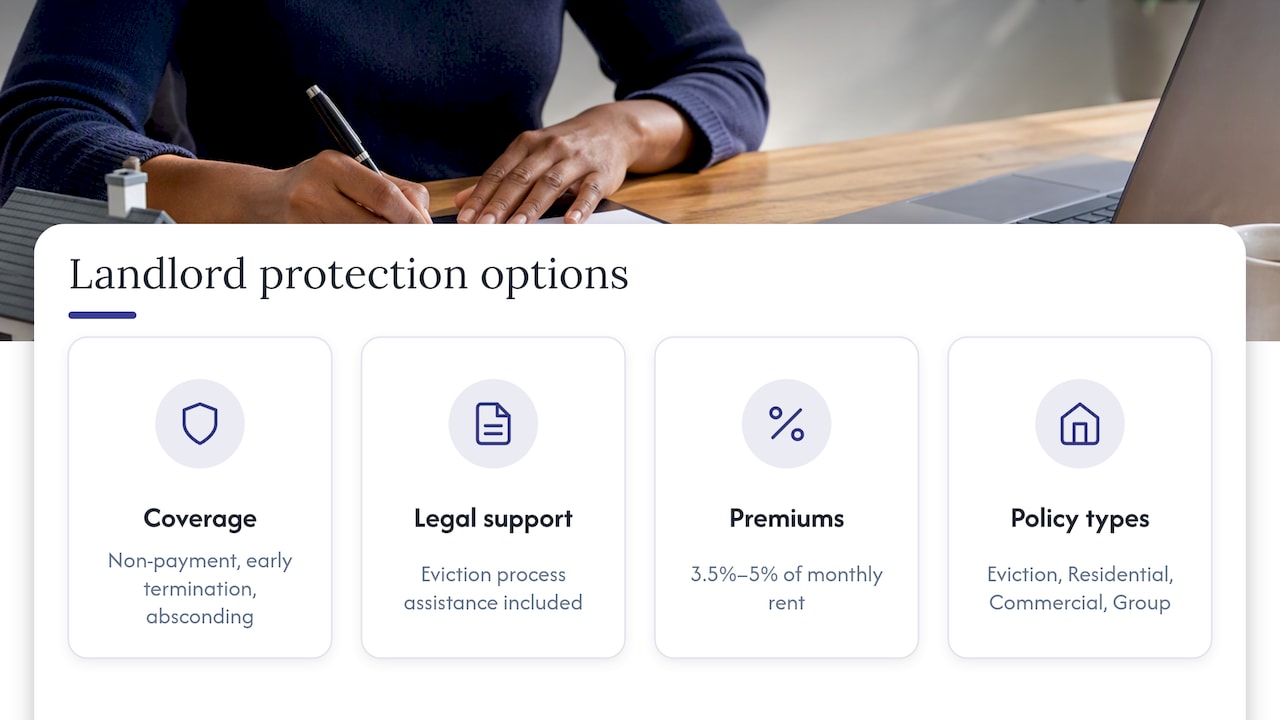
Rental Income Insurance offers cover built around exactly this gap, including protection against tenant non-payment, early lease termination and absconding, with legal support for the eviction process where it becomes necessary. It sits alongside your lease-to-own contract rather than replacing it: the contract sets out the rights and remedies, the policy covers the income you stand to lose while those remedies are being worked through. Premiums are priced at 3.5% to 5% of monthly rental income, with Eviction Insurance, Residential Rental Insurance, Commercial Rental Insurance and Group Rental Insurance also available depending on the type of property and tenant involved. If you are weighing up a lease-to-own tenant and want to know what cover would cost for your property, request a quote and get a straight answer before you sign anything.
This article is general information, not a substitute for advice from a qualified lawyer. Consult a qualified legal professional about your own circumstances before acting on anything here.
FAQ
What are the disadvantages of renting to own?
The main disadvantage for tenants is the risk of forfeiting the option fee and any accumulated rent credits if they default or fail to secure mortgage finance by the end of the term. Landlords face the risk of a defaulting tenant, a slow eviction process, and missing out on market gains if property values rise while the purchase price is fixed.
What is the difference between lease and lease to own?
A standard lease gives the tenant the right to occupy the property for a set period with no path to ownership. A lease-to-own agreement adds an option to purchase on top of the lease, giving the tenant the right to buy the property at an agreed price within the term, backed by a separate sales agreement that only activates once that option is exercised.
What happens if you rent-to-own and later default?
If a tenant defaults on a lease-to-own agreement, the contract usually sets out a cure period to remedy the missed payment before termination can proceed. If the default is not cured, the tenant typically forfeits the option fee and any rent credits accumulated, and the property reverts fully to the landlord.
Is lease-to-own a recognised arrangement under South African law?
There is no single law written specifically for lease-to-own; it is governed by a mix of the Alienation of Land Act, the Rental Housing Act and the Consumer Protection Act, and courts assess whether the arrangement is genuinely a sale and leaseback rather than a disguised credit agreement. Professionally drafted contracts and conveyancer involvement are strongly advised to keep the arrangement enforceable.
How long do lease-to-own agreements typically last?
Lease-to-own terms commonly run for 12 to 36 months, giving the tenant time to improve their credit profile or save towards a deposit before deciding whether to exercise the purchase option.
Sources
- Windfalls, pitfalls of rent-to-own – Market News
- FLISP implementation guidelines for non-mortgage products
- Supreme Court of Appeal judgment on sale-and-leaseback and simulated agreements