
Free excess cover is a policy or built-in benefit that pays your car insurance or rental excess for you, so you don’t have to cover that cost out of your own pocket when you claim. It applies in two main settings: private car insurance, where the excess is set by your policy, and car hire, where it’s set by the rental agreement. Either way, the goal is the same: keep cash in your account after an accident or theft.
TL;DR:
- Excess reimbursement policies typically cover claims up to R70,000, offering broader protection than counter waivers but often exclude tyres, windscreens, and towing costs.
- Buying excess cover is most beneficial when your liability exceeds your cash buffer, especially if you rent frequently or drive in high-risk areas.
- To maximize reimbursement, purchase the policy before collecting the vehicle, ensure documentation matches rental details, and file claims promptly with complete evidence.
- Insurers may deduct administrative, towing, and legal fees from recoveries, meaning claimants often receive only a partial refund of their paid excess.
- The FAIS Ombud highlights that high voluntary excess can significantly reduce claims payouts, making policy disclosures and your financial situation key factors in choosing coverage.
Table of Contents
- Defining the key terms: compulsory, voluntary and waiver cover
- How it works in practice: private insurance versus car hire
- What free excess cover usually includes, and where it falls short
- Is free excess cover worth it? Simple rules to decide
- Practical checklist: when to buy and how to claim
- Regulatory and recovery realities: what the Ombud and case outcomes show
- Three rules of thumb before you book or claim
- FAQ
- Sources
- Protecting your rental income alongside your vehicle
Defining the key terms: compulsory, voluntary and waiver cover
Before comparing policies or counter offers, it helps to know the vocabulary insurers and rental companies use, because the same idea often hides behind different names.
- Compulsory excess: the fixed amount your insurer sets for your policy, based on your risk profile, which you can’t negotiate away.
- Voluntary excess: an extra amount you agree to pay on top of the compulsory excess, usually in exchange for a lower premium.
- Excess waiver: a rental company add-on that reduces or removes your liability for the vehicle’s excess if it’s damaged or stolen.
- Excess reimbursement (or “free excess cover”): a standalone insurance policy that reimburses the excess you’ve already paid, rather than waiving it upfront.
Rental companies tend to market their own version as a “waiver” or “protection product,” while independent insurers sell “excess insurance” or “excess reimbursement” policies that work separately from the rental agreement. The difference between voluntary and compulsory excess matters because a high voluntary excess lowers your premium today but increases what you owe at claim time.
How it works in practice: private insurance versus car hire
The mechanics differ depending on which side of the transaction you’re on, and the order in which money changes hands catches a lot of people out.
- With private car insurance, you typically pay your excess directly to the repairer or your insurer when a claim is approved, and the insurer settles the rest of the repair cost.
- Your insurer may then pursue the at-fault third party for recovery, but that process happens between insurers and doesn’t automatically put your excess back in your pocket.
- With car hire, the rental company usually charges you the excess upfront, often by holding it against your card, if the vehicle is damaged or stolen during your hire period.
- You then submit a claim to an independent excess insurance provider, attaching your rental agreement, payment receipt and incident report, and the insurer reimburses you.
Reimbursement timing depends on how complete your paperwork is. Independent policies typically list reimbursable ceilings, with tiered limits commonly ranging from around R20,000 up to R70,000 depending on the plan you choose. That range gives a sense of how much protection different tiers actually buy.
What free excess cover usually includes, and where it falls short
A policy’s small print decides whether it protects you fully or leaves gaps precisely where you need help most.
- Excess reimbursement for the vehicle’s damage or theft excess, the core benefit of nearly every plan.
- Windscreen, tyre and towing costs, which independent policies often include but counter waivers frequently exclude.
- Administration fees charged by the rental company for processing a damage claim.
- Occasionally, baggage or personal effects cover, though this varies significantly by plan.
Independent car hire excess policies can cover liabilities up to R70,000, well above what most counter waivers offer, which is why comparing the two is worth the extra five minutes at booking.
Common exclusions include mechanical failure, deliberate or reckless damage, off-road driving, unauthorised drivers not named on the rental agreement, and any breach of the rental company’s terms. Plans are often tiered, for example Budget, Standard and Premier, and the tier you pick changes both your reimbursement ceiling and which extras are included.
Is free excess cover worth it? Simple rules to decide
The maths is straightforward once you know your own numbers: compare the premium for excess cover against the excess amount you’d actually be liable for, and weigh that against how much cash you can afford to have tied up after an incident.
- Buying usually makes sense when your compulsory or rental excess is high, you rent frequently, or you’re driving unfamiliar roads where incidents are more likely.
- It makes less sense if your excess is already low, you rarely drive a rental car, or your cash buffer can comfortably absorb the excess without strain.
- A cheap policy with narrow cover, for instance one that excludes tyres and windscreens, can end up costing you more in claim shortfalls than a slightly pricier plan with broader inclusions.
Pro Tip: Before comparing prices, write down your actual excess amount from the rental agreement or policy document. Cover that doesn’t exceed that figure isn’t doing its job.
Practical checklist: when to buy and how to claim
Getting the timing and paperwork right is most of what separates a smooth reimbursement from a rejected claim.
- Buy your excess cover before you collect the vehicle, since policies bought after an incident are almost always rejected.
- Confirm that the named driver on your cover matches exactly who’s listed on the rental agreement.
- Read the key information document or policy wording for cover limits, windscreen and tyre inclusions, towing costs and any named-driver restrictions.
- Keep every piece of documentation: photos of the damage, a police report for theft, your rental agreement, and payment receipts for the excess you paid.
- Submit your claim promptly, following the insurer’s stated steps, since most set a window for notification after the incident.
Our guide to documenting rental damage walks through what good evidence looks like if you want a closer look at this stage specifically.
Regulatory and recovery realities: what the Ombud and case outcomes show
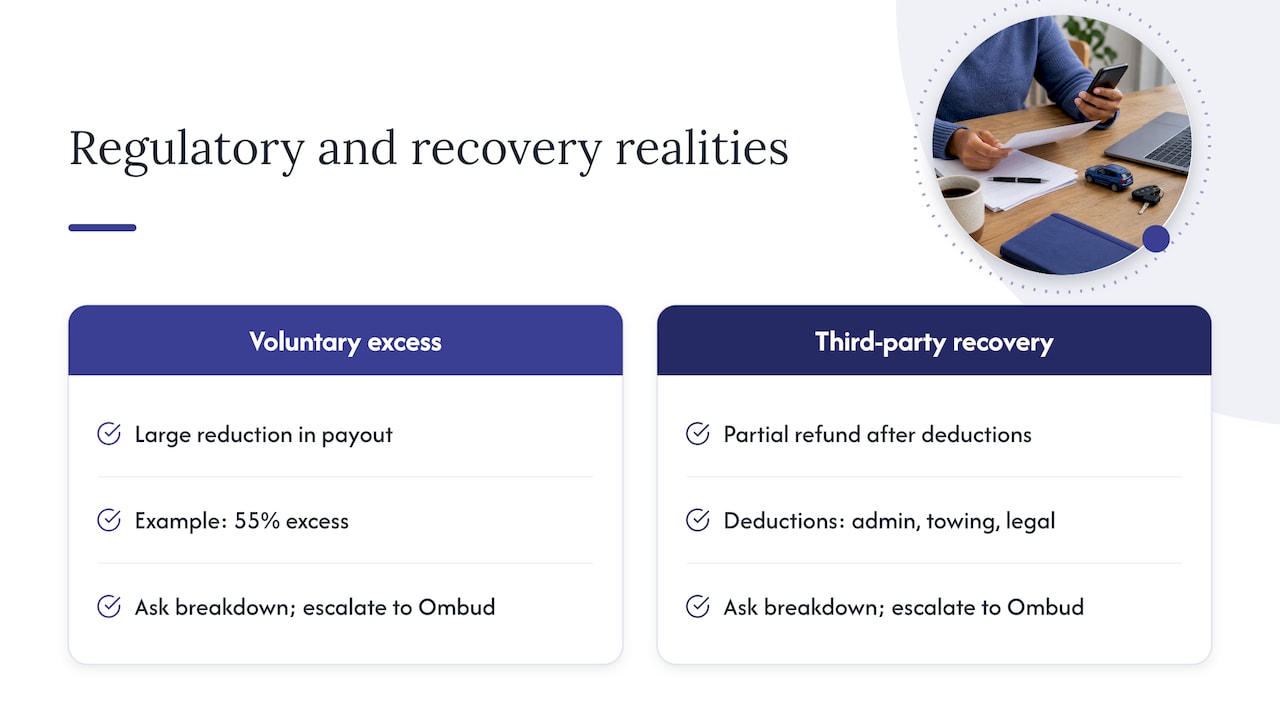
Insurers have a duty to explain excess structures clearly under short-term insurance rules, and the FAIS Ombud has highlighted cases where a high voluntary excess, in one instance 55%, materially reduced what a policyholder received on a claim. That’s a reminder that a lower premium today can mean a much smaller payout later.
Recovery from a third party doesn’t guarantee a full refund either. Case analysis from Moonstone shows that even when an insurer successfully recovers costs, administrative, towing and legal deductions can leave the policyholder with only a pro-rata share of their excess back.
Recovery proceeds are often reduced by the insurer’s administrative, towing and legal costs, so the policyholder may receive only a partial refund rather than the full excess.
If your insurer’s deductions seem excessive, you’re entitled to ask for a written breakdown and to escalate to the Ombud if disclosure was inadequate.
Three rules of thumb before you book or claim
Keep it simple: buy excess cover if your liability is high and you rent often, always check whether windscreens and tyres are excluded before you rely on a counter waiver, and purchase cover before you collect the keys, never after.
If an insurer’s explanation of your excess felt thin or confusing, that’s worth raising with the Ombud rather than letting it slide.
— Coert
This article is general information, not a substitute for advice from a qualified financial advisor. Consult a qualified financial professional about your own circumstances before acting on anything here.
FAQ
Can I claim my insurance excess back?
Sometimes, but not automatically. If your insurer recovers costs from a third party, deductions for admin, towing and legal fees often mean you get back only a portion of what you paid, not the full amount.
How does excess cover work?
Excess cover reimburses the amount you’re contractually liable to pay after a claim, whether that’s your private policy’s compulsory excess or a rental company’s damage excess. You typically pay the excess first, then submit your claim with receipts and agreements to the insurer for reimbursement.
Is it better to have high or low excess?
A higher voluntary excess usually lowers your premium but increases what you owe if you claim, which the FAIS Ombud has flagged as a decision that needs clear disclosure. Choose based on your cash buffer, not just the premium saving.
Can I refuse to pay excess?
No. Your excess is a contractual obligation under your insurance or rental agreement, and refusing to pay it can block your claim or breach the agreement entirely. Separate excess insurance exists precisely so you can meet that obligation without the cost falling on you permanently.
Sources
- Car Hire Excess Insurance South Africa | Hepstar
- Excess recovery and the client – Moonstone Information Refinery
- Understanding voluntary excess in vehicle insurance: a recent case – FAIS Ombud
For a closer look at how excess insurance mechanics apply in other contexts, see our excess insurance policy guide. You can also watch this related video:
Protecting your rental income alongside your vehicle
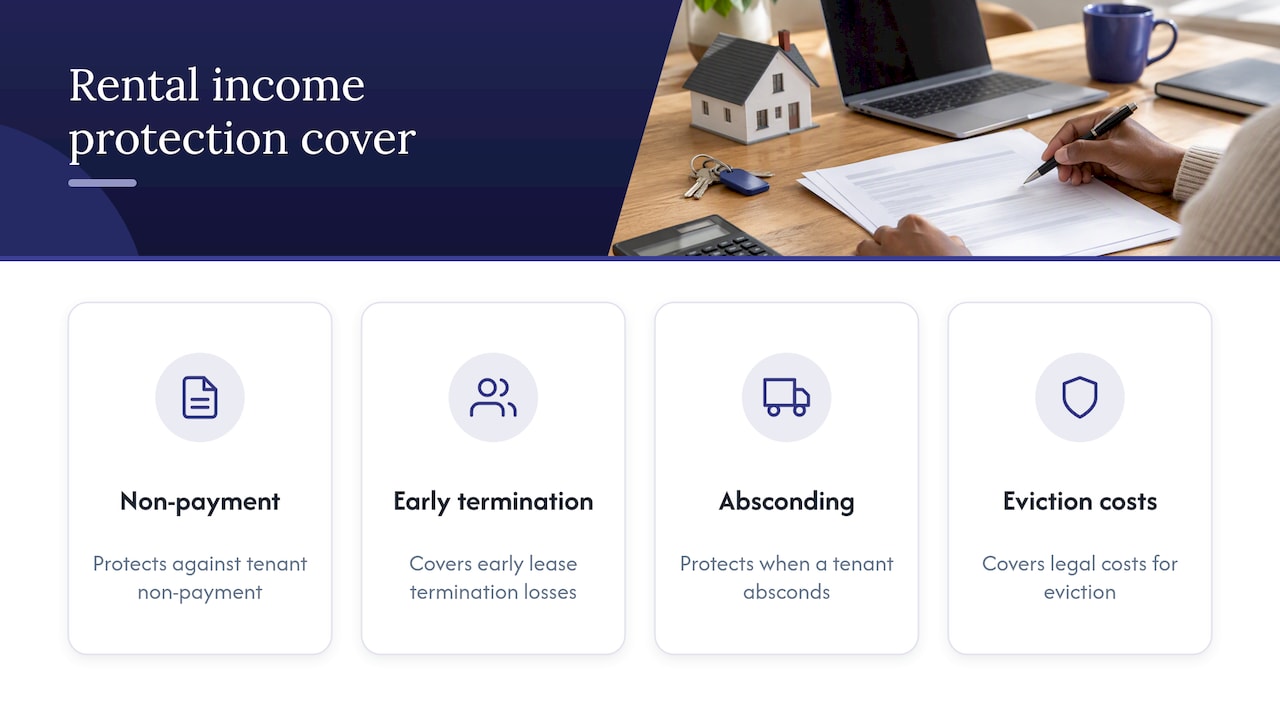
Understanding excess cover for your car is one way to avoid an unexpected bill landing on you at the worst moment, and the same logic applies to the income you rely on from a rental property. We built our cover around that same principle: you shouldn’t carry the full financial shock of someone else’s non-payment, early termination or sudden eviction process on your own.
We offer rental income protection covering tenant non-payment, early lease termination, absconding, and legal costs related to eviction for various property types, with pricing details available on our website. Coverage begins promptly, and we provide assistance to help you select an insurance plan that suits your needs among available options.
If you’re ready to see what that protection costs for your specific property, request a quote and we’ll talk you through the options that fit.