
Rental income loss is one of the most stressful financial blows a South African landlord can face. One month of missed rent can spiral into legal disputes, property damage, and months of vacancy before you recover. The good news is that most rental losses are preventable with the right systems in place. A structured, practical checklist gives you a clear process to follow before, during, and after every tenancy. This article walks you through exactly what to check, what to prepare, and how to protect your rental income from the risks that catch too many landlords off guard.
Table of Contents
- Understanding the risks of rental loss
- Checklist prerequisites: What you need before you start
- Step-by-step checklist for minimising rental loss
- Common mistakes South African landlords make
- How to verify protection and adjust your process
- A landlord’s stance: Why a checklist is your best defence in South Africa
- Secure your rental income with comprehensive insurance
- Frequently asked questions
Key Takeaways
| Point | Details |
|---|---|
| Rental loss risks | Non-payment and legal pitfalls are the main threats to landlord income in South Africa. |
| Checklist essentials | Preparation, tenant vetting, and written processes form the backbone of rental loss prevention. |
| Insurance role | Even well-prepared landlords should include rental income insurance as a safety net. |
| Process verification | Regular review of your checklist ensures you stay up-to-date with changing laws and tenant risks. |
Understanding the risks of rental loss
Before you can protect your income, you need to know what threatens it. Rental loss does not happen randomly. It follows predictable patterns, and most of them are avoidable once you know what to look for.
The South African rental market carries specific pressures that landlords elsewhere may not face. Economic instability, high unemployment, and rising living costs mean that tenants can go from reliable to struggling very quickly. Add in a legal system that can make evictions slow and expensive, and the risks compound fast.
Tenant non-payment is the leading cause of rental income loss in South Africa, but it is far from the only one. Here are the most common drivers:
- Tenant non-payment or late payment of rent
- Early lease termination without proper notice or penalty
- Property damage beyond normal wear and tear
- Absconding tenants who disappear without settling arrears
- Legal disputes that delay re-letting the property
- Extended vacancies caused by poor tenant screening
To put this in perspective, consider the key risk categories South African landlords face:
| Risk category | Likelihood | Financial impact |
|---|---|---|
| Tenant non-payment | High | Severe |
| Early termination | Medium | Moderate to severe |
| Property damage | Medium | Moderate |
| Vacancy periods | High | Moderate |
| Legal disputes | Low to medium | Severe |
The most dangerous assumption a landlord can make is that a good-looking applicant equals a reliable tenant. Appearances and first impressions are not a substitute for a proper screening process. Reviewing your rental property risks before each new letting is the first step toward protecting what you have built.

Using a rental income protection checklist from the outset gives you a repeatable framework that removes guesswork and replaces it with process.
Checklist prerequisites: What you need before you start
A checklist is only as useful as the preparation behind it. Before you can apply any loss-prevention process, you need the right documents, tools, and contacts in place. Skipping this step is like trying to fix a leaking pipe without the right tools. You will waste time and still end up with a mess.
Having the right documents and processes before letting a property significantly improves loss prevention outcomes. Here is what every landlord should have ready:
Essential documents:
- A legally compliant, written lease agreement
- Tenant screening report template (credit, employment, references)
- Property inspection template (ingoing and outgoing)
- Proof of insurance and policy details
- Copies of all compliance certificates (electrical, gas, beetle where applicable)
Tools and systems:
- A digital or physical filing system for tenant records
- Payment tracking software or a simple spreadsheet
- A calendar with reminders for inspections and lease renewals
- A rental income security checklist specific to your property type
Key contacts to have on hand:
- A reliable plumber, electrician, and general maintenance contractor
- A property attorney or paralegal familiar with the Rental Housing Act
- Your insurance broker or provider
| Prerequisite | Why it matters |
|---|---|
| Written lease | Legal enforceability and clarity |
| Tenant screening report | Reduces risk of non-payment |
| Inspection template | Documents property condition |
| Insurance policy | Covers gaps no checklist can fill |
Pro Tip: Set up automated reminders on your phone or calendar for quarterly inspections, annual insurance reviews, and lease renewal dates. Prevention is far cheaper than the cure.
Step-by-step checklist for minimising rental loss
With your prerequisites in order, you are ready to apply a structured process to every new letting. Following a methodical checklist greatly improves loss prevention success. Here is a practical, numbered checklist to guide you:
- Screen every tenant thoroughly. Run a credit check, verify employment income, and contact at least two previous landlords. Do not skip this step, even for referrals.
- Sign a written lease agreement. Verbal agreements are not worth the risk. Your lease must include rental amount, payment date, deposit terms, maintenance responsibilities, and early termination clauses.
- Collect a deposit upfront. A deposit equal to one or two months’ rent is standard. Hold it in a separate account as required by the Rental Housing Act.
- Conduct a detailed ingoing inspection. Document the property’s condition with photos and a signed inspection report. Both parties must sign it.
- Set up a payment tracking system. Know immediately when rent is late. Early intervention prevents small arrears from becoming large ones.
- Schedule periodic inspections. Inspect the property every three to six months. This deters damage and lets you catch maintenance issues early.
- Review your protections for property income annually. Risks change, and your strategy should too.
- Take out appropriate insurance cover. Review your policy to confirm it covers non-payment, early termination, and absconding.
Pro Tip: Before selecting an insurance policy, compare deductibles, waiting periods, and what specific events are covered. A cheaper premium is not always the better deal if the cover is too narrow.
| Protection layer | What it covers | When to apply |
|---|---|---|
| Tenant screening | Non-payment risk | Before signing |
| Written lease | Legal disputes | Before occupation |
| Deposit | Property damage | Before occupation |
| Inspections | Ongoing damage | During tenancy |
| Insurance | Residual risk | Ongoing |
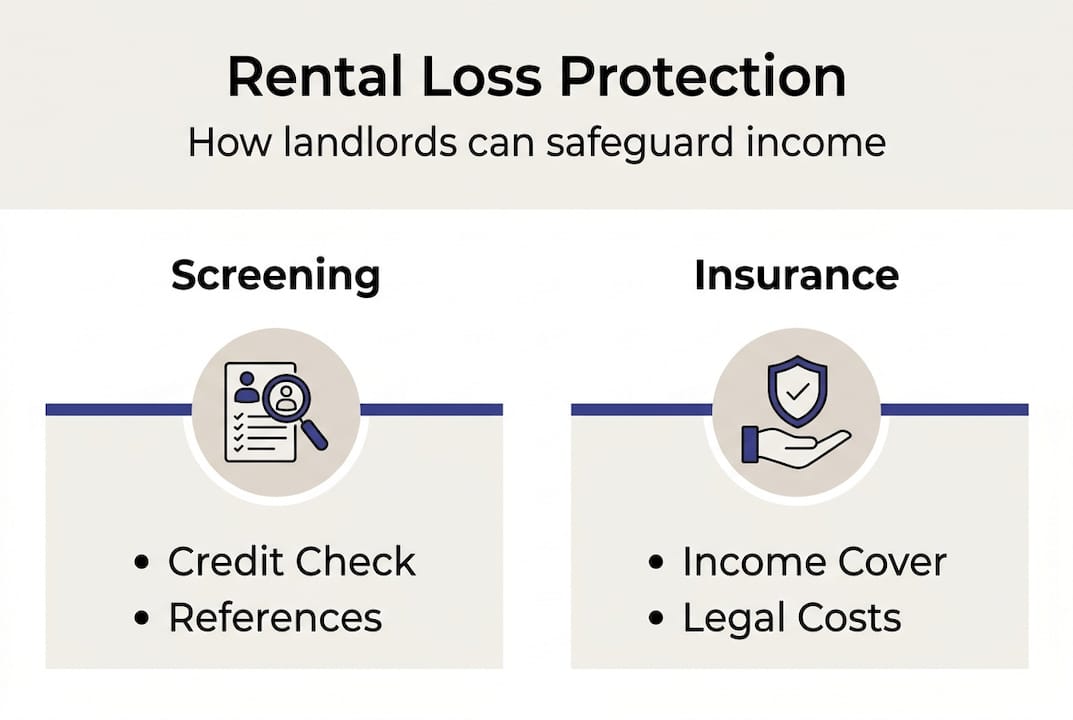
You can find a detailed breakdown of steps to safeguard rental income that complements this checklist and helps you cover every angle.
Common mistakes South African landlords make
Even experienced landlords fall into traps that cost them dearly. Knowing what these mistakes look like makes it far easier to avoid them.
Failing to check references and underestimating local legal requirements can lead to significant rental losses. The mistakes below are among the most common and the most costly:
- Skipping tenant screening because the applicant seems trustworthy or is in a hurry to move in
- Using verbal or informal agreements that cannot be enforced in a dispute
- Ignoring early warning signs such as late payments, excuses, or requests to delay rent
- Failing to conduct inspections and then being unable to prove damage at the end of a lease
- Not updating insurance cover after renovations, rent increases, or changes in tenancy
- Relying on goodwill instead of documented processes when issues arise
Regulatory penalties for rental process errors can be severe. Non-compliance with the Rental Housing Act, including improper deposit handling or unlawful eviction attempts, can result in fines and legal costs that far exceed the original rental loss.
Many landlords also make the mistake of treating their rental property as a passive investment that manages itself. It does not. Even a single property requires active oversight, especially in the South African market where economic conditions shift quickly.
Reviewing rental best practices regularly and learning how to protect rental income in the South African context gives you a real advantage over landlords who rely on luck.
How to verify protection and adjust your process
Once your checklist is in use, the work does not stop there. Ongoing review and adjustment of protection strategies ensures comprehensive cover as circumstances change.
Here is a final verification checklist to run through at least once a year:
- Confirm all lease agreements are current and reflect any changes in rent, occupants, or terms.
- Review your insurance policy to check that cover limits still match your rental income and property value.
- Audit your inspection records to ensure all visits are documented and signed.
- Check your emergency fund or contingency plan is still adequate for one to three months of lost income.
- Update your contractor contacts and confirm they are still available and competitively priced.
- Consult a property attorney if there have been any changes to the Rental Housing Act or local by-laws.
Beyond the annual review, keep an eye on these ongoing indicators:
- Tenant payment behaviour and any changes in pattern
- Property maintenance issues that could escalate
- Market rental rates to ensure your pricing remains competitive
- Changes in your own financial position that affect your risk tolerance
Good record-keeping is the backbone of this process. If you ever need to make an insurance claim or pursue a legal remedy, documented evidence is what makes the difference between a successful outcome and a frustrating dead end. Staying on top of your rental income loss workflow means you are never caught unprepared.
A landlord’s stance: Why a checklist is your best defence in South Africa
Most landlords we speak to admit they see checklists as extra admin. They already know their properties, they trust their instincts, and they have managed tenants before. That thinking is exactly what separates landlords who lose money from those who do not.
A checklist is not about doubting yourself. It is about removing the moments where fatigue, optimism, or time pressure causes you to skip a step that matters. In South Africa’s rental market, one skipped step can mean months of unpaid rent, a damaged property, or a costly legal battle.
The landlords who consistently protect their income are not necessarily the most experienced. They are the most systematic. They follow the same process every time, regardless of how straightforward a tenancy appears. That consistency is what catches problems early and keeps disputes from escalating.
Our rental income protection guide reflects what we have seen work repeatedly in the South African context. A checklist is not a bureaucratic exercise. It is your competitive edge in a market where the risks are real and the consequences of complacency are expensive.
Secure your rental income with comprehensive insurance
A thorough checklist reduces risk significantly, but it cannot eliminate it entirely. That is where insurance becomes the final, essential layer of protection for South African landlords.

Rental Income Insurance is designed specifically for landlords who want to protect their income against tenant non-payment, early lease termination, and absconding. Whether you manage one property or a growing portfolio, the right policy gives you the financial stability to handle the unexpected without panic. Request a quote today and find out how quickly you can put comprehensive cover in place. For a deeper look at your options, our rental income protection guide covers everything you need to make an informed decision.
Frequently asked questions
What is the most common cause of rental loss in South Africa?
Tenant non-payment is the leading cause of rental income loss for South African landlords, making proactive screening and insurance cover essential.
How can landlords screen tenants effectively?
Run a credit check, verify employment and income, and contact at least two previous landlords before signing any lease agreement to minimise the risk of non-payment.
Should insurance always be part of my rental loss checklist?
Yes. Insurance is an essential safety net that covers residual rental risks that even the most thorough preparation cannot fully prevent.
How often should I review my rental loss checklist?
Review your checklist and insurance cover at least once each year and whenever there are significant changes to your tenancy, property, or local regulations.
Recommended
- Essential Rental Income Protection Checklist for Landlords
- Essential Steps to Safeguard Rental Income Effectively – Rental Income Insurance
- How to Protect Rental Income: Secure Your Earnings Now – Rental Income Insurance
- Rental Income Security Checklist for Landlords
- roof maintenance checklist designed for Surrey property managers