
Nearly one in five landlords faces a major insurance claim each year, yet many still lack the right coverage for their properties. With property investment carrying unpredictable risks—think sudden water damage, liability claims, or lost rent—understanding how rental insurance works becomes more than a smart move. This guide demystifies the essentials of landlord insurance, helping you safeguard your assets and avoid costly surprises along the way.
Table of Contents
- What Is Rental Insurance for Landlords?
- Types of Rental Insurance Policies Explained
- Key Features and Inclusions Compared
- Costs, Exclusions, and Claim Processes
- Risks of Not Comparing Insurance Options
Key Takeaways
| Point | Details |
|---|---|
| Comprehensive Coverage | Rental insurance protects landlords against structural damage, liability claims, and loss of rental income, serving as a financial safety net. |
| Diverse Policy Types | Policies vary (DP-1, DP-2, DP-3) to suit different risk levels and property values, allowing for tailored protection. |
| Cost Factors | Insurance premiums depend on location, property type, coverage level, and risk assessments, requiring careful evaluation. |
| Importance of Comparison | Failing to compare insurance options can lead to inadequate coverage and financial vulnerability, making thorough evaluation essential. |
What Is Rental Insurance for Landlords?
Rental insurance is a critical financial protection mechanism designed specifically for property owners who rent out residential or commercial spaces. According to iii.org, landlord insurance is a policy crafted to shield property owners from potential financial losses associated with rental properties.
Rental insurance provides comprehensive coverage across multiple critical domains. As detailed by Alan Boswell, these policies typically include protection for:
- Building structure protection
- Liability coverage for property-related injuries
- Loss of rental income compensation
- Potential damages caused by tenants
- Unoccupied property protection
The fundamental purpose of rental insurance is risk mitigation. Property owners face numerous potential financial threats when leasing their assets, ranging from structural damage to liability claims and unexpected rental income disruptions. A well-structured rental insurance policy acts as a financial safety net, ensuring landlords can weather unexpected challenges without catastrophic financial consequences.
Unlike standard homeowner’s insurance, rental insurance is specifically tailored to the unique risks inherent in leasing property. Alan Boswell highlights that these policies can be customised to address specific concerns, offering flexible protection that adapts to individual property characteristics and tenant profiles. Whether you own a single residential unit or manage a diverse property portfolio, rental insurance provides a strategic financial safeguard against the unpredictable nature of property investment.
Types of Rental Insurance Policies Explained
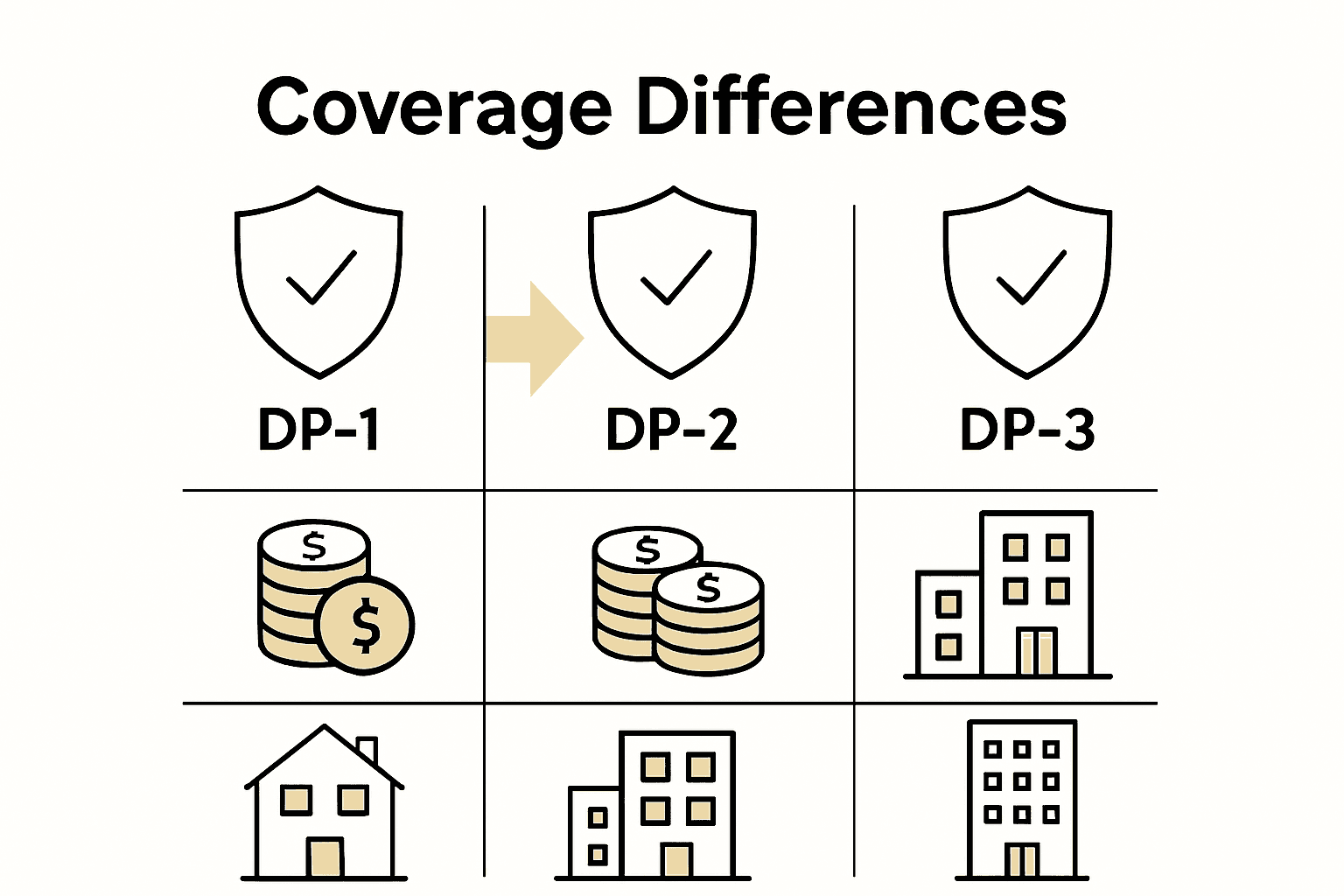
Rental insurance policies are not one-size-fits-all solutions. According to Gordon James Realty, these policies are categorically classified into three primary forms: DP-1, DP-2, and DP-3, each offering progressively comprehensive coverage for property owners.
Let’s break down these policy types:
Here’s a comparison of the main types of rental insurance policies for landlords:
| Policy Type | Coverage Scope | Typical Premium Cost | Suitable For |
|---|---|---|---|
| DP-1 | Named perils only | Lowest | Low-risk, basic lets |
| DP-2 | Named & additional perils | Moderate | Standard residential lets |
| DP-3 | All risks (except exclusions) | Highest | High-value, complex lets |
- DP-1 (Basic Coverage)
- Covers only specifically named perils
- Limited protection
- Lowest premium cost
- Suitable for minimal risk properties
- DP-2 (Broader Protection)
- Includes additional perils beyond DP-1
- More comprehensive coverage
- Moderate premium costs
- Recommended for standard residential rentals
- DP-3 (Comprehensive Coverage)
- Covers all perils except explicitly excluded risks
- Maximum protection for property owners
- Highest premium costs
- Ideal for complex or high-value rental properties
Alan Boswell further expands the landscape of rental insurance, highlighting specialised policies tailored to specific property types and usage scenarios. These include:
- Holiday home insurance
- Airbnb landlord insurance
- Serviced accommodation insurance
- Multi-property landlord insurance
- Private sector leasing insurance
- HMO (House in Multiple Occupation) landlord insurance
- Commercial landlord insurance
Choosing the right rental insurance policy requires careful consideration of your specific property characteristics, risk profile, and investment goals. While comprehensive coverage offers maximum protection, it’s crucial to balance thorough risk management with cost-effectiveness.
Consulting with insurance professionals can help you navigate these nuanced options and select a policy that provides optimal protection for your unique rental property portfolio.
Key Features and Inclusions Compared
Rental insurance policies offer a diverse range of features designed to protect property owners from various financial risks. Gordon James Realty highlights a critical feature that sets rental insurance apart: loss of rental income coverage. This protection ensures landlords maintain critical cash flow even when their property becomes temporarily uninhabitable due to covered damages.
Key features typically included in comprehensive rental insurance policies encompass:
-
Property Structure Protection
- Covers building damages
- Includes repairs from natural disasters
- Protects against structural deterioration
-
Liability Coverage
- Legal protection for tenant injuries
- Covers medical expenses
- Shields against potential lawsuits
-
Income Replacement
- Compensates for lost rental income
- Applies during property repair periods
- Helps maintain financial stability
-
Contents Insurance
- Protects landlord-owned furnishings
- Covers appliances and fixtures
- Provides replacement or repair costs
Moreover, rental insurance policies can be customised to address specific risks unique to different property types. For instance, a holiday rental might require different coverage compared to a long-term residential property. Landlords should carefully assess their individual property characteristics and potential risk exposures when selecting a policy.
While the specifics can vary, the fundamental goal remains consistent: providing financial protection and peace of mind for property owners navigating the complex landscape of rental investments. Thorough understanding and strategic selection of rental insurance features can significantly mitigate potential financial vulnerabilities, transforming an uncertain investment into a more secure and predictable revenue stream.
Costs, Exclusions, and Claim Processes
Understanding the financial and procedural landscape of rental insurance is crucial for property owners. Alan Boswell reveals that insurance premiums are not fixed but vary significantly based on multiple critical factors.
Factors Influencing Insurance Costs
- Property Location: Urban vs rural settings impact pricing
- Property Type: Residential, commercial, or mixed-use
- Coverage Level: Comprehensive vs basic protection
- Risk Assessment: Historical damage claims, neighbourhood crime rates
- Property Age and Condition: Newer properties often have lower premiums
Common Policy Exclusions
Rental insurance policies typically do not cover:
- Tenant’s Personal Belongings
- Intentional Damage by Tenants
- General Wear and Tear
- Extended Unoccupied Periods
- Specific Natural Disasters (depending on policy)
The claim process requires meticulous attention to detail. Gordon James Realty outlines a standard procedure that involves:
- Immediate Incident Reporting
- Comprehensive Damage Documentation
- Providing Photographic Evidence
- Submitting Detailed Repair Estimates
- Cooperating with Insurer’s Assessment Team
Successful claims management demands proactive documentation and swift communication. Property owners should maintain detailed records, understand their policy’s specific terms, and be prepared to provide comprehensive evidence during the claims process. This approach significantly increases the likelihood of a smooth, successful insurance claim resolution.

Risks of Not Comparing Insurance Options
Insurance comparison is far more than a mundane administrative task. Alan Boswell warns that failing to thoroughly evaluate insurance options can expose landlords to substantial financial vulnerabilities and unexpected risks.
Financial Exposure Risks
The potential consequences of inadequate insurance comparison include:
-
Insufficient Coverage
- Gaps in protection against specific perils
- Unexpected out-of-pocket expenses
- Limited liability protection
-
Unnecessary Overspending
- Paying premium rates for minimal protection
- Redundant coverage options
- Inefficient insurance investments
Specific Vulnerability Areas
Gordon James Realty highlights critical areas where non-comparison can create significant risk:
-
Income Loss Protection
- Inadequate compensation during property repairs
- Limited coverage for tenant-related disruptions
- Potential complete financial interruption
-
Liability Exposure
- Insufficient legal protection
- High-risk scenarios without comprehensive coverage
- Personal asset vulnerability
Not comparing insurance options is akin to navigating a financial minefield blindfolded. Property owners who invest minimal time in comprehensive policy evaluation risk everything they’ve worked to build. Strategic comparison isn’t just recommended—it’s essential for protecting your investment, maintaining financial stability, and ensuring long-term rental property success.
Secure Your Rental Income Against Uncertainty Today
Managing rental properties involves facing unpredictable challenges such as tenant non-payment, early lease termination and property damages. With the detailed comparison of rental insurance options presented, it is clear that protecting your rental income is essential to avoid financial setbacks and maintain stability. Rental income protection goes beyond standard landlord insurance by specifically covering income loss caused by those tenant-related issues.

Take control of your rental business now by choosing specialised coverage tailored to your unique risks. Visit Rental Income Insurance to explore how our solutions help you safeguard your rental income against the unexpected. Discover peace of mind with options designed to handle tenant non-payment and early lease termination at Rental Income Protection Solutions. Don’t leave your hard-earned income to chance. Act today and protect the financial future of your rental property investments.
Frequently Asked Questions
What is rental insurance for landlords?
Rental insurance for landlords is a specialized policy designed to protect property owners from financial losses related to their rental properties, covering aspects like property damage, liability claims, and loss of rental income.
What types of rental insurance policies are available for landlords?
There are three primary types of rental insurance policies: DP-1 (basic coverage for named perils), DP-2 (broader coverage including additional perils), and DP-3 (comprehensive coverage for all risks except exclusions).
What features are typically included in rental insurance policies for property owners?
Key features often include property structure protection, liability coverage for tenant injuries, income replacement for lost rental income, and contents insurance for landlord-owned furnishings.
How does the claims process work for rental insurance?
The claims process typically involves promptly reporting the incident, documenting damages, providing photographic evidence, submitting detailed repair estimates, and cooperating with the insurance company’s assessment team.
Recommended
- How to Choose Rental Insurance: A Complete Guide for Landlords – Rental Income Insurance
- Step by Step Rental Insurance Guide for Property Owners – Rental Income Insurance
- How to Assess Rental Coverage Effectively for Landlords – Rental Income Insurance
- Understanding the Guide to Choosing Rental Insurance – Rental Income Insurance
- Comprehensive hmo landlord insurance comparison – 2025
- Understanding How to Read Insurance Quotes Clearly –