
TL;DR:
- Emergency repairs cover provides urgent financial support for sudden property issues threatening safety or habitability. South African law requires landlords to respond promptly to such emergencies and maintain essential property systems throughout the lease. Proper documentation and understanding policy exclusions are vital for effective management and legal protection.
Emergency repairs cover is an insurance or service policy that pays for urgent work on a rental property when something fails suddenly and threatens health, safety, or habitability. Think of a burst pipe flooding a kitchen at midnight, or an electrical fault that cuts power to the entire unit. These are not situations where a landlord can schedule a contractor for next week. South African landlords face a specific legal duty to act fast, and understanding what is emergency repairs cover means understanding both the financial protection it offers and the legal obligations it sits alongside.
What obligations do South African landlords have regarding emergency repairs?
The Rental Housing Act 50 of 1999 requires landlords to maintain the structural integrity and essential systems of a rental property throughout the entire lease period. This includes plumbing, electrical systems, and anything that keeps the property habitable. The duty is continuous. It does not pause because a tenant is in arrears or because the landlord is travelling.

When a tenant reports an emergency, the landlord must act promptly. Failure to respond can trigger Rental Housing Tribunal intervention, which is costly, time-consuming, and damaging to a landlord’s record. The Tribunal has the authority to compel repairs and impose penalties.
The types of repairs that qualify as emergencies typically include:
- Burst pipes or severe water leaks
- Electrical faults causing power failure or fire risk
- Security lock failures leaving the property unsecured
- Dangerous structural damage such as a collapsed ceiling
- Sewerage blockages or overflows
- Gas leaks
Landlords may enter without prior notice only in genuine emergencies such as a fire or a burst pipe. Routine inspections require 24 hours’ notice. Misusing the emergency access right is one of the most common causes of landlord-tenant disputes before the Tribunal.
Pro Tip: Keep a written log of every tenant notification, including the date, time, and nature of the reported issue. This record protects you if a dispute reaches the Rental Housing Tribunal.
What does emergency cover include and exclude?
Emergency repair cover focuses on urgent plumbing, electrical, heating, and security emergencies, providing rapid assistance and temporary fixes that stop further damage. The goal is speed, not permanence. A policy might send a plumber to cap a burst pipe within hours, but it will not fund a full bathroom renovation.
What is typically covered
Most emergency repair policies cover the call-out fee, labour, and parts needed for an immediate fix. Common inclusions are:
- Plumbing failures causing active water damage
- Electrical faults that create safety hazards
- Security failures such as broken locks after a break-in
- Structural damage that makes the property unsafe to occupy
What is typically excluded
Exclusions matter as much as inclusions. Standard policies generally exclude:
- Damage caused deliberately or negligently by the tenant
- Gradual deterioration or wear and tear
- Cosmetic repairs that do not affect habitability
- Long-term or permanent repair work beyond the emergency fix
- Pre-existing conditions known before the policy started
The Rental Housing Act mandates a “wind and water-tight” dwelling at all times. Lease agreements can shift responsibility for minor internal maintenance, such as replacing tap washers or light fittings, to the tenant. However, the landlord almost always retains responsibility for structural and infrastructure emergencies. Understanding common rental insurance exclusions before signing a policy prevents nasty surprises.
Pro Tip: Read the exclusions clause of any emergency cover policy before you sign. Ask specifically whether tenant-caused damage is excluded and whether the policy covers temporary fixes only or also contributes to permanent repairs.
How does emergency repair cover work in practice?
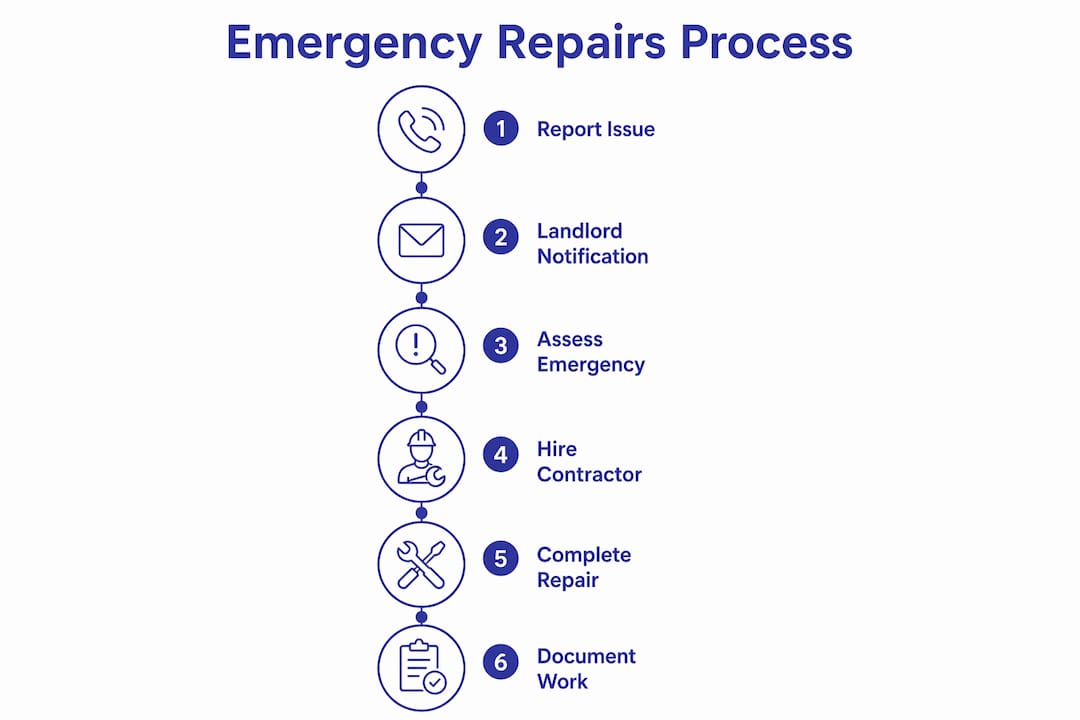
The process for accessing emergency repair cover follows a clear sequence. Knowing it in advance means you respond faster when something goes wrong.
- Receive the tenant’s notification. The tenant reports the emergency, ideally in writing. WhatsApp messages with timestamps are acceptable and create a documented timeline that is useful in any later dispute.
- Assess whether it qualifies as an emergency. Not every repair is urgent. A dripping tap is not an emergency. A burst geyser flooding the property is.
- Contact your emergency cover provider or insurer. Most policies have a 24-hour call centre. Report the incident, provide your policy number, and describe the fault clearly.
- Allow the provider’s contractor access to the property. In a genuine emergency, you may enter without notice. In all other cases, give the tenant reasonable warning.
- Obtain a temporary fix. The contractor stabilises the situation. This might mean capping a pipe, isolating an electrical circuit, or boarding a broken window.
- Arrange the permanent repair. Once the emergency is contained, you commission the full repair through your regular contractor or through the insurer’s extended cover if applicable.
- Document everything. Photograph the damage before and after the fix. Keep all invoices, job cards, and correspondence.
If a landlord fails to act after notification, tenants may repair and deduct costs from rent under strictly defined conditions. Tenants must seek legal advice before doing so, and improper procedure risks a breach of contract claim. This is a last resort, not a routine option, but it underlines why prompt landlord action matters.
One area that catches landlords out is the temptation to disconnect essential services when a tenant falls into arrears. Withholding water or electricity is illegal regardless of the circumstances. It violates tenant rights and typically results in urgent legal action against the landlord at the Tribunal.
Pro Tip: Set up a dedicated WhatsApp group or email thread for each tenancy. When an emergency is reported, respond in writing immediately, even if only to acknowledge receipt. That timestamp is your first line of legal protection.
What are best practices for managing emergency repairs effectively?
Preparation separates landlords who handle emergencies calmly from those who scramble. The following practices reduce both damage and legal risk.
- Act immediately on notification. Neglecting emergency repairs reduces habitability, invites rent reduction claims, and can lead to early lease termination. Speed limits both physical damage and financial loss.
- Build a trusted contractor network before you need it. Have a plumber, electrician, and locksmith on speed dial. Contractors who know your properties respond faster and charge fairly.
- Use written communication for everything. Verbal calls are insufficient as evidence. Follow every phone call with a written summary via WhatsApp or email.
- Understand the difference between your obligations and the tenant’s. Minor internal maintenance can be the tenant’s responsibility under the lease, but structural and infrastructure repairs remain the landlord’s duty regardless of what the lease says about smaller items.
- Review your emergency cover policy annually. Properties age. Cover that was adequate three years ago may no longer match the risk profile of an older geyser or ageing electrical panel.
- Integrate emergency cover with broader income protection. Emergency repairs cover handles the physical fix. It does not replace lost rental income if the property becomes uninhabitable. Knowing how to prepare for rental emergencies and pairing emergency cover with a rental income protection policy closes that gap.
The role of emergency assistance cover for South African landlords is not just about fixing things fast. It is about keeping your income stream intact and staying on the right side of the law while you do it.
Key takeaways
Emergency repairs cover is the most time-sensitive layer of landlord protection, and its value depends entirely on how quickly and correctly a landlord responds.
| Point | Details |
|---|---|
| Legal duty is continuous | The Rental Housing Act 50 of 1999 requires landlords to maintain habitability throughout the entire lease, not just at the start. |
| Emergency cover focuses on speed | Policies fund temporary fixes to stop damage fast, not permanent repairs or cosmetic work. |
| Documentation is your defence | Written records with timestamps protect landlords at the Rental Housing Tribunal if a dispute arises. |
| Exclusions define the real cover | Tenant-caused damage, wear and tear, and pre-existing faults are commonly excluded from emergency repair policies. |
| Income protection fills the gap | Emergency cover handles the repair; rental income insurance covers lost rent if the property becomes uninhabitable. |
Why I think most landlords underestimate emergency cover until it is too late
I have spoken with many South African landlords who treat emergency repairs as something to deal with reactively. They assume their standard building insurance covers everything urgent. It rarely does. Standard building insurance covers the structure after an event. Emergency repairs cover funds the immediate response that prevents a small fault from becoming a large claim.
The legal dimension surprises landlords most. The Rental Housing Act does not give you a grace period to find the cheapest contractor. It expects a prompt response. Landlords who delay because they are waiting for a quote or disputing who is responsible end up at the Tribunal, and the Tribunal is not sympathetic to procedural excuses when a tenant is living without water or power.
The other misunderstanding I see regularly is treating emergency cover as a luxury add-on. For a landlord with one or two properties, a single emergency, such as a geyser failure or a burst main, can cost more than a year of premium payments. The maths favour cover every time. Pair it with a solid rental income protection policy and you have a genuinely resilient investment, not just a property with a lease attached to it.
— Coert
How Rentalincomeinsurance supports landlords beyond emergency repairs

Emergency repairs cover keeps your property standing. Rentalincomeinsurance keeps your income flowing when the unexpected happens. If a property becomes uninhabitable after an emergency, or a tenant stops paying rent while repairs drag on, the financial gap can be significant. Rentalincomeinsurance protects landlords against tenant non-payment, early lease termination, and absconding, covering the income risks that emergency repair policies do not touch. You can request a quote today to see what cover suits your portfolio, or read the full rental income protection guide to understand how the two layers of protection work together.
Watch this short overview to see how rental income protection works in practice:
https://youtu.be/ej04S_af4qM
FAQ
What is emergency repairs cover for a rental property?
Emergency repairs cover is a policy or service contract that funds urgent repairs to a rental property when a sudden fault, such as a burst pipe or electrical failure, threatens health, safety, or habitability. It typically covers call-out fees, labour, and parts for an immediate fix.
What types of emergency repairs does cover typically include?
Cover generally includes burst pipes, electrical faults, security lock failures, dangerous structural damage, and sewerage issues, all of which require immediate action to protect the tenant and the property.
Can a tenant repair and deduct costs from rent if the landlord does not act?
Under strict conditions, tenants may repair and deduct costs from rent if a landlord fails to address an emergency after notification, but tenants must seek legal advice first to avoid breaching the lease.
Does emergency cover replace standard landlord insurance?
Emergency cover does not replace standard landlord insurance. It focuses on rapid response and temporary fixes, while standard building insurance covers structural damage after an event and rental income insurance covers lost rent during interruptions.
How should landlords document emergency repair requests?
Written or digital communication with timestamps, such as WhatsApp messages or emails, is the accepted standard. Verbal calls alone are insufficient evidence if a dispute reaches the Rental Housing Tribunal.
Recommended
- Role of emergency assistance cover for SA landlords – Rental Income Insurance
- Accidental Landlord Insurance – Protecting South Africans – Rental Income Insurance
- Legal Expenses Cover: Safeguarding South African Landlords – Rental Income Insurance
- How to handle property emergencies in South Africa – Rental Income Insurance