
TL;DR:
- Adding tenants as additional insureds helps landlords transfer liability and protect their loss history. However, coverage depends on endorsement wording and does not replace landlord insurance. Landlords should review actual endorsements annually and require comprehensive lease clauses to ensure effective protection.
An additional insured is a person or organisation formally added to a liability insurance policy to receive specified coverage under that policy. The addition happens through a policy endorsement, which modifies the “Who Is An Insured” section of the policy without giving the added party ownership rights or premium payment responsibilities. For South African landlords, understanding additional insureds is one of the most practical risk management tools available. When a tenant names you as an additional insured on their liability policy, claims arising from the tenant’s operations can be directed to the tenant’s insurer rather than your own. That single arrangement protects your loss history, your premiums, and your financial position.
Explaining additional insureds: what does coverage include and exclude?
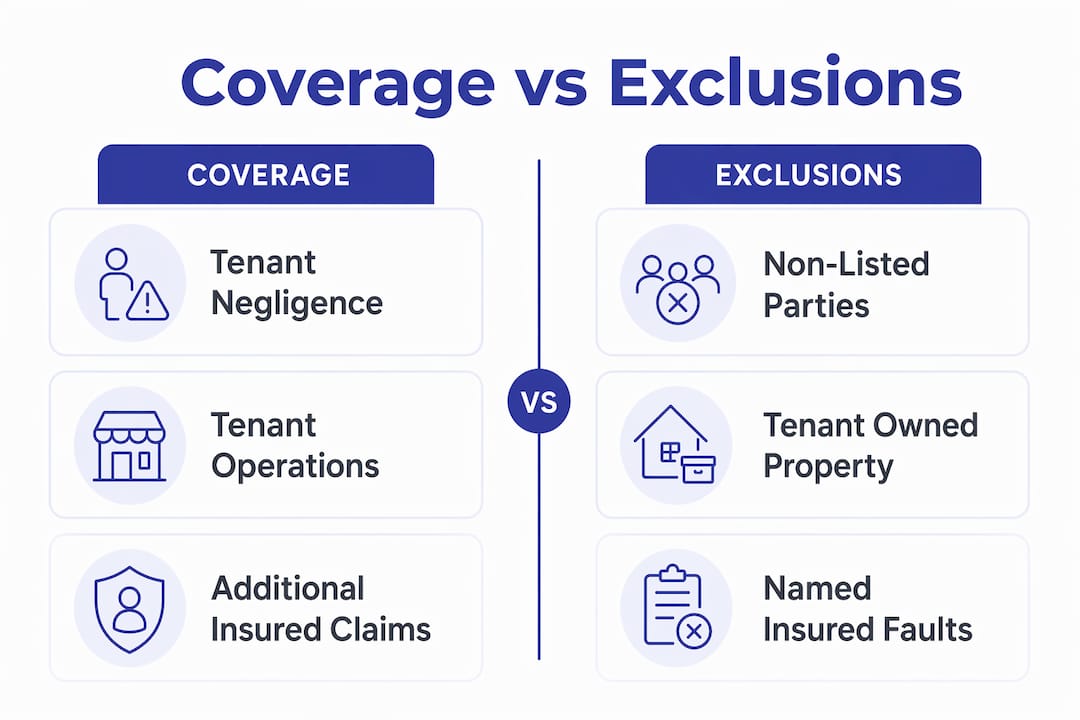
Additional insured coverage is tied directly to the named insured’s acts or omissions. Coverage for additional insureds is limited to the named insured’s operations and generally excludes the additional insured’s own independent negligence or liabilities unrelated to the named insured. Courts and insurers interpret endorsements strictly on this point. If a visitor slips on a wet floor caused by your tenant’s negligence, the tenant’s policy responds. If the same visitor slips because of a structural defect you as the landlord failed to repair, the tenant’s policy will not cover you for that claim.
Two types of endorsements govern how coverage is extended. A scheduled endorsement names each additional insured individually. A blanket endorsement automatically extends status to any party required by a written contract. The wording of the endorsement also determines whether coverage applies to ongoing operations, completed operations, or both. Ongoing operations cover incidents during the lease term. Completed operations cover incidents arising after work or activities have finished, which matters more in commercial than residential settings.
| Coverage scope | Typical exclusions |
|---|---|
| Claims from tenant’s negligence or operations | Additional insured’s own independent negligence |
| Defence costs for covered claims | Liabilities unrelated to named insured’s acts |
| Judgements arising from tenant’s acts | Claims exceeding policy limits |
| Ongoing operations (standard) | Completed operations (unless specifically endorsed) |
Pro Tip: Always request a copy of the actual endorsement, not just a summary. The endorsement wording determines exactly what is and is not covered when a claim arises.
Claims paid on behalf of additional insureds reduce the policy aggregate limits available to the named insured. This means a large claim against you as an additional insured could exhaust the tenant’s policy before the tenant’s own claims are settled. Keep this in mind when setting minimum liability limits in your lease.
How do landlords benefit from being named additional insured?
The practical advantages for landlords are significant and concrete. Tenant insurers cover defence costs and judgements, shielding the landlord’s own loss history from tenant-related claims. A clean loss history keeps your own premiums lower over time. That financial benefit alone justifies the administrative effort of requiring additional insured status in every lease.
The specific benefits landlords gain include:
- Risk shifting. Financial responsibility moves to the party whose activities created the risk. If a tenant’s business operations injure a third party on your property, the tenant’s insurer responds first.
- Defence coverage. If you are sued because of something a tenant did, the tenant’s liability policy provides legal defence. Legal defence costs in South Africa can run to tens of thousands of rands before a case reaches trial.
- Loss history protection. Claims handled by the tenant’s insurer do not appear on your own insurance record. Your renewal premiums stay unaffected by incidents you did not cause.
- Financial alignment. The party who creates the risk pays for the consequences through their own insurer. This is the correct allocation of financial responsibility.
- Common practice in commercial leases. Additional insured requirements are standard in commercial property leases. Residential landlords who adopt the same practice gain the same protections.
For a broader view of how liability protection for landlords works alongside additional insured status, the principles of risk transfer and defence coverage apply consistently across property types.
Adding an additional insured costs around £50 administratively, though the main cost lies in premium increases for the named insured policyholder. The tenant bears that cost. You receive the protection at no direct expense to yourself.

What should landlords include in lease agreements to secure this status?
A certificate of insurance alone does not give you binding coverage. A certificate of insurance is only a snapshot; the formal policy endorsement actually gives binding additional insured coverage. Relying on a certificate is one of the most common and costly mistakes landlords make. Your lease must go further.
Follow these steps to secure effective additional insured status through your lease:
- Specify the endorsement type. State whether you require a scheduled or blanket endorsement. Blanket endorsements are preferable for landlords with multiple tenants because they automatically extend coverage to parties required by written contracts without issuing new endorsements each time.
- Set minimum liability limits. Name a specific rand amount for public liability cover. A limit that was adequate five years ago may be insufficient today given rising legal costs.
- Require primary and non-contributory language. This clause means the tenant’s policy responds first, before your own policy is called upon. Without it, both insurers may dispute which policy pays first, delaying your defence.
- Address deductibles and self-insured retentions. Contracts must address deductibles and scope of coverage explicitly to avoid gaps. A tenant with a large self-insured retention effectively acts as their own insurer up to that amount, which may leave you exposed on smaller claims.
- Demand a waiver of subrogation. Without this clause, the tenant’s insurer can seek reimbursement from you after paying a claim, which defeats the purpose of the arrangement entirely.
- Require annual proof of renewal. Ask for updated endorsement documentation each time the tenant renews their policy. Policies lapse, limits change, and endorsements can be removed.
Comprehensively drafted lease agreements that specify insurance obligations, including named additional insured endorsements, are best practice for South African landlords seeking reliable tenant risk transfer.
Pro Tip: Do not accept a tenant’s verbal confirmation that they have added you as an additional insured. Request the endorsement document directly from their insurer and file it with the signed lease.
Common misconceptions and risks landlords should watch for
Additional insured status carries real limitations that landlords frequently underestimate. Treating it as a complete solution creates a false sense of security.
- You cannot control the policy. Additional insureds receive coverage under the named insured’s policy but lack control over policy terms or cancellation. A tenant can reduce limits, change insurers, or allow the policy to lapse without notifying you.
- Certificates of insurance are not coverage. A COI confirms a policy existed at the time of issue. It does not guarantee the policy is still active or that you remain on the endorsement.
- Additional insured status does not replace your own insurance. Additional insured status does not provide broad liability protection and should never replace a landlord’s own insurance policies. Your own landlord liability insurance remains necessary for risks that originate from your own actions or property condition.
- Subrogation risk is real. Without a waiver of subrogation, insurers might seek reimbursement from additional insureds after paying claims. This can undermine the protection the arrangement was meant to provide.
- Coverage is narrower than most landlords assume. The policy only responds to claims caused by the named insured. If a claim involves any element of your own conduct, the tenant’s insurer will argue the claim falls outside the endorsement.
Understanding property owner liability risks in detail helps landlords recognise where additional insured coverage ends and their own exposure begins. The two are not interchangeable.
Key takeaways
Additional insured status is a targeted risk transfer tool, not a substitute for a landlord’s own liability insurance, and its value depends entirely on the precision of the lease clause and the endorsement wording.
| Point | Details |
|---|---|
| Definition is precise | An additional insured is added by endorsement, not by certificate, and coverage is limited to the named insured’s acts. |
| Lease language is critical | Specify endorsement type, minimum limits, primary and non-contributory language, and a waiver of subrogation in every lease. |
| COIs are not coverage | Only a formal endorsement gives binding additional insured protection; never rely on a certificate alone. |
| Maintain your own insurance | Additional insured status covers tenant-caused claims only; your own liability policy covers your independent risks. |
| Blanket endorsements save time | For landlords with multiple tenants, blanket endorsements automatically extend coverage without issuing individual endorsements each time. |
Why I think most landlords are only half-protected
After years of working with South African property owners, I have noticed a consistent pattern. Landlords ask for proof of insurance, receive a certificate of insurance, file it away, and consider the matter closed. That approach leaves a significant gap. The certificate proves a policy existed on the day it was issued. It says nothing about whether you are actually named on an endorsement, what the current limits are, or whether the policy has since been cancelled.
The landlords who are genuinely protected do three things differently. They require the actual endorsement document, not just the certificate. They review it annually when the tenant renews. They also maintain their own liability cover regardless of what the tenant’s policy says. Additional insured status is a supplement, not a replacement.
Blanket endorsements are underused in South Africa. If you own more than two or three rental properties, negotiating blanket endorsement language into your standard lease template is far more efficient than chasing individual endorsements from every tenant. It also removes the risk of an administrative gap when a tenant changes insurers mid-lease.
The waiver of subrogation clause is the one provision I see omitted most often. Without it, you can be named as an additional insured, have a claim paid on your behalf, and then find the insurer pursuing you for reimbursement. That outcome is not theoretical. It happens. Include the waiver in every lease, without exception.
Review your lease insurance clauses at least once a year. Insurance markets change, limits that were adequate become insufficient, and endorsement wording evolves. A lease drafted five years ago may not reflect current best practice. The insurance terms every landlord should know include additional insured, waiver of subrogation, and primary and non-contributory language. If any of those are unfamiliar, that is the starting point.
— Coert
How Rentalincomeinsurance supports landlords managing property risk
Rentalincomeinsurance is built specifically for South African landlords who want reliable protection against the financial risks that come with letting property.
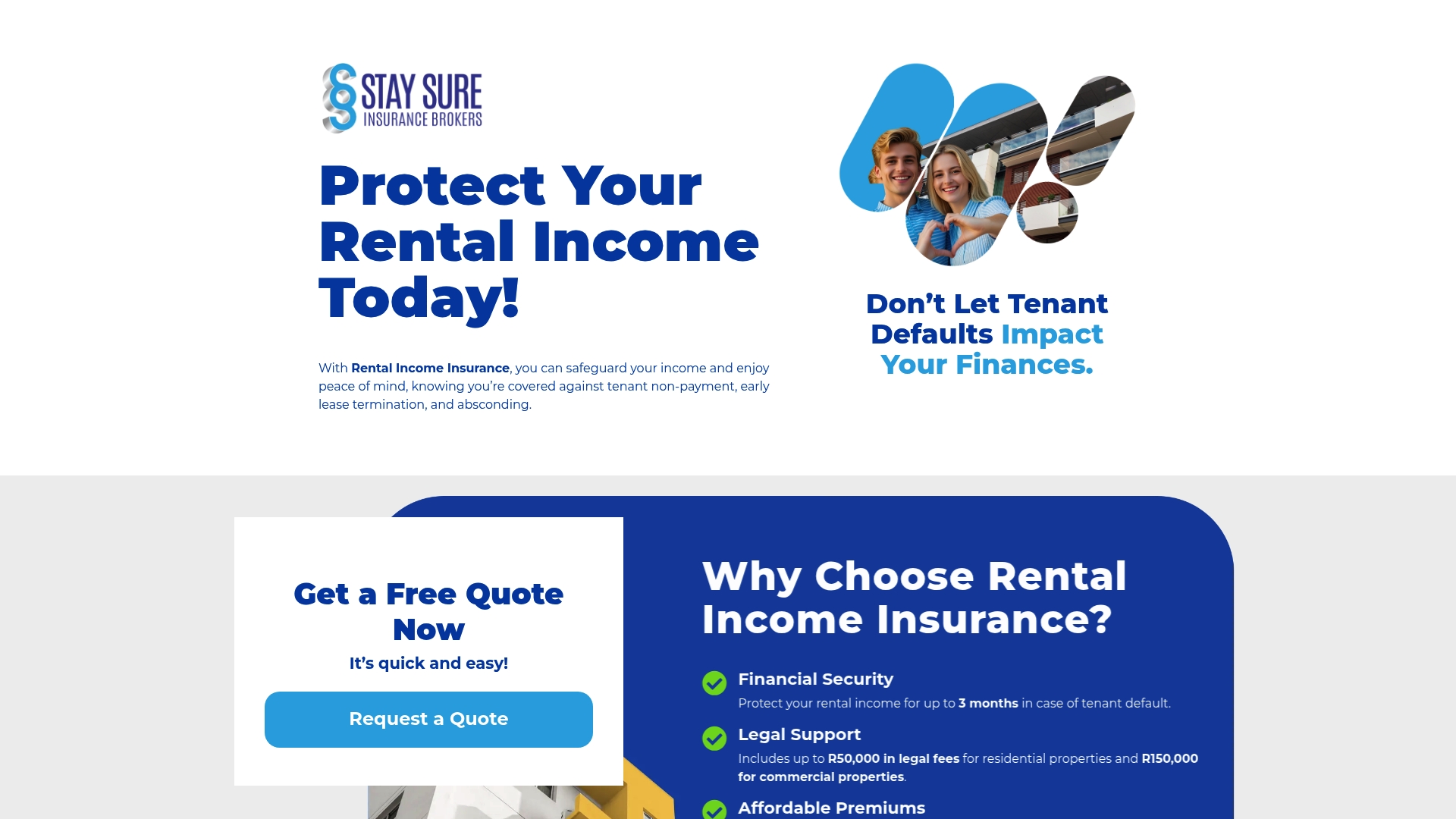
Additional insured status on a tenant’s policy addresses liability claims linked to tenant operations. Rentalincomeinsurance addresses the income risks that sit alongside those liability exposures: tenant non-payment, early lease termination, and absconding tenants. Together, these protections cover the two biggest financial threats landlords face. If you want to understand how rental income protection fits into your overall risk strategy, request a quote and speak with a specialist who understands the South African rental market. You can also watch a short overview of how the cover works here:
FAQ
What is an additional insured in simple terms?
An additional insured is a person or organisation added to someone else’s liability insurance policy by endorsement. They receive coverage for claims arising from the named insured’s operations, but they do not own or control the policy.
Does being an additional insured replace my own landlord insurance?
No. Additional insured status only covers claims caused by the named insured’s acts. Your own landlord insurance policy remains necessary for risks that originate from your own conduct or property condition.
What is the difference between a certificate of insurance and an endorsement?
A certificate of insurance confirms a policy existed at the time of issue but does not guarantee binding coverage. Only a formal policy endorsement actually adds you as an additional insured and provides enforceable protection.
Who qualifies as an additional insured on a tenant’s policy?
Any party named in the endorsement qualifies, typically parties required by a written contract such as a lease. Landlords and property owners are the most common additional insureds on tenant liability policies.
What is a waiver of subrogation and why does it matter?
A waiver of subrogation prevents the tenant’s insurer from seeking reimbursement from you after paying a claim on your behalf. Without it, the insurer can pursue you for costs even though you were listed as an additional insured.
Recommended
- Explaining insurance exclusions for SA landlords – Rental Income Insurance
- What is insurance excess? a guide for SA landlords – Rental Income Insurance
- The role of insurance endorsements for SA landlords – Rental Income Insurance
- Insurance claims explained: guide for South African landlords – Rental Income Insurance