
Rental income insurance typically costs from around 5% of your monthly rent, so a property let at R10,000 a month could cost roughly R500 a month to insure against tenant non-payment. This is rental income protection for landlords, not tenant contents insurance. It exists to protect your cash flow when a tenant stops paying, breaks the lease early, or disappears altogether.
Your exact premium depends on your rent amount, the cover period you choose, and your tenant’s credit history. The fastest way to get an accurate figure is to request a quote from Rental Income Insurance with your real numbers ready.
Before you get a quote, gather:
- Your signed tenancy agreement
- Your monthly rent figure in writing
- Any tenant screening or credit check records you already hold
Pro Tip: Insurers price faster and more accurately when you can show a clean rental payment history, so pull your last six months of bank statements before you enquire.
Key Takeaways
| Point | Details |
|---|---|
| Typical starting cost | Premiums often start from around 5% of monthly rent, so a R10,000 rental might cost roughly R500 a month. |
| Biggest cost drivers | Rent amount, cover period, excess level, property risk and tenant screening all shift your premium up or down. |
| Check policy limits | Verify the sum insured cap, waiting period and eviction cost limit before you buy. |
| Review annually | Update your cover whenever rent rises or your property changes to avoid underinsurance. |
| Get a tailored quote | Rental Income Insurance prices cover around tenant non-payment, early termination and absconding based on your actual rent and lease details. |
Table of Contents
- How much does tenant insurance cost, and what sets the price?
- What does a typical rental income insurance quote look like?
- How do you calculate your own estimated premium?
- Can you lower your rental income insurance premium?
- What does rental income insurance cover, and what’s excluded?
- How do you request a quote and buy cover?
- Get a tailored quote from Rental Income Insurance
- Sources
How much does tenant insurance cost, and what sets the price?
Underwriters look at several variables together, not any single one in isolation. Understanding them tells you which levers you can actually pull to bring your premium down.
The main cost drivers are:
- Monthly rent (sum insured): higher rent means a higher payout ceiling, so premiums rise with it.
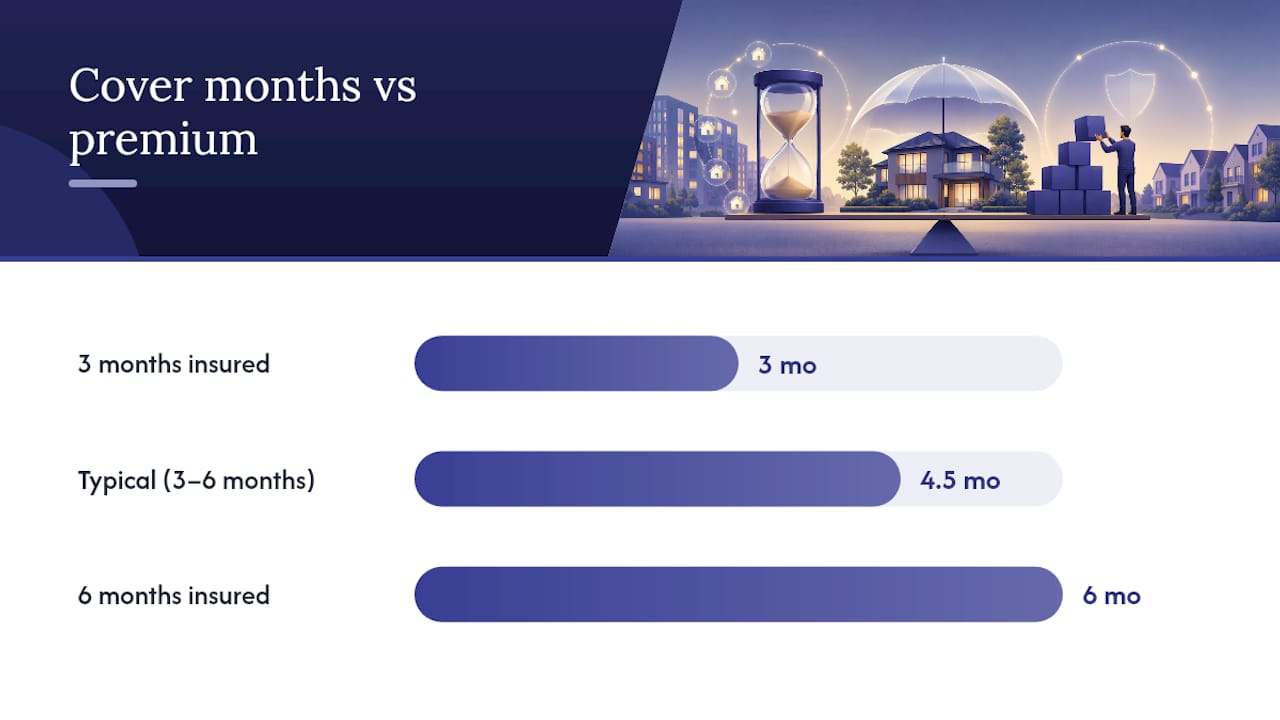
- Cover period: insuring three months of rent costs less than insuring six.
- Excess or deductible: a higher excess lowers your monthly premium but raises your out-of-pocket cost at claim time.
- Property type and construction: standalone houses, flats and commercial units carry different risk profiles.
- Location and crime or weather exposure: areas with higher crime or weather risk typically attract higher premiums.
- Tenant screening and credit history: a tenant with a strong credit record and verifiable income reduces perceived risk.
- Lease length and enforceability: a properly drafted, legally sound lease supports faster claims and can influence pricing.
- Claims history: landlords with prior claims on the property or portfolio usually pay more.
When preparing to request a quote, work through this order:
- Confirm your monthly rent and preferred cover period.
- Pull your tenant’s screening report and lease agreement.
- Decide roughly what excess you could afford to pay if a claim arose.
- Note any prior claims on the property in the last two to three years.
Pro Tip: A messy or informal lease agreement can push your premium up even when your tenant looks financially sound, because insurers price on enforceability as much as affordability.
What does a typical rental income insurance quote look like?
Real numbers make this easier to judge against your own property.
Some products cap the maximum monthly rental insured at R30,000, regardless of what you actually charge, so check this on your schedule if you let a higher-value property.
Eviction cost cover on these policies commonly ranges from R10,000 up to a maximum of R40,000, depending on the product you choose and the legal process required to remove a non-paying tenant.
How do you calculate your own estimated premium?
You can sketch a working estimate before you ever speak to an underwriter. The rough formula insurers use looks like this:
Estimated annual premium = monthly rent × cover months × insurer percentage
Divide that by 12 for a monthly figure.
Work through it in four steps:
- Write down your actual monthly rent.
- Decide how many months of rent you want insured, typically three to six.
- Multiply rent × months × 5% (adjust upward if your property carries more risk).
- Divide by 12 to see your likely monthly outlay.
Pro Tip: Choosing a higher excess, say one month’s rent instead of none, can meaningfully lower your monthly premium. Just make sure you could cover that excess in cash if a tenant stopped paying tomorrow.
Can you lower your rental income insurance premium?
You have more control over your premium than most landlords realise. The biggest levers are tenant quality and how much risk you’re willing to hold yourself.
Highest-impact actions:
- Raise your excess if you can absorb the cost at claim time.
- Tighten tenant vetting with proper reference and credit checks.
- Require a larger deposit or a guarantor for higher-risk tenants.
- Improve physical security at the property.
- Reduce insured months if your cash reserves can bridge a shorter gap.
The trade-off is straightforward: a bigger excess or shorter cover period lowers your monthly cost but leaves you exposed to more upfront pain if a tenant does stop paying.
Before requesting your quote:
- Screen tenants thoroughly and keep records.
- Set your excess at a level you could pay without strain.
- Ask about multi-property discounts if you own more than one rental.
Pro Tip: If you insure several properties, ask your insurer for a portfolio rate. Landlords rarely realise this is negotiable.
What does rental income insurance cover, and what’s excluded?
Knowing the scope of your policy matters as much as knowing the price, because a cheap policy with thin cover can cost you far more at claim time.
Typically covered:
- Lost rent for a defined number of consecutive months after non-payment begins
- Legal and eviction fees to remove a non-paying or absconding tenant
- Early lease termination cover
- Absconding tenant cover
- Limited property damage tied directly to the tenancy, where included
Common exclusions and limits to check:
- A cap on the maximum monthly rental insured
- A waiting period, often meaning claims start only after the second consecutive missed payment
- A requirement to repay claimed amounts if the tenant later settles the debt
- Exclusions for terrorism, flood or other named perils depending on the product
Before you sign, verify these items on your policy schedule:
- The sum insured and whether it matches your actual rent
- The waiting period before a claim can be lodged
- The eviction cost limit
- The reimbursement clause covering recovered rent
Cover generally begins from the first month’s outstanding rental and runs up to a maximum of three months, or until the debt is settled or the property is re-let, whichever comes first.
For a full breakdown of what’s included on a landlord policy, read our guide on what landlord insurance covers.
When should you review your cover?
Review your policy annually, or sooner if anything material changes. Industry professionals recommend a yearly review because rising rents and property values quietly leave landlords underinsured.
Review immediately if:
- You raise the rent
- You renovate or add value to the property
- Local crime or claims activity spikes
Pro Tip: Set a calendar reminder for your renewal date and log any rent changes as they happen, not months later when you’ve forgotten the figure.
How do you request a quote and buy cover?
Getting a formal quote is quicker than most landlords expect once your paperwork is in order.
Insurers commonly ask for:
- Your signed tenancy agreement
- Proof of the monthly rent amount
- Tenant ID and screening or credit report
- Bank statements showing recent rent payments
- Photos of the property and details of any security measures
Underwriters check the tenant’s credit and eviction history alongside property risk factors, and reaching out to a reputable insurer directly remains the most reliable way to get pricing that reflects your actual situation rather than a generic estimate.
To move forward:
- Gather the documents above.
- Submit them through a quote request.
- Expect underwriting checks before a policy is issued.
Pro Tip: Complete applications with all documents attached upfront tend to move through underwriting fastest. See our full walkthrough on how to get landlord insurance for a step-by-step checklist.
Why we recommend cover over carrying the risk yourself
Unpaid rent doesn’t just cost you the missed month. It costs legal fees, eviction time, and the stress of chasing a tenant who’s already gone. Rental Income Insurance builds policies specifically around tenant non-payment, early termination and absconding, which is exactly the gap most standard property policies leave open.

Get a tailored quote from Rental Income Insurance
Rental Income Insurance is the direct route to protecting your rent, built specifically around tenant non-payment, early lease termination and absconding rather than general property risk. Where a standard landlord policy leaves these gaps uncovered, this product is designed around them from the start.

Requesting a quote takes minutes: submit your tenancy agreement, monthly rent figure and any tenant screening records you hold, and you’ll get pricing built around your actual property rather than a generic estimate. If you’re still deciding what level of cover fits your portfolio, our guide to rental income protection walks through the options in more detail. When you’re ready, request your quote and get a working figure for your property today.
For a fuller picture of how landlord cover works alongside this, Landlord Insurance Explained is a useful outside reference on the basics.
Sources
For deeper detail on premium examples, policy limits and annual review guidance, see the Insurance Biz market breakdown, PrivateProperty’s landlord insurance guide, and GeoAfrika’s overview of rental income insurance.
- Property Rental Insurance: insuring rental income against risk of tenant default | Insurance Biz
- Landlord insurance: Protect your rental investment
- What is Rental Income Insurance? – GeoAfrika
This article is general information, not a substitute for advice from a qualified financial advisor. Consult a qualified financial professional about your own circumstances before acting on anything here.