
TL;DR:
- Renters insurance protects tenants’ belongings and liability coverage within rented properties.
- Choosing the right policy involves accurately assessing possessions, coverage limits, and deductible amounts.
- Most renters underestimate their belongings’ value, risking underinsurance during claims.
Renters insurance is defined as a policy that protects a tenant’s personal belongings and covers personal liability within a rented property. Knowing how to choose renters insurance correctly means matching your coverage limits, deductible, and payout type to your actual possessions and financial situation. Most renters in South Africa underestimate the value of what they own, which leads to underinsurance when a claim matters most. This guide walks you through every factor to consider, from inventorying your belongings to comparing policy terms, so you can buy with confidence.
How to choose renters insurance: assessing your coverage needs
The starting point for any renters insurance decision is an accurate picture of what you own. Walk through every room and list your possessions, from electronics and clothing to furniture and appliances. Assign each item a current replacement value, not what you paid for it years ago. Prices change, and relying on original purchase prices leaves you underinsured if you need to replace everything after a fire or theft.
Replacement cost vs actual cash value
The payout type your policy uses makes a significant difference to what you receive after a claim. Replacement cost coverage pays the full current price to replace a stolen laptop or damaged sofa. Actual Cash Value, known as ACV, pays only the depreciated value, meaning a three-year-old television may pay out a fraction of what a new one costs. Many renters choose ACV to save on premiums but receive much less in claims. Replacement cost coverage is the recommended choice despite a slightly higher premium.
Calculating how much personal property cover you need
| Coverage component | Typical limit | What it covers |
|---|---|---|
| Personal property | R50,000–R200,000+ | Furniture, electronics, clothing, appliances |
| Personal liability | R1,000,000+ | Legal costs and damages if you injure someone |
| Additional living expenses | 20%–30% of property limit | Temporary accommodation and related costs |
| High-value item endorsement | Agreed value per item | Jewellery, art, musical instruments |
High-value items such as jewellery, cameras, or musical instruments often exceed standard policy sub-limits. Scheduled personal property endorsements allow you to insure these items separately at an agreed value, which removes any dispute about what they are worth at claim time. Ask your insurer specifically about sub-limits before you assume your R30,000 camera is fully covered under a standard policy.
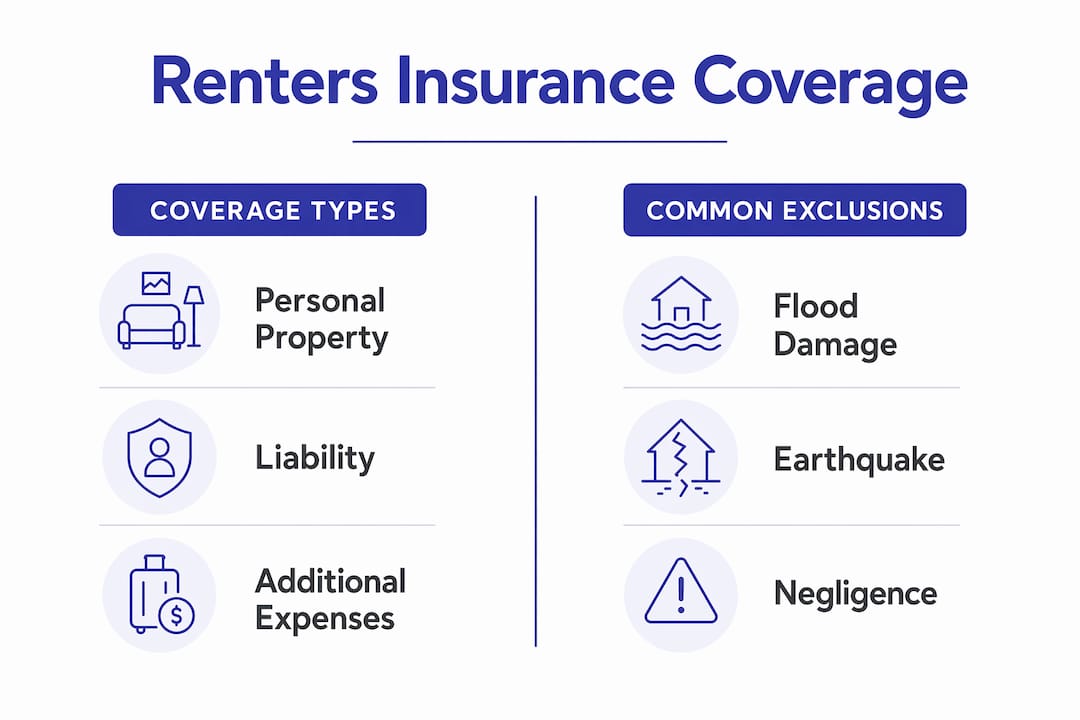
Liability coverage protects you if a visitor is injured in your flat or if you accidentally damage a neighbour’s property. Liability coverage limits typically range from R100,000 to R500,000, with only a small premium increase for higher tiers. Choosing the right liability limit should reflect your personal net worth, because a lawsuit can target your savings and assets directly.
Pro Tip: Use a spreadsheet or a home inventory app to photograph and record every item you own. Store the file in cloud storage so it survives a fire or theft alongside your possessions.
You can also assess your rental coverage using structured frameworks designed for the South African rental market.
How does your deductible affect your premium?
A deductible is the amount you pay out of your own pocket before your insurer covers the rest of a claim. Choosing a higher deductible lowers your monthly premium. Choosing a lower deductible raises your premium but reduces the financial shock of a claim.

The practical rule is straightforward. Deductible choice should be based on your savings and your ability to pay out-of-pocket expenses comfortably. If your emergency fund holds less than R5,000, a high deductible is a risk you cannot afford. A lower deductible costs more each month but protects you when a claim arrives unexpectedly.
Common deductible options and their trade-offs:
- Low deductible (R1,000–R2,500): Higher monthly premium, lower financial shock at claim time. Best for renters with limited savings.
- Mid deductible (R3,000–R5,000): Balanced premium and out-of-pocket exposure. Suits renters with a modest emergency fund.
- High deductible (R7,500+): Lowest monthly premium, but requires strong savings to cover the gap. Best for renters who rarely claim.
For context, a $500 deductible is considered safer for renters without an emergency fund, because it limits the financial exposure at the moment a claim is filed. Apply the same logic to your rand-denominated policy.
Pro Tip: Set your deductible at an amount you could pay within 48 hours from your current savings. If you cannot, lower the deductible and accept the slightly higher premium.
For a deeper look at how deductibles work in the South African context, the insurance deductibles guide from Rentalincomeinsurance explains the mechanics clearly.
What policy features should renters look for?
Standard renters insurance policies in South Africa include three core coverage areas. Understanding each one prevents gaps in your protection.
Personal property cover
Personal property cover pays to repair or replace your belongings after theft, fire, water damage from burst pipes, or vandalism. The limit you choose should reflect the total replacement value from your home inventory. Most policies set a blanket limit with sub-limits for specific categories such as cash, jewellery, and electronics.
Liability protection
Liability protection covers legal costs and compensation if you are held responsible for injuring someone or damaging their property. A visitor who slips on a wet floor in your flat and sues you for medical expenses is a real scenario. Without liability cover, those costs come directly from your pocket.
Additional living expenses
Additional Living Expenses cover, often called ALE, pays for temporary accommodation, meals, and related costs if your rental becomes uninhabitable after an insured event. Renters frequently overlook this feature. If a fire forces you out of your flat for six weeks, ALE cover prevents a financial crisis on top of an already stressful situation.
Optional endorsements worth considering
- Valuables scheduling: Covers high-value items at agreed replacement values, avoiding depreciation disputes.
- Identity theft protection: Covers costs related to restoring your identity after fraud.
- Home office equipment: Covers business-related equipment not included under standard personal property limits.
What standard policies typically exclude
Most renters insurance policies do not cover flood damage, earthquake damage, or damage caused by your own negligence over time. In South Africa, flooding is a real risk in certain provinces. If your area is prone to flooding, ask specifically about flood endorsements or separate flood cover. Never assume a standard policy covers every risk.
Practical steps to compare and buy renters insurance
Comparing renters insurance policies requires consistent parameters. If you request quotes with different coverage limits or deductible amounts, the price comparison becomes meaningless.
Follow these steps to buy with confidence:
- Complete your home inventory and calculate the total replacement value of your belongings.
- Decide on your coverage type. Choose replacement cost over ACV unless the premium difference is genuinely unaffordable.
- Set your liability limit based on your net worth and the risks in your living situation.
- Choose your deductible based on your current emergency savings.
- Request at least three quotes using identical coverage parameters so you compare like with like.
- Review policy exclusions carefully. Ask each insurer specifically about flooding, high-value sub-limits, and home office equipment.
- Check the insurer’s claims reputation. Read verified customer reviews focused on claims handling, not just price.
- Buy the policy and document it. Store your policy documents digitally alongside your home inventory.
Update your insurance inventory annually or after major life events such as buying expensive electronics, starting a home business, or acquiring valuable items as gifts. A policy that matched your needs two years ago may leave you underinsured today.
Pro Tip: When comparing quotes, ask each insurer what their average claims settlement time is. A policy that pays out in five days is worth more than one that takes three months.
Renters in South Africa can also review rental insurance options to understand how different policy structures compare across the local market.
For a quick overview of how renters insurance works in practice, this short video is worth your time:
Key takeaways
Choosing renters insurance correctly requires matching your coverage limits, deductible, and payout type to your actual possessions, savings, and personal liability exposure.
| Point | Details |
|---|---|
| Use replacement cost cover | Replacement cost pays full current prices; ACV pays depreciated value and leaves you short at claim time. |
| Build a home inventory first | List every item with its current replacement value before requesting any quotes. |
| Match your deductible to your savings | Set your deductible only as high as you can pay from your emergency fund within 48 hours. |
| Do not overlook ALE cover | Additional Living Expenses cover pays for temporary housing if your rental becomes uninhabitable. |
| Review your policy annually | Update your coverage after major purchases, life changes, or acquiring high-value items. |
Why most renters get this wrong, and how to avoid it
I have spoken with many renters who bought the cheapest policy they could find and assumed they were covered. The problem is that cheap usually means ACV payouts, low liability limits, and no ALE cover. When a claim arrives, the gap between what they expected and what they received was a genuine shock.
The most common mistake I see is skipping the home inventory entirely. Renters guess at a coverage amount, pick a round number like R50,000, and move on. Then a burglary or fire reveals that their actual belongings were worth R120,000. The shortfall is their problem, not the insurer’s.
The second mistake is choosing a deductible based on the lowest premium rather than what they can actually afford to pay. A R10,000 deductible sounds fine until you need to find that money within a week of losing everything in a flood.
My honest advice is this: spend two hours on your home inventory before you request a single quote. That number drives every other decision. Once you know your real replacement value, the right coverage limit, payout type, and deductible become obvious rather than arbitrary. South Africa’s rental market has specific risks, including load shedding-related appliance damage and localised flooding, that make thorough coverage assessment more important here than in many other markets. Read your exclusions list as carefully as your coverage list.
— Coert
Rentalincomeinsurance: protecting what matters in your rental
Renters need protection that reflects the realities of renting in South Africa, and Rentalincomeinsurance understands those realities directly. Whether you are a tenant looking to protect your belongings or a landlord wanting to safeguard your rental income against non-payment, early lease termination, or property damage, Rentalincomeinsurance offers cover built for the local market.
Getting started takes minutes. You can request a personalised quote and speak with an expert who understands South African rental conditions. If you want to understand the full scope of what rental income protection covers, the rental income protection guide is a clear and practical starting point. Rentalincomeinsurance is here to make sure the unexpected does not become unaffordable.
FAQ
What does renters insurance typically cover?
Renters insurance covers personal belongings against theft, fire, and water damage, personal liability if you injure someone or damage their property, and additional living expenses if your rental becomes uninhabitable. Standard policies do not cover flooding or earthquakes unless you add a specific endorsement.
How much renters insurance do I need?
Your personal property limit should equal the total replacement value of everything you own, calculated from a current home inventory. Liability cover should reflect your net worth, with most insurers offering tiers that include R100,000, R300,000, and R500,000 options.
What is the difference between replacement cost and actual cash value?
Replacement cost coverage pays the full current price to replace a damaged or stolen item. Actual Cash Value pays only the depreciated value, which is often significantly less for electronics and appliances.
How do I find affordable renters insurance in South Africa?
Request at least three quotes using identical coverage parameters, then compare exclusions and claims handling reputation alongside price. Choosing a slightly higher deductible reduces your premium, but only set it as high as your emergency savings can comfortably cover.
How often should I update my renters insurance policy?
Update your policy annually or immediately after major life events such as buying expensive electronics, starting a home business, or receiving high-value gifts. An outdated policy is as risky as no policy at all.
Recommended
- How to get landlord insurance in South Africa: 2026 guide – Rental Income Insurance
- How to Protect Against Property Damage: A South African Guide – Rental Income Insurance
- Best landlord insurance for SA rentals: 2026 guide – Rental Income Insurance
- Best rental property insurance for SA landlords – Rental Income Insurance