
Picture this: your tenant stops paying rent, and suddenly you’re covering the mortgage from your own pocket whilst chasing payments and worrying about legal costs. For South African landlords, tenant-related income loss represents one of the most significant threats to financial stability. Non-payment, early lease termination, and property damage can quickly erode your returns and create serious cash flow problems. This guide delivers practical, actionable strategies specifically designed to help you protect your rental income and maintain consistent returns from your property investment.
Table of Contents
- Understanding the risks: Common causes of income loss
- Essential groundwork: Preparing for tenant issues
- Implementing active income loss prevention strategies
- Responding to trouble: What to do when issues arise
- Reviewing and enhancing your income loss prevention strategy
- Explore insurance solutions to protect your rental income
- Frequently asked questions
Key Takeaways
| Point | Details |
|---|---|
| Know your main risks | Tenant non-payment, early termination, and property damage are the top threats to your income. |
| Prepare proactively | Thorough screenings and robust leases form the base of effective loss prevention. |
| Actively protect income | Use a mix of payment monitoring, insurance, and direct action to safeguard earnings. |
| Respond rapidly to issues | Take immediate steps and start claims when problems occur to limit losses. |
| Review and upgrade | Assess your prevention strategy yearly and adjust for new risks and opportunities. |
Understanding the risks: Common causes of income loss
Three primary threats dominate the landscape of rental income loss in South Africa. Tenant non-payment sits at the top, where tenants fail to meet their monthly obligations, forcing you to cover expenses whilst pursuing recovery. Early lease termination follows closely, leaving you with unexpected vacancy periods and lost income during the search for replacement tenants. Property damage rounds out the trio, where tenants cause harm beyond normal wear and tear, requiring costly repairs before you can re-let the property.
The financial impact of each cause varies but compounds quickly. Non-payment means you’re covering bond repayments, rates, and maintenance from your own funds. Early termination creates a double burden: lost rental income plus advertising and vetting costs for new tenants. Property damage demands immediate capital outlay for repairs, often delaying your ability to generate income again.
Late payments, property damage, and early terminations are responsible for the majority of landlord income loss in South Africa.
These issues create knock-on effects that extend beyond immediate financial loss. You might delay essential property maintenance, struggle to meet your own financial commitments, or face stress that impacts your ability to manage the property effectively. Many landlords find themselves trapped in a cycle where one tenant issue leads to rushed decisions about the next tenant, perpetuating the problem. Understanding these risks forms the foundation for building robust income protection strategies that address each threat systematically.
Essential groundwork: Preparing for tenant issues
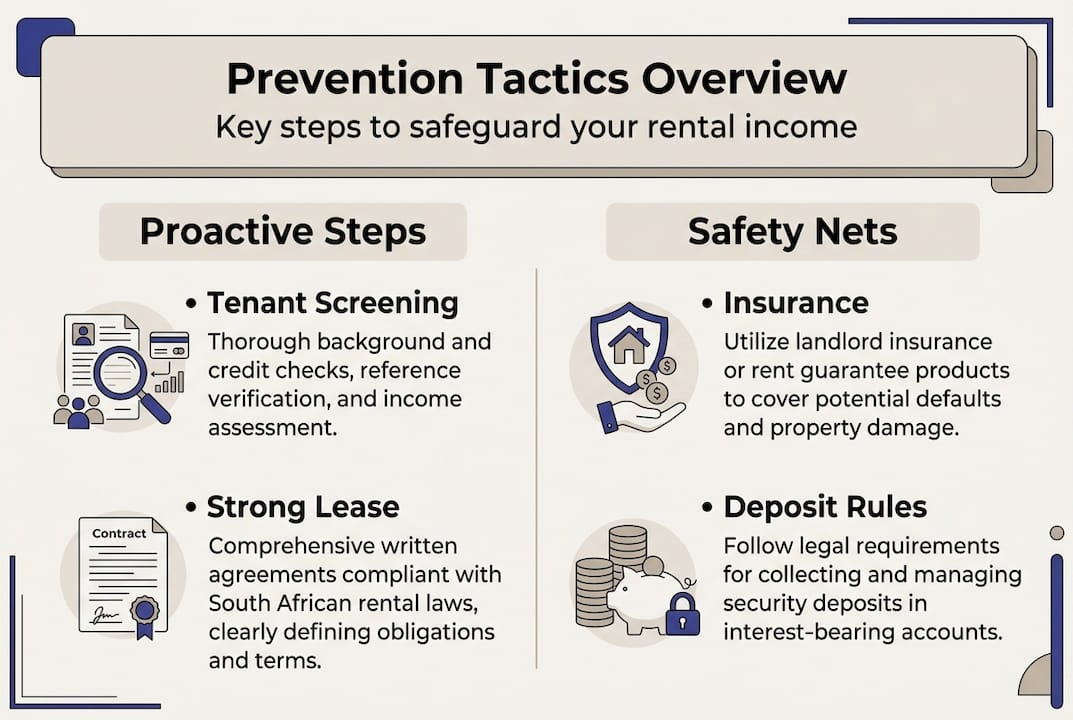
Prevention starts before you ever hand over the keys. Your tenant screening process represents your first and most critical line of defence against income loss. Begin by requiring a comprehensive rental application form that captures employment details, previous rental history, and personal references. Request at least three months of payslips or bank statements to verify income stability. Contact previous landlords directly to confirm payment history and property care standards. Run a credit check through a registered credit bureau to identify any patterns of default or financial instability.
Pro Tip: Always verify employment directly with the employer rather than relying solely on payslips, which can be falsified. A quick phone call can reveal whether the applicant actually works there and confirm their position.
Your lease agreement must function as a comprehensive protection document. Include explicit rent payment terms specifying the amount, due date, and acceptable payment methods. Detail the tenant’s responsibilities for property maintenance and damage beyond normal wear and tear. Establish clear exit clauses that outline notice periods, conditions for early termination, and associated penalties. Address deposit handling with specific terms about deductions, timelines for return, and the inspection process.
Thorough tenant screening and watertight lease agreements are the first line of defence for landlords.
| Essential requirement | Purpose | Implementation |
|---|---|---|
| Credit check | Identify financial risk patterns | Use registered credit bureau |
| Income verification | Confirm ability to pay | Request 3 months payslips |
| Reference checks | Validate rental history | Contact previous landlords |
| Comprehensive lease | Establish clear terms | Include all protection clauses |
| Deposit documentation | Protect against damage | Detailed inventory and photos |
| Insurance review | Transfer risk | Compare rental insurance options |
Document everything from the start. Take detailed photographs and videos of the property before handover, noting existing damage or wear. Create a comprehensive inventory of fixtures, fittings, and appliances with their condition clearly recorded. Have the tenant sign off on this documentation to establish a baseline for future comparison. Store all documents securely in both physical and digital formats, ensuring you can access them quickly if disputes arise.

Implementing active income loss prevention strategies
Active prevention requires ongoing vigilance and systematic processes. Monitor rent payments closely, flagging any late payment immediately rather than waiting for arrears to accumulate. Set up automated payment reminders that notify tenants three days before rent is due, reducing the likelihood of forgotten payments. Maintain regular communication with tenants through quarterly check-ins, creating opportunities to identify and address potential issues before they escalate.
When arrears occur, act within 48 hours. Send a formal written notice documenting the missed payment and requesting immediate settlement. Follow up with a phone call to understand the situation and explore payment arrangements if appropriate. Document every interaction meticulously, creating a paper trail that supports potential legal action or insurance claims.
Pro Tip: Use property management software or banking apps that automate payment tracking and send alerts when rent hasn’t been received by the due date. This removes the manual burden and ensures you never miss early warning signs.
Income protection products form a crucial safety net. Insurance policies specifically designed for landlords can safeguard you from significant financial loss due to default, early lease termination, or damages. These products typically cover lost rental income for specified periods, legal costs for eviction proceedings, and repair costs for malicious damage. Compare different providers and coverage levels to find policies that match your specific risk profile and property portfolio.
| Prevention strategy | Advantages | Limitations | Best for |
|---|---|---|---|
| Rental income insurance | Comprehensive coverage, transfers risk | Monthly premium cost | All landlords seeking security |
| Larger deposits | Immediate funds for damages | Capped by law, doesn’t cover extended loss | Lower-risk properties |
| Legal cost cover | Supports eviction process | Doesn’t replace lost income | Properties with higher tenant turnover |
| Direct negotiation | Maintains tenant relationship | Time-consuming, uncertain outcome | Established tenant relationships |
Deposit handling requires careful attention to legal requirements. South African law caps rental deposits at a maximum of three months’ rent for unfurnished properties. Hold deposits in a separate interest-bearing account and provide tenants with written confirmation of the amount and account details. Conduct thorough inspections before releasing deposits, comparing the property’s condition against your initial documentation. Provide itemised deduction statements if you withhold any portion, supported by quotes or invoices for repairs.
Digital tools streamline your prevention efforts significantly. Cloud-based document storage ensures you can access lease agreements, inspection reports, and communication records from anywhere. Automated payment systems reduce the administrative burden whilst creating clear audit trails. Property management platforms integrate these functions, offering dashboards that highlight overdue payments, upcoming inspections, and maintenance schedules. Explore comprehensive income protection policies alongside these operational tools for maximum protection.
Responding to trouble: What to do when issues arise
When tenant issues materialise despite your prevention efforts, follow a structured response process. For non-payment, issue a formal breach notice within two days of the missed payment, clearly stating the amount owed and the deadline for settlement. If payment doesn’t arrive within seven days, consult with your attorney about initiating eviction proceedings whilst simultaneously notifying your insurer if you hold relevant coverage.
For property damage, document everything immediately with photographs and detailed written descriptions. Obtain at least three quotes for repairs from registered contractors. Notify the tenant in writing about the damage and your intention to claim against the deposit or pursue additional compensation. If the damage exceeds the deposit amount or appears malicious, file a police report and inform your insurance provider.
Early lease termination requires careful navigation of your lease terms. Review the exit clauses to determine whether the tenant has valid grounds for early departure or must pay penalties. Calculate the financial impact including lost rent until you secure a new tenant, advertising costs, and any necessary repairs or cleaning. Negotiate a settlement that covers these costs whilst avoiding lengthy legal battles when possible.
Filing claims and prompt action can greatly minimise long-term losses.
Know when to escalate versus negotiate. If a tenant communicates openly about temporary financial difficulty and has a strong payment history, consider a structured payment plan that keeps them in the property whilst recovering arrears. However, if communication breaks down, payments stop entirely, or the tenant becomes hostile, move quickly to legal action. Delays only increase your losses and complicate recovery.
Insurance claims require prompt reporting and thorough documentation. Most policies stipulate notification within 30 days of discovering an issue. Gather all supporting evidence including lease agreements, payment records, correspondence with the tenant, and damage documentation. Submit a complete claim package rather than piecemeal information, which speeds up processing. Understand which exclusions might apply to your situation, such as normal wear and tear, pre-existing damage, or unreported issues. Follow up regularly with your insurer and respond promptly to any requests for additional information. Review your essential landlord coverages to ensure you’re claiming under the correct policy sections.
Reviewing and enhancing your income loss prevention strategy
Your prevention strategy requires regular evaluation and updates to remain effective. Schedule an annual review each January, examining your insurance coverage, lease agreement templates, and screening processes. Request fresh insurance quotes from multiple providers to ensure you’re receiving competitive rates and comprehensive coverage. Update your lease agreements to reflect any changes in legislation or lessons learned from the previous year.
Several warning signs indicate your current strategy needs adjustment. Repeated income loss from different tenants suggests your screening process isn’t identifying risk factors effectively. Frequent disputes about deposit deductions point to inadequate initial documentation or unclear lease terms. Difficulty claiming on insurance reveals gaps in your coverage or documentation practices. Rising vacancy periods between tenants indicate your property might need upgrades or your rental price requires adjustment.
Implement these immediate improvements to strengthen your protection:
- Digitise all tenant documentation and store it in encrypted cloud storage with automatic backups
- Set up automated rent payment tracking that alerts you within 24 hours of missed payments
- Create template letters for common scenarios like breach notices, inspection requests, and deposit deductions
- Build relationships with reliable contractors who can provide quick quotes and emergency repairs
- Join a landlord association to stay informed about legislative changes and industry best practices
| Priority action | Implementation timeline | Expected impact |
|---|---|---|
| Review and update insurance coverage | Annually in January | Ensures adequate protection against evolving risks |
| Refresh tenant screening criteria | Every 6 months | Adapts to changing market conditions and risk patterns |
| Audit lease agreement templates | Annually or when legislation changes | Maintains legal compliance and comprehensive protection |
Periodic review lets you close gaps and tailor policies to changing risks. Compare different income protection insurance options annually to ensure you’re receiving optimal value and coverage. Stay informed about why landlords choose specific protection products by reading case studies and industry reports. Your prevention strategy should evolve alongside your property portfolio, tenant demographics, and the broader rental market conditions.
Explore insurance solutions to protect your rental income
Whilst robust screening and proactive management reduce your risk significantly, comprehensive insurance provides the ultimate safety net for South African landlords. Even the most diligent screening can’t predict every tenant issue, and a single default or damage incident can wipe out months of rental profit. Specialist rental income protection transfers this risk to insurers who understand the unique challenges you face.

Our tailored coverage options address the specific threats outlined in this guide. Protection against tenant non-payment ensures you continue receiving income even when tenants default. Early termination cover bridges the gap between unexpected departures and securing new tenants. Malicious damage protection handles repair costs that exceed deposits. Legal expense cover supports you through eviction proceedings without depleting your reserves.
Request a personalised quote that matches your property portfolio and risk profile. Our team understands the South African rental market and designs policies that complement your existing prevention strategies. Discover how rental income insurance works alongside your operational practices to create comprehensive protection. Visit our homepage to explore the full range of solutions available to secure your rental income and maintain the financial stability your investment deserves.
Frequently asked questions
What is the quickest way for a landlord to recover lost income after a tenant defaults?
Notify your insurer and start the claims process immediately, whilst following up legally with the tenant as required. Prompt action minimises delays and ensures you receive compensation within the policy timeframes.
Which insurance options protect landlords against tenant non-payment?
Tenant default insurance and comprehensive rental income protection policies both guard landlords from tenant non-payment. Compare coverage levels, waiting periods, and claim limits to find the option that matches your needs.
What should a South African landlord always include in a lease agreement for full protection?
A robust lease must specify rent details, deposit rules, responsibilities for property damage, and termination clauses. Thorough tenant screening and watertight lease agreements form your first line of defence against income loss.
How often should I review my income loss prevention strategy?
Review your strategy at least yearly or whenever your property or policies change. Periodic review lets you close gaps and adapt to evolving risks in the rental market.
Recommended
- Prevent rental income loss: Guide for SA landlords – Rental Income Insurance
- Top rental loss prevention strategies for SA landlords – Rental Income Insurance
- How to Prevent Income Loss 2025 as a SA Landlord – Rental Income Insurance
- Rental income loss: Key definitions for SA landlords – Rental Income Insurance