
TL;DR:
- Property cover protects landlords from tenant default, damages, and early lease termination expenses.
- Without insurance, landlords risk significant financial losses from unpaid rent and property repairs.
- Choosing the right policy involves assessing risks, reviewing inclusions, and regular policy updates.
Most South African landlords invest heavily in their properties but leave their income almost entirely unprotected. A single tenant who stops paying rent, causes serious damage, or walks out of a lease early can cost you tens of thousands of rands before you even set foot in a courtroom. The Rental Housing Act mandates strict legal processes for landlords, but navigating those processes without financial backing is a gamble few can afford. Property cover is not a luxury or an afterthought. It is the strategic foundation that keeps your rental investment working for you, even when tenants do not.
Table of Contents
- Understanding property cover: what it is and why it matters
- The financial risks of being uninsured as a landlord
- How insurance protects your rental income: key features explained
- How to choose the right property cover for your needs
- Why most landlords underestimate property risks – and what to do differently
- Secure your rental income with trusted property cover
- Frequently asked questions
Key Takeaways
| Point | Details |
|---|---|
| Mitigate major risks | Property cover shields landlords from costly tenant defaults, damages, and legal disputes. |
| Maximise income stability | Cover helps ensure reliable rental income even if tenants break leases or fail to pay. |
| Choose smart protection | Selecting the right insurance means matching landlord needs, tenant profile, and property type. |
| Combine strategies | Pair insurance with tenant checks and inspections for comprehensive security. |
Understanding property cover: what it is and why it matters
Property cover, in the context of renting out a home or flat, refers to a suite of insurance products designed to protect landlords from the financial consequences of tenant-related incidents. It goes well beyond standard building insurance. Where building insurance covers physical damage from fire or floods, property cover for landlords specifically addresses the unique risks that come with having a tenant in your property.
The core risks that property cover options address include:
- Tenant default: When a tenant stops paying rent and you still have a bond, rates, and levies to cover each month.
- Malicious or accidental damage: When a tenant leaves the property in a state that far exceeds normal wear and tear.
- Early lease termination: When a tenant breaks the lease and vacates before the agreed end date, leaving you with a vacant property and no income.
- Legal dispute costs: When you need to pursue an eviction or a damages claim through the courts.
Think of it this way. You would not drive a car without insurance, even if you are a careful driver. The risk does not come only from your own behaviour. It comes from what others do. Renting out property works exactly the same way.
Insurance is recommended alongside legal processes for South African landlords, because the legal system alone is slow and costly. Cover gives you a financial bridge while the process plays out.
Pro Tip: Always combine your insurance with thorough tenant screening. Cover is your safety net, but a well-screened tenant reduces how often you need to use it.
Here is a quick summary of common risks and how property cover addresses them:
| Risk | Without cover | With property cover |
|---|---|---|
| Tenant stops paying rent | Full income loss each month | Rent default benefit pays out |
| Malicious property damage | Repair costs out of pocket | Malicious damage claim covered |
| Early lease termination | Vacancy period with no income | Early termination benefit applies |
| Legal and eviction costs | Paid entirely by landlord | Legal cost cover included |
Exploring your rental income protection options early means you are not scrambling to find solutions when a crisis is already under way.
The financial risks of being uninsured as a landlord
Let us put real numbers to the risk. Imagine you own a property that rents for R12,000 per month. Your tenant stops paying in January. By the time a formal eviction is completed, which can take three to six months in South Africa, you have lost between R36,000 and R72,000 in rental income alone. That does not include legal fees, which can easily add another R15,000 to R30,000 to your total loss.
The three main financial risks every uninsured landlord faces are:
- Tenant non-payment: The most common and immediately damaging risk. Even one or two missed months can disrupt your ability to service a bond.
- Property damage beyond the deposit: Deposits in South Africa are typically capped at two months’ rent. Serious malicious damage can cost far more to repair.
- Early lease termination: A tenant who leaves mid-lease forces you to find a new tenant quickly, often at a lower rate, while carrying all holding costs.
Policies that cover early lease termination and malicious damage provide crucial protection, though they typically exclude pre-existing arrears and fraudulent activity. Understanding these edge cases before you sign is essential.
The cumulative effect of even one bad tenancy experience can wipe out years of rental profit. Many landlords only realise this after it happens to them. Understanding the financial risks in property investment is the first step towards making smarter decisions.

Insurance is, at its core, a cost-effective risk management tool. The monthly premium for a solid landlord policy is almost always a fraction of what a single month of lost rent would cost you.
Pro Tip: Avoid policies that exclude the most common risks like non-payment and malicious damage. A cheap policy that does not cover what you actually need is not a saving. It is a false sense of security. Check your insurance and rental income alignment carefully, and use an insurance checklist to compare your options before committing.
How insurance protects your rental income: key features explained
Understanding what a policy actually does for you makes it far easier to choose the right one. Here is a breakdown of the key features you should look for in any landlord insurance product.
Rent default cover pays you a monthly benefit when your tenant stops paying. This keeps your cash flow stable while you pursue the eviction process legally.
Legal cost cover funds the eviction application and any subsequent court proceedings. Without this, many landlords simply cannot afford to pursue the matter properly.
Malicious damage cover protects you when a departing or disgruntled tenant deliberately damages the property. This goes beyond what any deposit can realistically cover.
Early termination cover compensates you for the income lost when a tenant breaks the lease before its end date.
When you compare landlord insurance policies, pay close attention to what is excluded, not just what is included.
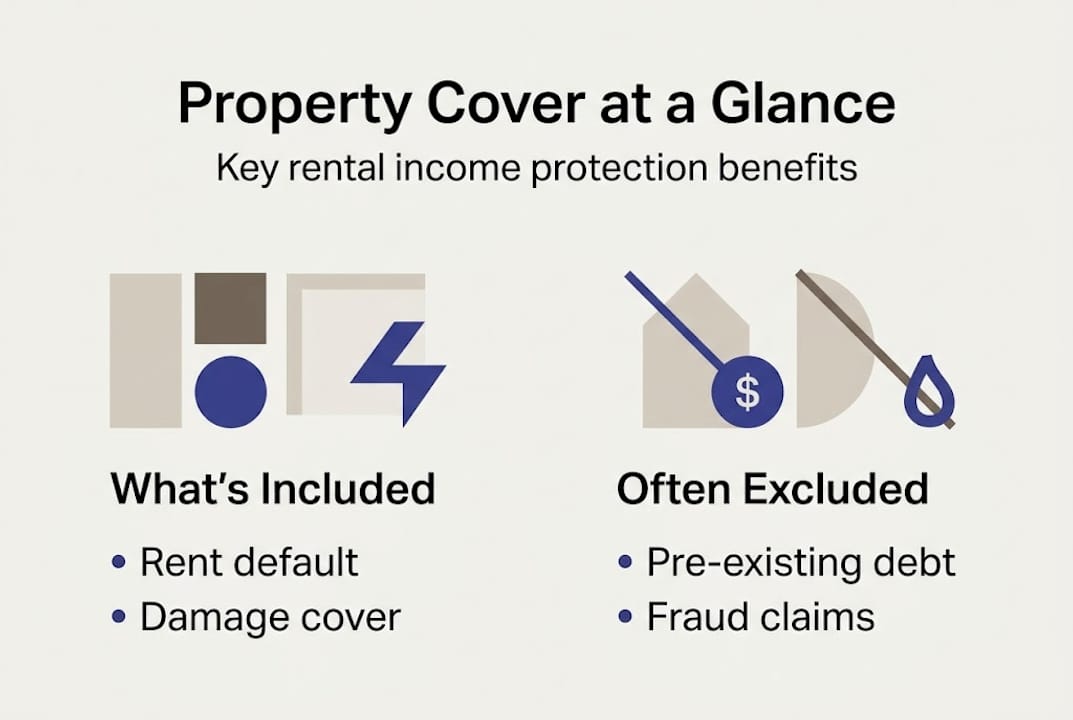
| Feature | Typically included | Typically excluded |
|---|---|---|
| Rent default | Yes | Pre-existing arrears |
| Malicious damage | Yes | Normal wear and tear |
| Legal costs | Yes | Fraudulent tenancy |
| Early termination | Yes | Mutual lease cancellation |
| Vacancy period cover | Sometimes | Long-term vacancies |
Insurers require tenant screening and credit checks as a condition of cover. This is not bureaucracy. It is a shared risk management approach. A tenant who passes a credit check is statistically less likely to default, which keeps claims low and premiums manageable for everyone.
Understanding renting property essentials from the tenant’s perspective also helps landlords set realistic expectations and draft stronger lease agreements.
The benefits South African landlords feel most directly include:
- Stable monthly income even during a non-paying tenancy
- Reduced stress during the eviction process
- Financial cover for repairs after tenant damage
- Legal support without out-of-pocket costs
- Greater confidence when accepting new tenants
Reading up on building insurance insights alongside rental income cover gives you a fuller picture of how to protect both the structure and the income it generates.
How to choose the right property cover for your needs
Choosing the right cover is not about finding the cheapest policy. It is about finding the most appropriate one for your specific property, tenant profile, and risk appetite. Here is a practical process to follow.
- Assess your property type and value. A high-value property in a sought-after suburb carries different risks to a lower-priced flat in a high-density area. Your cover should reflect this.
- Identify your biggest risks. If you have had issues with tenant turnover, early termination cover is critical. If your property is in a high-crime area, malicious damage cover moves to the top of the list.
- Check inclusions and exclusions carefully. Read every line. Pay attention to waiting periods, claim limits, and what triggers a valid claim.
- Confirm the tenant screening requirement. Tenant screening and using the right insurance go hand in hand. Make sure your screening process meets the insurer’s requirements before a policy is issued.
- Align cover with your lease agreement. A well-drafted lease is not just a legal document. It is often a requirement for a valid insurance claim. Make sure both documents are consistent.
- Review your cover annually. Rental values change. Property values change. Your cover should keep pace.
A step-by-step insurance guide can help you work through this process without missing anything important. If you own multiple properties, exploring portfolio insurance options may offer better value than insuring each property separately.
Regular property inspections are also part of the picture. A property inspection guide can show you how to document property condition before and during a tenancy, which supports any future claims and keeps your relationship with tenants professional and transparent.
Why most landlords underestimate property risks – and what to do differently
Here is something most insurance articles will not tell you. The biggest risk to your rental income is not the bad tenant you can spot from a distance. It is the seemingly reliable one who suddenly loses their job, goes through a divorce, or simply decides to stop paying because they know the eviction process takes months.
South African landlords often underinsure because the market has historically favoured property owners. When demand is strong and good tenants are plentiful, it is easy to assume things will always work out. But the rental market shifts, and when it does, uninsured landlords absorb the full impact.
The cultural tendency to see insurance as an expense rather than an investment is costing landlords real money. Reframing it as part of your property management strategy, alongside maintenance, inspections, and lease management, changes how you approach every letting decision. Familiarising yourself with landlord insurance terms is a practical first step towards that mindset shift. Property cover is not what you buy when things go wrong. It is what ensures things do not go catastrophically wrong when they inevitably get complicated.
Secure your rental income with trusted property cover
You have spent time and money building a rental portfolio. The last thing you need is one difficult tenancy to unravel that work. Property cover gives you the financial stability to handle tenant challenges without panic, legal uncertainty, or months of lost income.
At Rental Income Insurance, we specialise in protecting South African landlords from the risks that matter most. Whether you are dealing with non-payment, early terminations, or property damage, our solutions are built around your reality as a landlord. Take the next step and request a quote tailored to your property and risk profile. Or, if you want to understand your options more fully before committing, learn more about rental income insurance and how it works in practice.
Frequently asked questions
What does property cover typically exclude for South African landlords?
Most policies exclude pre-existing arrears and fraudulent tenancy activity, so always read the policy terms carefully before signing.
Is property insurance mandatory for landlords in South Africa?
Insurance is not legally required, but the Rental Housing Act mandates strict processes and strongly recommends cover alongside legal action.
Does property cover protect against tenant non-payment and damages?
Yes, most policies cover loss of rent and malicious damage, though claims arising from fraud or arrears that existed before the policy started are typically excluded.
Why do insurers require tenant screening?
Insurers require credit checks because screening reduces the likelihood of defaults, keeping claims manageable and premiums affordable for all landlords.
Recommended
- Rental Income Insurance | Secure Your Rental Income
- Insurance in Property Management: Securing Rental Income – Rental Income Insurance
- 7 Reasons Property Investors Need Insurance Today – Rental Income Insurance
- 7 Key Protections for Property Income Every Landlord Needs – Rental Income Insurance
- Rental Yield Explained: Boost Your Singapore Property Returns