
Rental income is rarely as reliable as it looks on paper. Across South Africa, arrears rates reached 18.4% in 2023, meaning nearly one in five tenants was behind on rent at any given time. For landlords who depend on that monthly payment to cover a bond, maintenance, or living expenses, even a single missed month can trigger a cascade of financial stress. This guide breaks down exactly what rental income loss means, why it happens, and how the right insurance cover can protect your investment before the next shortfall arrives.
Table of Contents
- What is rental income loss?
- Main causes of rental income loss for landlords
- Types of rental income loss in the South African context
- Comparing rental income loss definitions: Industry, legal, and insurance perspectives
- How rental income loss impacts South African landlords
- Minimising rental income loss: Practical strategies and insurance
- Protect your rental income with tailored cover
- Frequently asked questions
Key Takeaways
| Point | Details |
|---|---|
| Rental income loss is common | Nearly one in five South African landlords are affected by rent arrears or defaults. |
| Definitions vary by context | Legal, industry, and insurance definitions of rental income loss differ and affect your claim rights. |
| Insurance offers vital protection | Rental income insurance can cover lost rent and legal costs, providing essential security for landlords. |
| Preventative steps reduce risk | Careful tenant vetting and prompt action can help minimise your risk before insurance is needed. |
What is rental income loss?
Rental income loss is the shortfall or complete absence of expected rent payments from a tenant. It sounds simple, but the term covers a wide spectrum of situations, and understanding the differences matters enormously when you need to act or claim.
At one end, you have late payments, where rent arrives a few days after the due date. Inconvenient, but usually recoverable. Then there are partial payments, where a tenant pays only a portion of what is owed. More serious is default, which is the outright failure to pay rent for one or more months. Finally, termination losses occur when a tenant vacates early, leaving you without income until a new tenant is found. Each type carries different legal and financial implications, and understanding the rental income loss workflow helps you respond correctly to each one.
“Tenants in arrears typically owe between 73% and 77% of their monthly rent, and arrears rates sit at 16.9% as of Q2 2025, the lowest in recent years yet still affecting a significant portion of landlords nationwide.”
These figures illustrate why rental income insurance matters so much. Even at its lowest recent rate, the risk is far from negligible. A single month of lost rent on a property with a R12,000 monthly rental means R12,000 gone, with bond payments, rates, and levies still due.
Main causes of rental income loss for landlords
Once you understand what rental income loss is, the next step is recognising why it happens. South Africa’s economic climate creates specific pressures that make tenant default more likely than many landlords anticipate.
The most common causes include:
- Tenant financial hardship or job loss: Retrenchments and rising living costs push tenants into arrears quickly, often with little warning.
- Early lease termination: A tenant who relocates for work or personal reasons may leave before the lease ends, creating an immediate income gap.
- Deliberate non-payment: Some tenants exploit the length of South Africa’s eviction process, continuing to occupy a property without paying rent for months.
- Eviction delays: Legal proceedings under the Prevention of Illegal Eviction Act can take many months, during which 17.1% of landlords nationally receive no rent at all.
- Property becoming uninhabitable: Fire, flooding, or structural damage can render a unit unlettable, cutting off income entirely.
Understanding these causes helps you assess your own exposure and explore the income loss coverage benefits that address each risk directly.
Types of rental income loss in the South African context
Not all rental income loss is the same, and insurers treat each type differently when assessing a claim. Knowing the distinctions protects you from nasty surprises when you need your policy to pay out.

| Type | Definition | Common example | Typically insured? |
|---|---|---|---|
| Temporary arrears | Rent paid late or partially | Tenant pays two weeks late | Sometimes, subject to policy |
| Chronic default | Repeated non-payment over months | Tenant stops paying entirely | Yes, after demand letter |
| Early termination | Tenant vacates before lease ends | Tenant leaves 4 months early | Yes, with valid lease |
| Property damage loss | Unit unlettable due to damage | Fire renders flat uninhabitable | Yes, with property cover |
Rental income insurance can cover 3 to 12 months of lost rent alongside legal and eviction costs ranging from R10,000 to R150,000, depending on the policy. Reviewing the insurance step by step process before you need it means you will not be scrambling when a crisis hits.
Pro Tip: Keep a written record of every communication with your tenant, including WhatsApp messages, emails, and payment receipts. This documentation is often the difference between a successful insurance claim and a rejected one.
Comparing rental income loss definitions: Industry, legal, and insurance perspectives
The term “rental income loss” means different things depending on who is using it. This matters because a misunderstanding between your legal position, your lease agreement, and your insurance policy can leave you exposed.
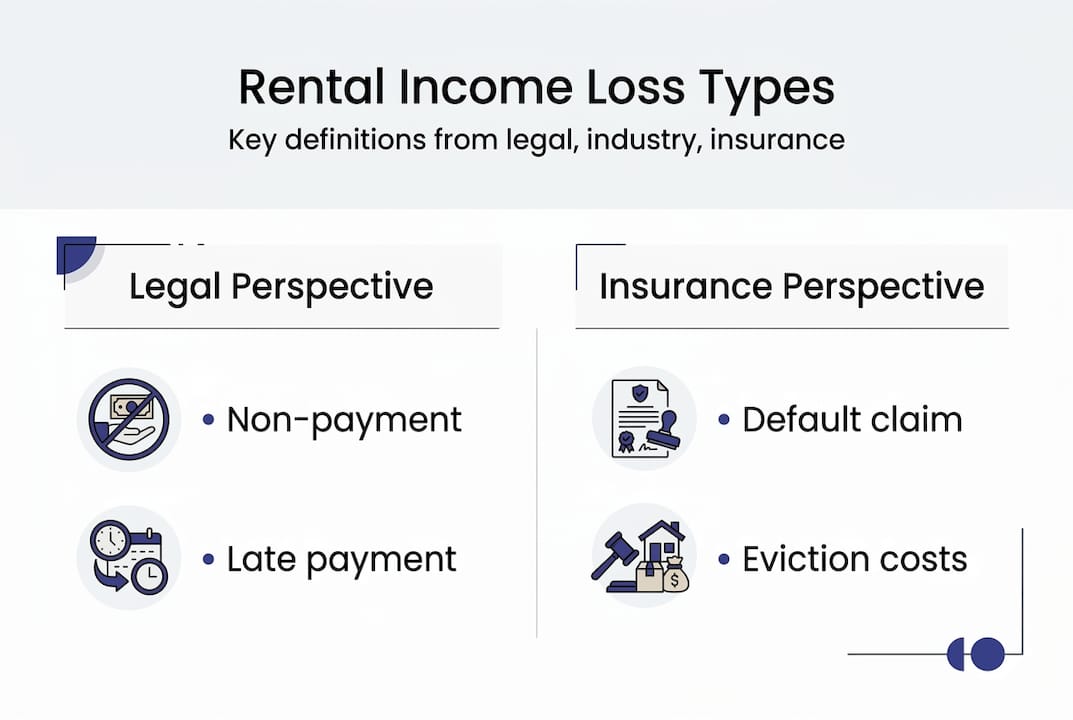
| Perspective | Definition | Key condition | Practical application |
|---|---|---|---|
| Legal | Non-receipt of contractually due rent | Valid signed lease required | Basis for eviction and civil claims |
| Industry | Includes arrears, partial payment, early exit | Broad interpretation | Used in property management reporting |
| Insurance | Lost rent after confirmed tenant default | Demand letter plus valid lease | Triggers claim eligibility |
The insurance definition is the most precise. Claims begin from the second non-payment after a formal demand letter has been issued, and a valid lease must be in place. This is why understanding landlord insurance jargon and ensuring your lease agreement references insurance correctly are both essential steps before a problem arises.
The gap between the industry definition and the insurance definition catches many landlords off guard. A tenant who pays 60% of rent each month may be considered in arrears by your managing agent, but your insurer may not trigger a claim until full non-payment occurs and a demand letter is served.
How rental income loss impacts South African landlords
Definitions and statistics only tell part of the story. The real impact of rental income loss is felt in very practical ways.
- Bond and mortgage risk: If your rental income covers your bond repayment, even two months of non-payment can put you in arrears with your bank.
- Deferred maintenance: Without rental income, essential repairs get postponed, which can reduce the property’s value and make it harder to attract quality tenants.
- Legal costs: Pursuing an eviction or debt recovery through the courts is expensive and time-consuming, often costing tens of thousands of rands.
- Stress and relationship strain: The emotional toll of chasing a non-paying tenant, especially one who refuses to vacate, is significant and often underestimated.
“Arrears rates have ranged between 16.9% and 18.4% in recent years, affecting 17.1% of landlords nationwide. For many, this is not a theoretical risk but an annual reality.”
Exploring the full range of rental income insurance benefits shows how a well-structured policy addresses each of these pain points directly, rather than leaving you to absorb the losses alone.
Minimising rental income loss: Practical strategies and insurance
Knowing the risks is only useful if you act on them. Here is a practical sequence of steps every South African landlord should follow to reduce exposure to rental income loss.
- Screen tenants thoroughly: Run credit checks, verify employment, and contact previous landlords before signing any lease.
- Use a well-drafted lease: Ensure your lease is legally compliant and clearly states payment terms, penalties, and notice periods.
- Send rental reminders proactively: A simple reminder two days before rent is due reduces late payments significantly.
- Act quickly on arrears: Issue a formal written demand the moment rent is missed. Delays weaken your legal and insurance position.
- Keep detailed records: Document every interaction, payment, and incident in writing.
- Get rental income insurance: A policy that covers both lost rent and legal costs gives you a financial buffer while the legal process runs its course.
Premiums typically range from 2% to 5% of monthly rent, with cover for 3 to 12 months of lost income. Understanding rental insurance premium costs upfront helps you budget accurately and choose the right level of cover. Working with a specialist also means understanding the role of rental agents in supporting your claim when things go wrong.
Pro Tip: Choose a policy that covers both legal and eviction costs alongside lost rent. Paying for an eviction out of pocket while also absorbing missed rent is a double blow that comprehensive cover prevents entirely.
Protect your rental income with tailored cover
You have now seen how rental income loss is defined, what causes it, and how it ripples through your finances. The next step is making sure you are not left absorbing those losses alone.

At Rental Income Insurance, we offer cover designed specifically for South African landlords facing the realities of tenant non-payment, early lease termination, and absconding tenants. Whether you own one property or a growing portfolio, our policies are built to protect your cash flow when it matters most. Request a personalised quote today and find out exactly what you are covered for. You can also explore what rental income insurance covers in detail, or read our full rental income protection guide to make a fully informed decision.
Frequently asked questions
What qualifies as rental income loss in South Africa?
Rental income loss is any situation where you do not receive the agreed rent, whether due to non-payment, late payment, or the property becoming unlettable. It covers the full spectrum from a single missed payment to months of complete default.
How do insurance policies define and cover rental income loss?
Insurance policies typically cover lost rent due to tenant default for 3 to 12 months, starting after a formal demand letter is issued and subject to a valid lease being in place.
What is the most common cause of rental income loss in South Africa?
Tenant default due to job loss or financial hardship is the leading cause, with 17.1% of landlords affected nationally each year. South Africa’s slow eviction process compounds the problem significantly.
Are legal costs also covered by rental income insurance?
Most rental income insurance policies cover legal and eviction costs alongside lost rent, with limits typically ranging from R10,000 to R150,000 depending on the policy selected.
Recommended
- Prevent rental income loss: Guide for SA landlords – Rental Income Insurance
- Key Rental Property Terms Explained for SA Landlords – Rental Income Insurance
- Top rental loss prevention strategies for SA landlords – Rental Income Insurance
- Rental Income Tax Tips: Complete Guide for SA Landlords – Rental Income Insurance