
TL;DR:
- Promptly reporting and documenting tenant issues is essential for legal defense and cost management.
- Early action reduces repair costs, prevents disputes, and strengthens claims for deposits and insurance.
- Establishing consistent communication and inspection routines builds a competitive advantage and safeguards income.
Many landlords assume that a missed payment or a small maintenance complaint can wait until the end of the month. That assumption is one of the most costly mistakes a South African property owner can make. Delayed action on tenant issues does not just create inconvenience; it erodes your legal standing, inflates repair costs, and can leave you without recourse when disputes escalate. This guide walks you through the legal obligations, financial realities, and practical steps that make prompt tenant issue reporting one of the most important habits you can build as a landlord.
Table of Contents
- The legal foundation: Rental Housing Act and compliance
- Financial risks of ignoring tenant issues
- Evidence-building: How to document and communicate effectively
- Proactive monitoring: Commercial leases and business impacts
- Our take: Why prompt reporting is the real competitive advantage
- Secure your rental income with expert support
- Frequently asked questions
Key Takeaways
| Point | Details |
|---|---|
| Legal compliance | Prompt reporting safeguards your legal position and deposit recovery in South Africa. |
| Reduced financial loss | Fast action decreases the risk of arrears, costly repairs, and income gaps. |
| Stronger evidence | Clear, written records make legal and insurance claims far easier to win. |
| Proactive advantage | Landlords who report issues early resolve disputes faster and keep properties profitable. |
The legal foundation: Rental Housing Act and compliance
The Rental Housing Act is the cornerstone of the landlord-tenant relationship in South Africa, and it places clear obligations on both parties. Understanding these obligations is not optional. It is the baseline from which every dispute, deposit claim, or eviction case is judged.
One of the most important mechanisms in the Act is the joint inspection. At the start of a tenancy, both the landlord and tenant must inspect the property together and record its condition in writing. The same process applies at the end of the lease. This ingoing and outgoing inspection report becomes the legal benchmark for any damage claims or deposit deductions. If you skip this step or fail to document it properly, you may find yourself unable to claim for damages that are clearly the tenant’s fault.
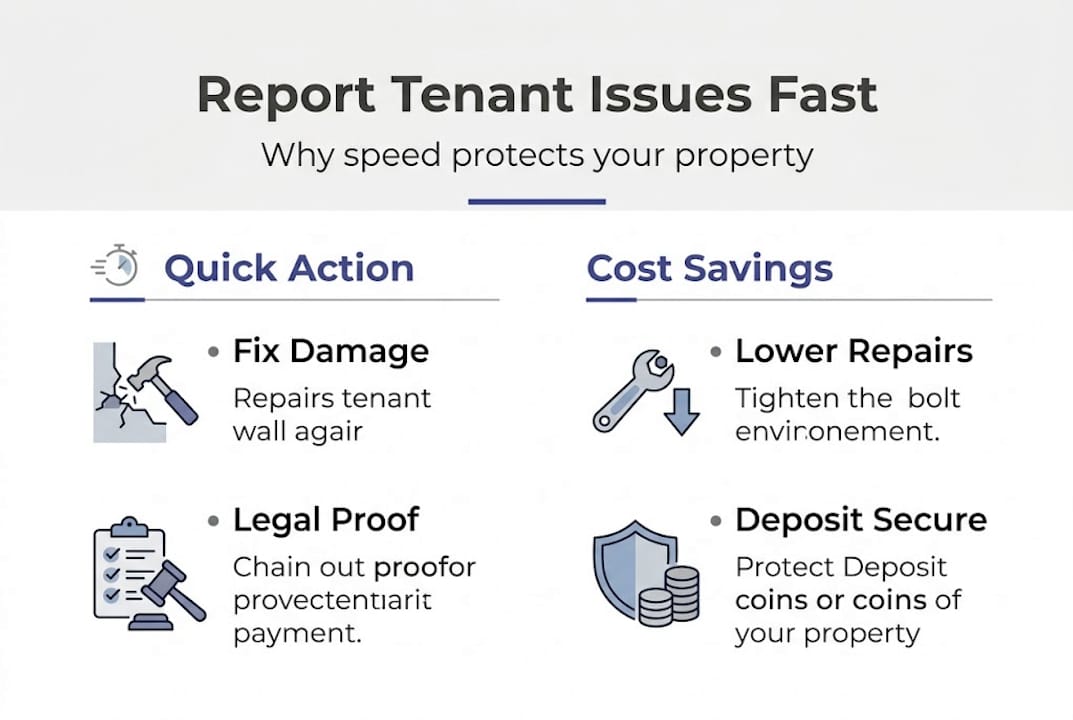
Beyond inspections, the Act requires that any issues, whether maintenance requests, lease breaches, or payment failures, be communicated and recorded promptly. The Rental Housing Act requires joint inspections and documented records, and failure to follow these steps weakens deposit claims and eviction cases significantly. This is not a technicality. Rental Housing Tribunals across South Africa regularly dismiss landlord claims simply because the paper trail is incomplete or the landlord waited too long to act.
Here are the key legal steps every landlord must follow:
- Conduct and sign a joint ingoing inspection before the tenant moves in
- Record all maintenance requests and your responses in writing
- Issue formal written notices for any lease breaches, including late payment
- Conduct and sign a joint outgoing inspection before the tenant vacates
- Retain all correspondence and inspection records for at least three years
“A landlord who cannot produce written evidence of a reported issue is, in the eyes of the Tribunal, a landlord who never raised it at all.”
Staying on top of rental property insurance compliance is equally important, because your insurer will also expect documented evidence before processing any claim. Legal compliance and insurance readiness go hand in hand.
Financial risks of ignoring tenant issues
With the legal foundation clear, it is easier to see why regulatory compliance alone does not cover all risks. The financial consequences of slow responses are just as pressing, and in many cases, more immediately damaging to your bottom line.

The numbers tell a sobering story. Tenant arrears sit at roughly 17 to 18% nationally according to PayProp Q4 2024 data, and civil judgements for rental arrears have exceeded R2.75 billion over the past decade. Proactive issue resolution can lead to 60% faster dispute handling compared to reactive approaches. These are not abstract figures. They represent real income lost by real landlords who waited too long.
| Issue type | Cost of early action | Cost of delayed action |
|---|---|---|
| Unreported water leak | R800 to R2,000 repair | R15,000 to R50,000 structural damage |
| Missed rental payment | One month arrears | Three to six months arrears plus legal fees |
| Lease breach (unauthorised occupant) | Written notice, resolved quickly | Eviction proceedings, R10,000 or more |
| Property damage (undocumented) | Deposit deduction | Full cost absorbed by landlord |
The table above illustrates a pattern that repeats itself across thousands of South African rental properties every year. Small problems become expensive ones when action is delayed. An unreported leak does not stay small. Overdue rent does not resolve itself. And undocumented damage does not become easier to claim for as time passes.
Pro Tip: Set a fixed day each month to review all open maintenance requests and outstanding payments. A 30-minute monthly audit can prevent months of costly disputes.
The rental income best practices guide outlines how consistent monitoring and rapid response can meaningfully reduce your exposure to arrears and repair escalation. The landlords who fare best financially are not necessarily those with the best properties. They are the ones who act quickly and document everything.
Evidence-building: How to document and communicate effectively
Understanding the financial and legal stakes means practical action is essential. Building a solid evidence trail is not complicated, but it does require consistency and the right habits from day one.
Prompt reporting creates documented evidence that is crucial for Rental Housing Tribunal disputes, where communication records serve as vital proof for maintenance issues, damages, or lease breaches. Without this trail, even the most legitimate claim can fall apart.
Here is a step-by-step approach to building your evidence record:
- Use email as your primary channel. Email creates a time-stamped, searchable record of every communication. Always follow up verbal conversations with a written email summary.
- Send registered post for formal notices. When issuing a breach notice or a final demand, registered post provides proof of delivery that email alone cannot guarantee.
- Use a standardised inspection checklist. A consistent checklist removes ambiguity and ensures nothing is missed during ingoing and outgoing inspections.
- Photograph every issue. Date-stamped photographs of damage or maintenance problems are powerful evidence in any dispute.
- Log every tenant interaction. Keep a simple log of calls, visits, and verbal agreements. Note the date, time, and what was discussed.
- Respond to tenant reports in writing. Even if a tenant calls you about a problem, follow up with a written acknowledgement that confirms the issue and your intended action.
| Communication method | Evidence strength | Best use case |
|---|---|---|
| High | Routine correspondence, maintenance requests | |
| Registered post | Very high | Formal notices, breach letters, final demands |
| WhatsApp message | Moderate | Quick updates, but screenshot and save |
| Verbal agreement | Low | Avoid for anything significant |
| Signed inspection report | Very high | Ingoing and outgoing condition records |
Pro Tip: Create a dedicated email folder for each tenant. Store every piece of correspondence there from day one. If a dispute arises, you will have a complete, organised record ready within minutes.
Exploring your insurance options comparison is a natural next step once your documentation habits are in place, because insurers assess claims based on the quality of your records.
Proactive monitoring: Commercial leases and business impacts
Residential properties are only one side of the picture. For commercial landlords, the risks and processes are distinct, and the financial stakes are often considerably higher.
In the commercial sector, tenant distress can escalate rapidly. A business that begins missing rental payments may already be in financial difficulty, and early detection of commercial tenant distress through monitoring of late payments and lease breaches prevents business rescue impacts on landlords and protects ongoing income stability. Once a tenant enters formal business rescue, your ability to recover arrears or enforce lease terms becomes severely limited.
The warning signs are often visible well before a formal crisis emerges. Watch for:
- Consistently late rental payments, even if the tenant eventually pays
- Requests to sublet part of the premises without prior agreement
- Visible reduction in business activity or staff on the premises
- Requests for rental discounts or payment deferrals
- Failure to maintain the premises as required under the lease
- Changes in key personnel or management at the tenant’s business
“In commercial property, the landlord who waits for confirmation of a problem has already lost valuable time to act strategically.”
Early reporting and monitoring allow you to take strategic action before the situation becomes critical. You may be able to negotiate a structured payment arrangement, issue a formal breach notice that preserves your legal rights, or activate an insurance claim before arrears mount further. Exploring commercial rental insurance options is a practical step that many commercial landlords overlook until it is too late.
The commercial lease environment in South Africa also tends to involve longer lease terms and higher monthly values, which means the cost of inaction compounds quickly. A residential landlord losing one month’s rent is painful. A commercial landlord losing three months on a high-value lease can be devastating.
Our take: Why prompt reporting is the real competitive advantage
Most landlords treat issue reporting as an administrative chore. We see it differently. The landlords who build a fast, repeatable reporting routine are not just protecting themselves legally. They are building a genuine competitive advantage in the rental market.
Here is the insight that most property guides miss: prompt reporting is not just about defence. It signals professionalism to tenants. Tenants who see that their landlord responds quickly and documents properly are less likely to test boundaries, more likely to maintain the property, and more likely to renew their lease. That translates directly into lower vacancy rates and more stable income.
A straightforward reporting routine is as valuable as tenant screening or property upgrades. It costs almost nothing to implement, but the return in reduced disputes, faster insurance claims, and stronger tribunal outcomes is significant. Landlords who build this habit lose less income and face fewer legal conflicts over time.
Your income protection strategy should treat prompt reporting as a foundational pillar, not an afterthought. The landlords who outperform the market are not always the ones with the best properties. They are the ones with the best processes.
Secure your rental income with expert support
Prompt reporting is a powerful tool, but it is only half of a smart risk management approach. Even the most diligent landlord can face situations where a tenant stops paying, abandons the property, or terminates a lease early without warning.

That is where Rental Income Insurance steps in to complete your protection. By combining rigorous documentation habits with the right rental income insurance cover, you create a safety net that addresses both the legal and financial gaps that tenant issues can expose. Whether you own a single residential property or a portfolio of commercial spaces, understanding what rental income insurance covers is an essential part of protecting your investment. Take the next step and get a rental income insurance quote today.
Frequently asked questions
What types of tenant issues should be reported immediately?
Report any damage, repair needs, payment arrears, unauthorised occupants, or breaches of lease terms as soon as they occur. Prompt reporting creates documented evidence that is vital for Tribunal disputes and insurance claims.
How does prompt issue reporting help with deposit disputes?
It ensures all problems are documented, supporting claims for repairs or deductions if disputes go to the Rental Housing Tribunal. The Rental Housing Act requires records from joint inspections, and without them your deposit claim is significantly weakened.
Why is written communication recommended when reporting tenant problems?
Written records such as emails or registered post provide a verifiable trail that strengthens your position in legal or insurance matters. Document all communications in writing to build an evidence trail that holds up in formal proceedings.
What are some early warning signs of commercial tenant distress?
Consistently late payments, sudden requests for subletting, or visible operational changes are warning signs that should be flagged immediately. Early detection of tenant distress gives landlords the time to act before business rescue proceedings limit their options.
How quickly should I respond to reported tenant issues?
Response should be prompt, ideally within 24 to 48 hours, to protect your interests and meet regulatory expectations. Delays in responding can be interpreted as acceptance or negligence in formal dispute settings.
Recommended
- 7 Essential Property Damage Prevention Steps for Landlords – Rental Income Insurance
- 6 Essential Tips for a Property Damage Avoidance List – Rental Income Insurance
- Key landlord responsibilities: protect your SA rental income – Rental Income Insurance
- Top landlord safety tips to protect your rental income – Rental Income Insurance
- Secure package storage: protecting residents and your NOI – Postal Solutions