
Estate agents in South Africa are legally termed property practitioners under the Property Practitioners Act 22 of 2019, which came into full effect on 1 february 2022. Their core role is to act as professional intermediaries who guide buyers, sellers, and landlords through property transactions, from valuation and marketing through to signed agreements and transfer. The Property Practitioners Regulatory Authority (PPRA) oversees all licensing, compliance, and conduct standards. Before any property practitioner can legally negotiate or earn commission, they must hold a valid Fidelity Fund Certificate (FFC) and operate under a formal written mandate.
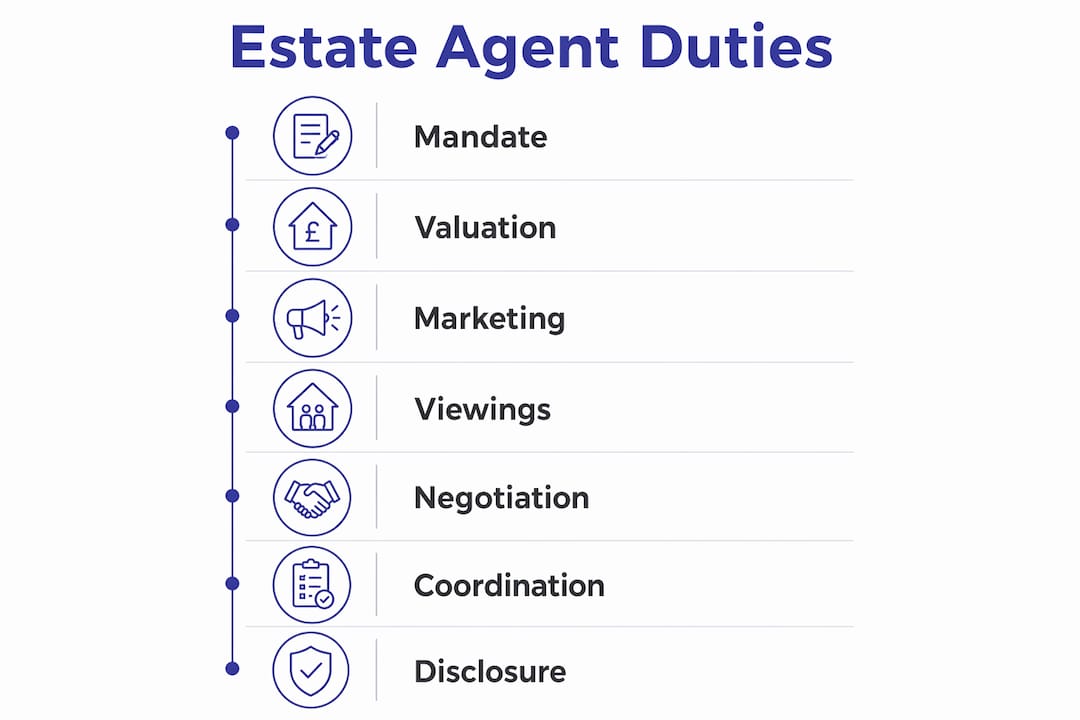
The functions of real estate agents in South Africa span several critical areas:
- Valuation: Advising sellers on realistic market pricing based on comparable sales and local conditions
- Marketing: Listing and promoting properties across digital and traditional platforms
- Viewings: Arranging and conducting property inspections with prospective buyers or tenants
- Negotiation: Presenting and managing offers professionally, balancing the interests of all parties
- Transaction management: Coordinating with transfer attorneys, mortgage originators, and other professionals to keep deals on track
- Disclosure: Declaring all material facts within their personal knowledge to protect buyers and sellers alike
- Ethical conduct: Operating within the PPRA’s Code of Conduct, which requires honesty, transparency, and written documentation of all key steps
What legal framework governs property practitioners in South Africa?
The Property Practitioners Act 22 of 2019 is the cornerstone legislation for the sector. It replaced the Estate Agency Affairs Act 112 of 1976 and, with it, dissolved the Estate Agency Affairs Board, transferring its functions to the newly constituted PPRA. The Act also widened the definition of who qualifies as a property practitioner, bringing bond originators, home inspectors, and property managers under the same regulatory umbrella as traditional estate agents.
The shift from “estate agent” to “property practitioner” was deliberate. As Cliffe Dekker Hofmeyr noted when the Act was introduced, the intent was to tighten oversight and bring multiple property-related roles under one regulatory framework, strengthening consumer protection across the board.
“Without a valid Fidelity Fund Certificate at the time of the sale agreement, agents are not entitled to commission, and conveyancers cannot pay out fees to unlicensed agents.” — NGL Attorneys
Key compliance requirements under the Act include:
- Fidelity Fund Certificate (FFC): Mandatory for all property practitioners to trade legally and earn commission
- Mandatory disclosure form: Sellers must complete this when handing a mandate to an agent; failure to obtain it can expose the agent to personal liability
- Written mandates: Agents must have a formal, signed mandate before negotiating or presenting any offer
- Prohibition on illegal payments: The Act imposes strict penalties for kickbacks, undisclosed fees, or any payment arrangement that circumvents the regulated commission structure
- Property Sector Transformation Fund: Established under the Act to promote inclusivity and support historically disadvantaged persons in accessing the property sector
New entrants to the profession must complete a formal internship, pass NQF-level qualifications, and pay registration and fidelity fund fees before they can practise lawfully.
Core duties and responsibilities of property practitioners
The day-to-day estate agent responsibilities in South Africa are broader than most buyers and sellers realise. A property practitioner is not simply a salesperson; they carry statutory duties that, if neglected, can expose them to sanctions and their clients to financial loss.
Property valuation and pricing advice
Accurate pricing is where most transactions succeed or fail. A property practitioner analyses recent comparable sales, current market conditions, and the property’s specific attributes to recommend a listing price. Overpricing a property costs sellers time; underpricing costs them money. Getting this right requires genuine local knowledge, not guesswork.
Marketing and listing properties
Once a mandate is signed, the agent takes responsibility for presenting the property to the widest appropriate audience. This includes professional photography, listing on property portals, social media promotion, and targeted outreach to buyers already registered on the agent’s database.

Conducting viewings and managing client relationships
Viewings are where the agent’s interpersonal skills matter most. They must present the property honestly, answer questions accurately, and manage the expectations of both seller and prospective buyer. Agents must disclose all material defects within their personal knowledge, shifting responsibility away from the old “buyer beware” principle and reducing post-sale disputes.
Negotiating offers and managing the sales process
Property practitioners act as neutral intermediaries when emotions run high. Sellers are often sentimentally attached to their homes; buyers can feel intimidated by the process. The agent’s role is to balance these dynamics professionally, presenting offers fairly and guiding both parties towards an acceptable outcome. All negotiations must be documented in writing to have legal effect, and agents must explain the contractual consequences of any document before it is signed.
Coordinating with related professionals
A property sale involves more than just the agent and the two parties. Effective liaison with transfer attorneys, mortgage originators, and surveyors often determines whether a deal completes on time. The agent sits at the centre of this network, managing information flow and keeping all parties aligned.
Mandatory disclosure obligations
The Act requires sellers to complete a mandatory disclosure form when handing over a mandate. If an agent fails to obtain this form, they risk personal liability for any undisclosed defects that surface after transfer. This requirement protects both the buyer and, critically, the agent.
Pro Tip: Always ask to see a property practitioner’s valid FFC before signing any mandate or offer to purchase. Non-compliance cannot be fixed retroactively once an offer is signed without a valid certificate in place.
What skills does an effective property practitioner need?
The importance of estate agents lies partly in the breadth of competencies they must bring to every transaction. Technical knowledge alone is not enough.
- Negotiation and communication: The ability to present offers clearly, manage objections calmly, and find common ground between parties with competing interests
- Local market knowledge: Understanding recent sales data, neighbourhood trends, school catchment areas, and infrastructure developments that affect property values
- Legal and procedural literacy: Knowing the requirements of the Property Practitioners Act, the Code of Conduct, and the transfer process well enough to guide clients through each stage
- Ethical conflict management: Handling situations where buyer and seller interests diverge without favouring either party inappropriately
- Organisational ability: Managing multiple mandates, viewings, offers, and professional relationships simultaneously without letting details slip
- Continuing professional development: The PPRA requires ongoing education to maintain licensing; practitioners who invest in their own development tend to serve clients more reliably
- Trustworthiness and transparency: Clients are making some of the largest financial decisions of their lives. An agent who withholds information or cuts corners destroys the trust that underpins every transaction
- Resilience: The South African property market is sensitive to interest rate movements, economic conditions, and political sentiment. Practitioners who adapt quickly serve their clients better when conditions shift
Understanding the differences between agent types and their respective obligations can also help buyers and sellers choose the right professional for their specific needs.
How do estate agents guide you through buying or selling property in South Africa?
The services provided by estate agents span the entire transaction lifecycle, from the first conversation to the moment transfer is registered at the Deeds Office.
Stage 1: Mandate agreement
The process begins with a formal written mandate between the seller and the agent. This document sets out the agreed listing price, the agent’s commission, the mandate period, and the marketing approach. No agent may legally begin marketing or negotiating without this agreement in place.
Stage 2: Valuation, disclosure, and marketing preparation
The agent conducts a comparative market analysis and advises on pricing. The seller completes the mandatory disclosure form, and the agent prepares the marketing materials. This stage protects all parties by establishing a clear, documented record of the property’s condition and agreed terms.

Stage 3: Viewings and buyer engagement
The agent arranges and conducts viewings, gathers feedback, and maintains contact with interested buyers. How estate agents help buyers at this stage goes beyond showing rooms: they provide local area information, recent sales data, and realistic estimates of running costs, helping buyers make informed decisions rather than emotional ones.
Stage 4: Offer to purchase and negotiation
When a buyer is ready, the agent facilitates the offer to purchase. This is a legally binding document, and the agent must ensure both parties understand its terms before signing. All counter-offers and amendments must be in writing. The agent manages the back-and-forth professionally until both parties reach agreement.
Stage 5: Referrals and professional coordination
Once an offer is accepted, the agent refers the buyer to a mortgage originator if finance is required and liaises with the transfer attorney appointed by the seller. Keeping these relationships active and the information flowing is what prevents delays and failed transfers.
Stage 6: Ongoing communication until transfer
The agent’s responsibility does not end when the offer is signed. They remain the primary point of contact for both parties until the property is registered in the buyer’s name. This includes chasing outstanding conditions, confirming bond approval, and managing expectations when timelines shift.
A word of caution: Illegal side deals, undisclosed payments, or arrangements that bypass the formal process are prohibited under the Act and carry serious penalties. If any party suggests a transaction structure that avoids the registered agent or the formal transfer process, treat it as a red flag.
For landlords who work with property practitioners on the rental side, understanding how insurance supports property management is equally important. Rental income can be disrupted by tenant non-payment or early lease termination, and having the right cover in place protects your investment regardless of how diligent your agent is.
Protect your rental income with Rentalincomeinsurance

Property practitioners do an enormous amount to protect your interests during a transaction. But once a tenant moves in, a new set of risks begins. Rentalincomeinsurance covers you against tenant non-payment, early lease termination, and absconding, giving you genuine peace of mind that your rental income is protected even when things go wrong.
We understand the challenges landlords face in the South African market. That is why our cover is designed to be clear, accessible, and reliable. Whether you are a first-time landlord or managing a portfolio of properties, we are here to help you safeguard what you have worked for.
Request a quote today and find out how straightforward protecting your rental income can be.
{{youtube:
}}
Key takeaways
Property practitioners in South Africa operate under the Property Practitioners Act 22 of 2019, and a valid Fidelity Fund Certificate is a legal prerequisite for any agent to earn commission or conduct a lawful transaction.
| Point | Details |
|---|---|
| Legal title has changed | Estate agents are now called property practitioners under the Property Practitioners Act 22 of 2019. |
| FFC is non-negotiable | A valid Fidelity Fund Certificate must be held at the time of signing; non-compliance cannot be corrected retroactively. |
| Disclosure protects all parties | Agents must declare all material defects within their personal knowledge, and sellers must complete a mandatory disclosure form. |
| Agents coordinate the full process | From valuation and marketing through to transfer, practitioners liaise with attorneys, mortgage originators, and surveyors. |
| Rental income needs separate protection | Even with a diligent agent, landlords should cover themselves against tenant non-payment and early lease termination. |
Recommended
- Role Of Insurance Brokers For Landlords: Complete Guide SA – Rental Income Insurance
- Role of rental agents in claims: South African guide – Rental Income Insurance
- Estate agent rental insurance referral benefits: 2026 guide – Rental Income Insurance
- Insurance Basics For Rental Agents In South Africa – Rental Income Insurance