
TL;DR:
- A guarantor legally promises to pay rent and related costs if the tenant defaults, providing financial security. Landlords prefer local guarantors with strong credit and high income; overseas guarantors are usually rejected. Rental guarantee insurance offers an alternative, protecting landlords without personal financial liability for guarantors.
A guarantor is a person who legally promises to pay your rent if you cannot, making the role of guarantors for rent one of the most consequential commitments in any lease agreement. In South Africa’s competitive rental market, landlords routinely require a guarantor when a prospective tenant’s income falls below the standard threshold or their credit history raises concern. Guarantors typically must earn 200–300% of the total rental amount to qualify, which means the bar is high. Understanding what a guarantor does, what they risk, and when you need one is knowledge every renter in South Africa should have before signing a lease.
What is the role of guarantors for rent?
A rent guarantor is a third party who co-signs a lease and accepts legal responsibility for the tenant’s financial obligations. The industry term for this arrangement is a “lease guarantee,” and it functions as a binding contract separate from the tenancy agreement itself. Guarantors serve as a financial safety net that helps tenants with limited credit or income secure rental properties by reassuring landlords of guaranteed payments.

Landlords use guarantors to reduce their exposure to financial loss. If a tenant stops paying rent, the landlord does not need to wait for a court order against the tenant before acting. Most lease guarantee contracts are “guaranties of payment,” which means the landlord can claim from guarantors immediately upon tenant default without first pursuing the tenant legally. That distinction matters enormously for anyone considering signing as a guarantor.
In South Africa, the Rental Housing Act and the National Credit Act both influence how guarantee agreements are structured and enforced. Tenants should understand that a guarantor is not a co-tenant. The guarantor does not live in the property or share day-to-day responsibilities. Their obligation is purely financial, and it activates the moment the tenant fails to meet their lease obligations.
What legal responsibilities does a guarantor assume?
A guarantor’s liability under a rental agreement is broader than most people expect. A lease guarantor must cover unpaid rent, legal fees, and property damages exceeding the deposit, with liability often extending to the lease’s full remaining term. That is not a minor commitment. If a tenant abandons a property six months into a twelve-month lease, the guarantor may owe six months of rent plus any legal costs the landlord incurs.
The key obligations a guarantor typically accepts include:
- Unpaid rent for any period the tenant fails to pay, up to the lease end date
- Property damages beyond the security deposit, including repairs and cleaning costs
- Legal fees the landlord incurs in pursuing the debt
- Court costs if the matter escalates to litigation
Joint tenancies add another layer of complexity. Joint and several liability means a guarantor could be responsible for the total rent arrears of all tenants in a shared property, not just one person’s share, unless the contract explicitly limits this. A guarantor for one flatmate in a shared house could theoretically be liable for every flatmate’s unpaid rent.
The difference between a guarantor and a co-signer is also worth clarifying. A co-signer is jointly liable from day one of the lease. A guarantor’s liability is typically triggered only after the tenant defaults. However, as noted above, most South African lease guarantees are structured so that the landlord can pursue the guarantor immediately after default, without first exhausting legal options against the tenant.
Pro Tip: Before signing as a guarantor, ask the landlord or letting agent for a copy of the full guarantee agreement and have a solicitor or legal adviser review it. Pay specific attention to clauses about joint and several liability and the duration of your obligation.
Guarantors do retain one important right. After paying a landlord’s claim, a guarantor can seek reimbursement from the tenant through civil court. That right exists in law, but exercising it is costly and time-consuming, and recovery is not guaranteed.
Who qualifies as a guarantor under South African landlord requirements?
Not everyone can serve as a guarantor. Landlords prefer guarantors who are local residents with strong credit and stable income, and South African landlords are no different. The vetting process for a guarantor is often as thorough as the vetting process for the tenant.
The typical qualification steps a landlord will require are:
- Proof of income showing earnings of at least two to three times the monthly rent, often verified through three months of payslips or bank statements
- Credit check conducted through a bureau such as TransUnion or Experian, with no adverse listings or judgments
- Proof of South African residency such as a utility bill or lease agreement in the guarantor’s name
- Identity verification via a certified copy of a South African ID or passport
- Signed guarantee agreement reviewed and witnessed, sometimes requiring notarisation
One factor that surprises many renters is the residency requirement. Landlords frequently reject guarantors who live abroad due to difficulties enforcing agreements cross-border, regardless of the guarantor’s financial strength. A parent living in the United Kingdom or Zimbabwe cannot easily serve as a guarantor for a tenant renting in Cape Town or Johannesburg, even if they are financially sound.
Pro Tip: If your preferred guarantor lives outside South Africa, explore rental guarantee insurance as an alternative. Products like those offered by Rentalincomeinsurance provide landlords with equivalent financial protection without the residency constraint.
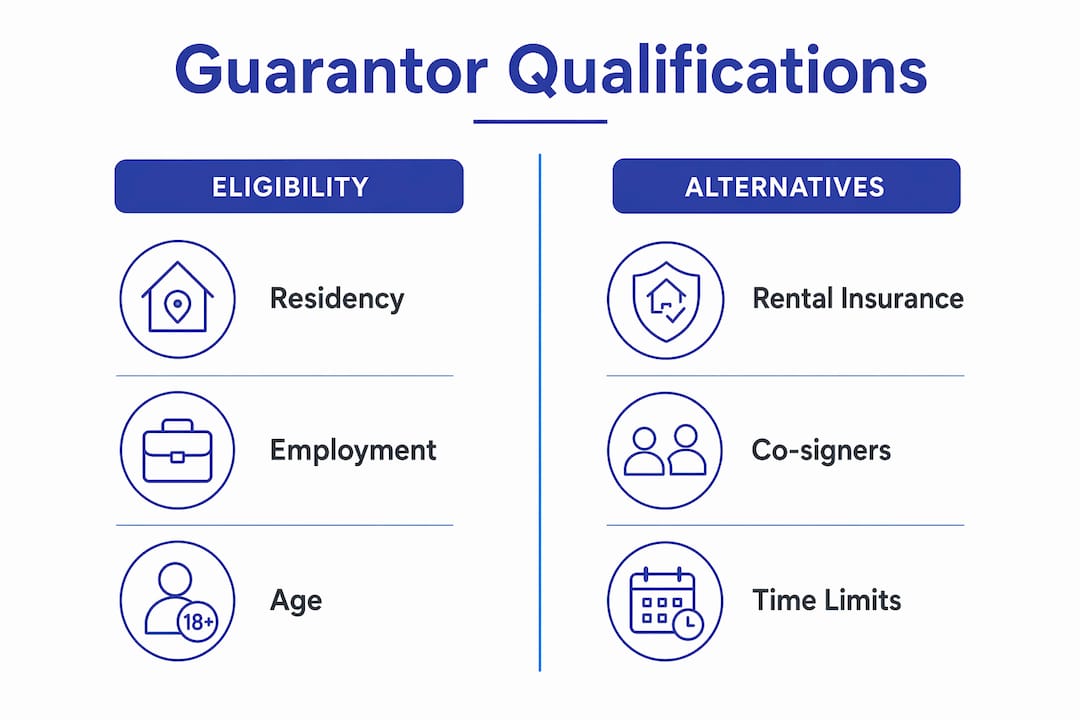
Age and employment stability also matter. Retired individuals may qualify if their pension income meets the threshold. Self-employed guarantors will typically need to provide two years of audited financial statements or tax returns to demonstrate consistent earnings.
How do guarantors help tenants secure a rental property?
A guarantor shifts the risk calculation for a landlord. Without one, a tenant with a thin credit file or a new job is a financial unknown. With a qualified guarantor in place, the landlord has a legally enforceable backup, and the tenant’s own financial profile becomes less decisive. This is the core practical benefit of having a guarantor during the application process.
The tenants who most commonly need a guarantor in South Africa include:
- Students and recent graduates with no rental history or independent income
- First-time renters who have not yet built a credit profile
- Newly employed tenants whose income is real but not yet verifiable over a long period
- Self-employed individuals whose income fluctuates and is harder to document
- Foreign nationals who lack a South African credit history
A strong guarantor can also influence the terms of a lease. Some landlords will reduce the security deposit requirement or waive certain conditions when a credible guarantor is in place. The guarantor effectively lends their financial credibility to the tenant, and landlords respond to that.
Rental guarantee insurance offers an alternative for tenants who cannot find a suitable guarantor. Rather than relying on a family member or friend, a tenant or landlord can arrange an insurance product that covers unpaid rent and related costs. This approach is growing in popularity across South Africa because it removes the personal burden from individuals who would otherwise be asked to guarantee a lease.
What are the risks of being a guarantor?
The most dangerous misconception about being a guarantor is that it is a simple favour with no real consequences. Signing as a guarantor is a legally binding contract that may damage the guarantor’s credit score and lead to court judgments if the tenant defaults. The personal relationship between guarantor and tenant offers no legal protection whatsoever.
The real risks include:
- Credit damage if the landlord registers a judgment against the guarantor for unpaid rent
- Financial loss that may run to many months of rent plus legal costs
- Strained relationships when the guarantor must pursue the tenant for reimbursement
- Pressure and coercion from tenants who exploit personal relationships to secure a signature
“Legal Aid professionals warn of financial abuse risks in guarantor arrangements and emphasise the necessity of independent risk assessment before agreeing to sign.” Legal Aid WA
Many guarantors underestimate their legal risks or feel pressured to sign, and legal experts warn this can lead to severe financial consequences. The advice is consistent: never sign a guarantee agreement without reading every clause and seeking independent legal advice if anything is unclear.
Pro Tip: Ask the landlord whether the guarantee can be time-limited or capped at a specific rand amount. Some landlords will accept a limited guarantee rather than an open-ended one, which significantly reduces your exposure.
How can renters and guarantors protect themselves?
Protection starts with information. Before any guarantee is signed, both the tenant and the prospective guarantor should understand exactly what the agreement covers, for how long, and under what conditions the landlord can make a claim.
The table below compares the two main approaches to providing landlords with financial security:
| Feature | Traditional guarantor | Rental guarantee insurance |
|---|---|---|
| Who provides it | An individual (family member, friend) | An insurance provider |
| Residency requirement | Usually South African resident | Not applicable |
| Credit check required | Yes, for the guarantor | Typically for the tenant |
| Financial risk to individual | High, potentially unlimited | Capped by policy terms |
| Duration | Tied to lease term | Policy period, renewable |
| Cost to tenant | None directly, but a personal favour | Premium paid by landlord or tenant |
Rental guarantee insurance offers an alternative to traditional guarantors, helping landlords secure rent while relieving tenants and guarantors of personal financial risk. For tenants who cannot find a qualifying guarantor, this product can be the difference between securing a property and losing it to another applicant.
Negotiating the terms of a guarantee agreement is also possible. Tenants can request that the landlord accept a limited guarantee, capped at three to six months’ rent, rather than an unlimited one. Some landlords will agree, particularly if the tenant’s other credentials are strong. A landlord risk assessment can help both parties understand the actual level of risk involved and negotiate accordingly.
For legal advice specific to South Africa, the Legal Aid South Africa offices in major cities including Johannesburg, Cape Town, and Durban provide free or subsidised consultations. The Rental Housing Tribunal in each province also handles disputes between landlords, tenants, and guarantors at no cost.
Pro Tip: Always request a written copy of the signed guarantee agreement for your own records. If a dispute arises later, having the original document is critical.
Key takeaways
The role of guarantors for rent is to provide landlords with a legally binding financial backup, but that obligation carries serious personal and financial consequences that every guarantor must understand before signing.
| Point | Details |
|---|---|
| Guarantor liability is broad | Guarantors can owe unpaid rent, damages, and legal fees for the full remaining lease term. |
| Qualification standards are strict | Landlords require local residency, strong credit, and income of 200–300% of the monthly rent. |
| Default triggers immediate claims | Landlords can pursue guarantors directly after tenant default without first suing the tenant. |
| Insurance is a credible alternative | Rental guarantee insurance removes personal financial risk while giving landlords equivalent protection. |
| Independent advice is non-negotiable | Every prospective guarantor should seek legal review before signing any guarantee agreement. |
Why I think renters underestimate the guarantor commitment
I have spent years watching tenants treat the guarantor requirement as an administrative box to tick. They ask a parent or older sibling, get a signature, and move on. What they rarely do is sit down with that person and explain what they have just agreed to.
The uncomfortable truth is that a guarantor agreement is one of the most significant financial commitments a person can make outside of their own mortgage or loan. The liability is real, the enforcement is swift, and the personal fallout when things go wrong can be lasting. I have seen families fall out over guarantor disputes that could have been avoided with a single honest conversation before the lease was signed.
South Africa’s rental market adds its own pressures. Vacancy rates in cities like Cape Town and Johannesburg mean landlords hold significant power, and tenants often feel they cannot push back on guarantor requirements. But pushing back is not the point. The point is going in with clear eyes. If you are asking someone to guarantee your rent, tell them exactly what that means. Show them this article if it helps.
And if you cannot find a suitable guarantor, do not give up on the property. Explore rental income protection as a genuine alternative. The market has moved, and there are now products that serve the same function without putting a family member’s credit record on the line.
— Coert
Protect your rental income with Rentalincomeinsurance
Whether you are a tenant struggling to find a qualifying guarantor or a landlord who wants more reliable protection than a personal guarantee can offer, Rentalincomeinsurance has a solution built for the South African market.

Rentalincomeinsurance covers landlords against tenant non-payment, early lease termination, and absconding, without relying on an individual guarantor to absorb the risk. For tenants, arranging this cover through your landlord can remove the need for a personal guarantor entirely. Visit Rentalincomeinsurance to request a quote and find out how affordable proper protection can be. You can also watch a short overview of how rental income protection works below.
FAQ
What does a guarantor do in a rental agreement?
A guarantor legally promises to pay the tenant’s rent and cover costs such as damages or legal fees if the tenant defaults. The landlord can claim directly from the guarantor immediately after default under most South African lease guarantee agreements.
Who needs a guarantor when renting in South Africa?
Tenants whose income falls below two to three times the monthly rent, or who have a limited credit history, are most commonly required to provide a guarantor. Students, first-time renters, and newly employed individuals fall into this category most often.
Can a guarantor living outside South Africa be accepted?
Most South African landlords reject overseas guarantors because cross-border enforcement of guarantee agreements is difficult and costly. A local resident with stable income and good credit is the standard requirement.
What is the difference between a guarantor and rental guarantee insurance?
A guarantor is an individual who accepts personal financial liability for the tenant’s obligations. Rental guarantee insurance is a policy that pays the landlord directly in the event of non-payment, without exposing any individual to personal financial risk.
How can a guarantor limit their financial exposure?
A guarantor can negotiate a limited guarantee capped at a specific rand amount or a defined number of months’ rent, rather than accepting open-ended liability. Seeking independent legal advice before signing is the most effective way to identify and negotiate these limits.
Recommended
- Rent default management guide for South African landlords 2026 – Rental Income Insurance
- Legal requirements for South African landlords: Essential guide – Rental Income Insurance
- Rental agreement checklist for South Africa 2026 – Rental Income Insurance
- Rental Guarantee in South Africa: Securing Landlord Income – Rental Income Insurance