
TL;DR:
- Tenant absconding involves tenants leaving without notice or payment, causing significant financial loss.
- Prevention includes thorough screening, clear lease agreements, and prompt communication with tenants.
- Insurance solutions can protect landlords from income loss due to tenant absconding and vacancy periods.
Most South African landlords assume a signed lease is all the protection they need. It isn’t. Tenants can vanish overnight, leaving behind an empty property, unpaid rent, and a landlord scrambling to cover a bond payment with no income coming in. This situation, known as tenant absconding, is more common than many property owners realise, and the financial blow can be severe. In this article, we break down exactly what absconding means, why it happens, how to prevent it, and which insurance solutions give you real, reliable protection when the worst occurs.
Table of Contents
- What is tenant absconding?
- Why do tenants abscond? Key triggers and warning signs
- Impact of tenant absconding on landlords
- Strategies to prevent tenant absconding
- Insurance solutions for tenant absconding
- Our take: Why every landlord needs a layered approach
- Protect your rental income against tenant absconding
- Frequently asked questions
Key Takeaways
| Point | Details |
|---|---|
| Tenant absconding explained | It means tenants leave suddenly without notice or fulfilling legal obligations. |
| Major risks for landlords | Landlords face sudden income loss, legal costs, and property issues when absconding occurs. |
| Prevention strategies | Screening, clear leases, and risk management reduce tenant absconding dramatically. |
| Value of insurance | Rental income insurance provides financial protection against rent loss when tenants vanish. |
| Layered defence works best | Combining prevention with insurance gives South African landlords the most robust protection. |
What is tenant absconding?
Tenant absconding happens when a tenant leaves a rental property without giving notice, without following the formal termination process outlined in their lease agreement, and typically without settling outstanding rent or other obligations. It is not the same as a mutual cancellation or a standard end-of-lease departure. Absconding is sudden, unannounced, and almost always leaves the landlord in a difficult position.
In the South African context, the Rental Housing Act governs lease agreements and the rights of both landlords and tenants. When a tenant absconds, they are in breach of contract. However, enforcing that contract after the tenant has disappeared is a separate, often costly, challenge.
Common forms of absconding include:
- Leaving without any notice or communication
- Stopping all rent payments and becoming unreachable
- Abandoning property contents or leaving the unit in a damaged state
- Subletting illegally and then disappearing
As noted in guidance on absconding tenant insurance, tenant absconding results in sudden termination of rental payments, which immediately disrupts your cash flow. Beyond the financial hit, you are left dealing with a vacant property that must be re-marketed, possibly repaired, and re-let as quickly as possible.
“Absconding is not just a legal problem. It is a cash-flow emergency that can destabilise an entire property portfolio if you are not prepared.”
The legal implications are real but limited in practical terms. You may have grounds to pursue the tenant for unpaid rent, but locating a tenant who has deliberately disappeared is difficult. Legal proceedings are expensive and slow. The immediate consequence you feel is the one that matters most: your income stops without warning.
Why do tenants abscond? Key triggers and warning signs
Having defined what tenant absconding is, let’s look at the causes and warning signs.
Most tenants do not abscond on impulse. There is usually a build-up of circumstances that pushes them to disappear rather than engage. The most common triggers include:
- Sudden financial hardship such as job loss or unexpected debt
- Eviction fears when rent falls behind and the tenant believes they cannot recover
- Relationship breakdowns where one partner leaves and the other cannot afford the rent alone
- Undisclosed financial instability that was missed during screening
- Poor landlord-tenant relationships where communication has broken down completely
As tenant risks for landlords research confirms, a blend of financial pressure and poor communication is the most frequent combination. Landlords who do not conduct thorough background checks are especially exposed.
Warning signs to watch for include late or partial rental payments, sudden silence after previously responsive communication, neglect of the property, and unusual activity like removing furniture in stages. These signals rarely appear all at once, but when you notice a pattern, act immediately.
Pro Tip: Implement a risk assessment workflow before signing any lease. Credit checks, employment verification, and previous landlord references are not optional extras. They are your first line of defence. As shown through landlord experience, strict screening and understanding risk factors genuinely reduce the likelihood of absconding.
Do not wait for missed payments to start a conversation. Regular, friendly check-ins build a relationship where tenants feel they can communicate difficulties rather than disappear. The landlords who hear about problems early are the ones who avoid the worst outcomes.
Impact of tenant absconding on landlords
Understanding why tenants abscond puts you in a better position to grasp the risks when it happens.
The financial impact is the most immediate concern. When a tenant disappears, your rental income stops. Bond repayments, municipal rates, levies, and maintenance costs do not stop with it. The gap between income and outgoing expenses can widen quickly, especially if the property sits vacant for several weeks or months.

Beyond lost income, rental income risks for South African landlords typically include:
| Type of loss | Description |
|---|---|
| Unpaid rent | Arrears owed from the final weeks or months before absconding |
| Legal and tracing fees | Cost of attempting to locate and pursue the tenant |
| Property damage | Repairs needed before re-letting, often beyond normal wear and tear |
| Re-letting costs | Agency fees, advertising, and time spent on viewings |
| Vacancy period loss | Ongoing income shortfall while finding a replacement tenant |
The emotional and administrative burden is also significant. Cleaning and repairing a unit, dealing with a property that may have been left in disarray, and restarting the letting process from scratch is exhausting. Many landlords underestimate how much time this takes.
“The real cost of absconding is rarely just the missed rent. It is the full chain of expenses that follows, and the weeks of stress in between.”
As confirmed in guidance from Rental Income Insurance, unpaid rent, legal fees, and turnover costs combine to make absconding one of the most damaging events a landlord can experience. The rental insurance claims process exists precisely to help landlords recover more quickly when this happens.
Strategies to prevent tenant absconding
Now you know the real impact, let’s focus on what proactive South African landlords can do.
Prevention starts before a tenant even moves in. The decisions you make during the screening phase shape the risk profile of your entire tenancy. Here are the most effective steps:
- Conduct thorough background checks. Verify income, employment, and credit history. Confirm the information with official payslips or bank statements rather than relying on self-reporting.
- Contact previous landlords directly. Ask specific questions about payment reliability and communication. A tenant who repeatedly left contact in the final weeks of prior tenancies is a strong warning sign.
- Include firm lease clauses. Address early termination, notice requirements, and the consequences of absconding clearly in the lease. Tenants who understand the terms are less likely to disappear without consequence.
- Collect the full deposit upfront. A deposit equivalent to one or two months’ rent provides some buffer, though it will not cover extended vacancies.
- Respond quickly to late payments. Do not let arrears accumulate. Contact the tenant the moment a payment is missed.
Pro Tip: No single strategy is enough on its own. As outlined in rental risk management steps, a blend of screening, contracts, and insurance consistently outperforms any individual measure.
| Strategy | Protection offered | Limitations |
|---|---|---|
| Tenant screening | Reduces likelihood of problem tenants | Cannot predict all future difficulties |
| Lease clauses | Sets legal expectations | Difficult to enforce if tenant disappears |
| Deposit | Covers minor damage and short gaps | Rarely covers extended income loss |
| Insurance | Covers income loss and related costs | Requires documentation and policy compliance |
Always pair prevention with protection. A tenant default insurance guide can help you understand the full range of cover available for situations where prevention alone is not enough.
Insurance solutions for tenant absconding
With prevention strategies in place, you can further safeguard your income with the right insurance.
Absconding tenant insurance is specifically designed to cover the rental income you lose when a tenant leaves without notice. It bridges the gap between the moment your income stops and the moment a new paying tenant moves in. This type of cover is part of a broader rental income protection offering.
What does cover typically include?
- Loss of rental income during the vacancy period caused by absconding
- Cover for properties undergoing re-letting after the tenant disappeared
- Some policies extend to legal costs associated with tracing or pursuing the tenant
- Protection that runs alongside any simultaneous property damage claims
As clearly set out regarding absconding tenant insurance cover, this type of policy covers loss of income due to sudden vacancy, which is the primary financial wound absconding inflicts.
To ensure your claim is processed without delay, you will need to provide:
- A copy of the signed lease agreement
- Evidence of the last rental payment received
- Written documentation of attempts to contact the tenant
- A police report or formal record of the absconding event where applicable
Claims are most commonly denied when landlords cannot prove they took prompt action, failed to document the incident properly, or allowed arrears to accumulate before notifying their insurer. Understanding the full insurance claims step-by-step process in advance makes all the difference.
Pro Tip: Keep a communication log with every tenant from day one. Dated records of every interaction, payment, and issue create the paper trail that supports a successful claim.
Our take: Why every landlord needs a layered approach
Let’s step back and consider the bigger picture from a landlord’s standpoint.
Too many landlords treat the signed lease as a full-stop. They believe that because the agreement says the tenant must pay rent and give notice, those things will happen. Experience tells a different story. A document provides legal standing, not actual protection. It does not stop a tenant from leaving at 2am with everything they own.
The landlords who suffer most when absconding occurs are those with only one layer of protection. They screen tenants but carry no insurance. Or they have insurance but have no records to support a claim. The loss compounds at every stage.
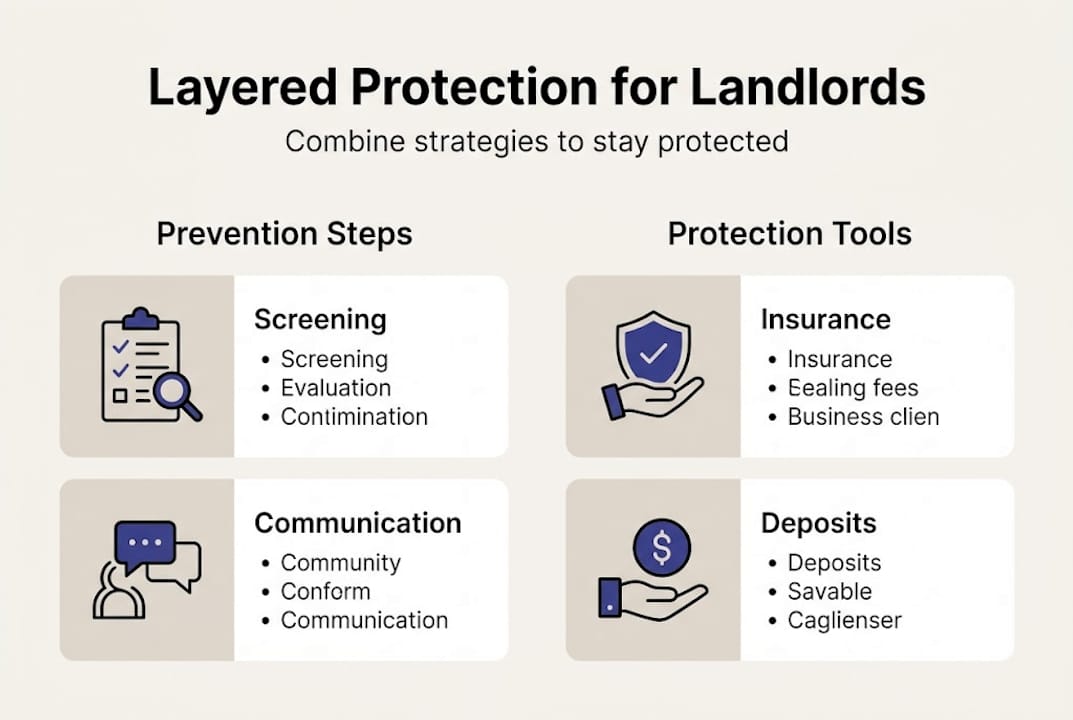
What genuinely builds resilience is combining careful tenant selection, responsive communication during the tenancy, well-drafted lease terms, and appropriate insurance cover. None of these layers is foolproof alone. Together, they dramatically reduce both the likelihood and the financial severity of absconding. Guidance on minimising rental risks consistently supports this multi-layered view. Even experienced landlords with excellent instincts get caught out sometimes. The South African rental market is unpredictable. Acting as if it is not is the most expensive mistake you can make.
Protect your rental income against tenant absconding
Ready to take proactive steps to shield your income?
At Rental Income Insurance, we work with South African landlords every day who have experienced exactly what this article describes. The sudden silence. The empty unit. The missed bond payment. We built our cover to address the real, practical gaps that a lease agreement alone cannot fill.

Whether you want to learn about rental income insurance before making any decisions, explore our rental income protection guide for a full picture of your options, or simply get a rental income insurance quote right now, we make the next step easy. You have worked hard for your rental property. Let’s make sure it keeps working for you.
Frequently asked questions
What should a landlord do first when a tenant absconds?
Notify your insurer immediately, document the incident thoroughly, and begin the process of finding a replacement tenant without delay. As the claim process guide confirms, prompt communication with your insurance provider is critical to a successful outcome.
Will insurance cover my lost rental payments if a tenant absconds?
If you hold absconding tenant insurance, you can claim for loss of rental income, subject to your policy terms and the evidence you provide. This type of policy specifically addresses loss of income due to sudden vacancy.
Are deposits enough to protect landlords from absconding?
Deposits offer limited help with physical damages but rarely cover extended periods of lost income or legal pursuit costs. As risk management guidance makes clear, a blend of screening, contracts and insurance is necessary for real protection.
How can I prevent tenants from absconding?
Thorough screening before the tenancy begins, clear lease terms covering early termination, and consistent communication throughout the tenancy are proven ways to reduce the risk. A structured landlord risk assessment helps identify vulnerability before it becomes a problem.
Recommended
- How to Protect Rental Income: Secure Your Earnings Now – Rental Income Insurance
- Smart ways to prevent tenant default and secure rental income – Rental Income Insurance
- How to Prevent Income Loss 2025 as a SA Landlord – Rental Income Insurance
- Key landlord responsibilities: protect your SA rental income – Rental Income Insurance
- How moving companies streamline tenant turnover in Ontario