
TL;DR:
- Tenant deposits serve as a financial buffer against unpaid rent and property damage for landlords. They are not sufficient alone, so rental income insurance is essential to cover extended losses and legal costs. Proper documentation and layered protection strategies help landlords mitigate risks effectively in 2026.
Tenant deposits are defined as a sum of money held by a landlord as a financial buffer against losses caused by a tenant’s failure to pay rent or their damage to the property. The role of deposits in protection is direct: they give landlords a first line of defence before any legal process begins. South African landlords and rental agents operate in a market where tenant non-payment and property damage are genuine, recurring risks. A deposit does not eliminate those risks, but it absorbs the initial financial blow. Understanding how deposits work, and where they fall short, is the foundation of sound rental income management in 2026.
How do deposits protect landlords against tenant risks?
Deposit protection is the practice of collecting, holding, and applying a tenant’s upfront payment to cover specific losses defined in the lease. The deposit functions as a financial buffer between a landlord’s income and the unpredictable behaviour of tenants. Deposit handling and protection schemes prevent losses and support landlord confidence when things go wrong.
Deposits protect landlords against several common risk categories:
- Unpaid rent. If a tenant stops paying, the deposit covers one or more months of lost income while the landlord pursues legal remedies.
- Property damage beyond fair wear and tear. Repairs to broken fittings, damaged walls, or destroyed appliances can be deducted from the deposit before it is returned.
- Cleaning and restoration costs. A property left in poor condition at the end of a tenancy can require significant expenditure. The deposit absorbs that cost.
- Early lease termination. When a tenant leaves before the lease ends, the deposit can offset the income gap while the landlord finds a replacement.
- Absconding tenants. If a tenant disappears without notice, the deposit provides immediate funds without waiting for a court order.
The size of the deposit matters. A deposit set too low leaves the landlord exposed to losses that exceed what the deposit can cover. Most South African landlords collect one to two months’ rent as a deposit, which provides a reasonable buffer for short-term defaults but may not cover extended non-payment or significant property damage.
Pro Tip: Set your deposit at two months’ rent rather than one. The additional month provides meaningful cover for the gap between a tenant defaulting and a replacement tenant moving in.
What are the mechanisms for deposit protection in South Africa?
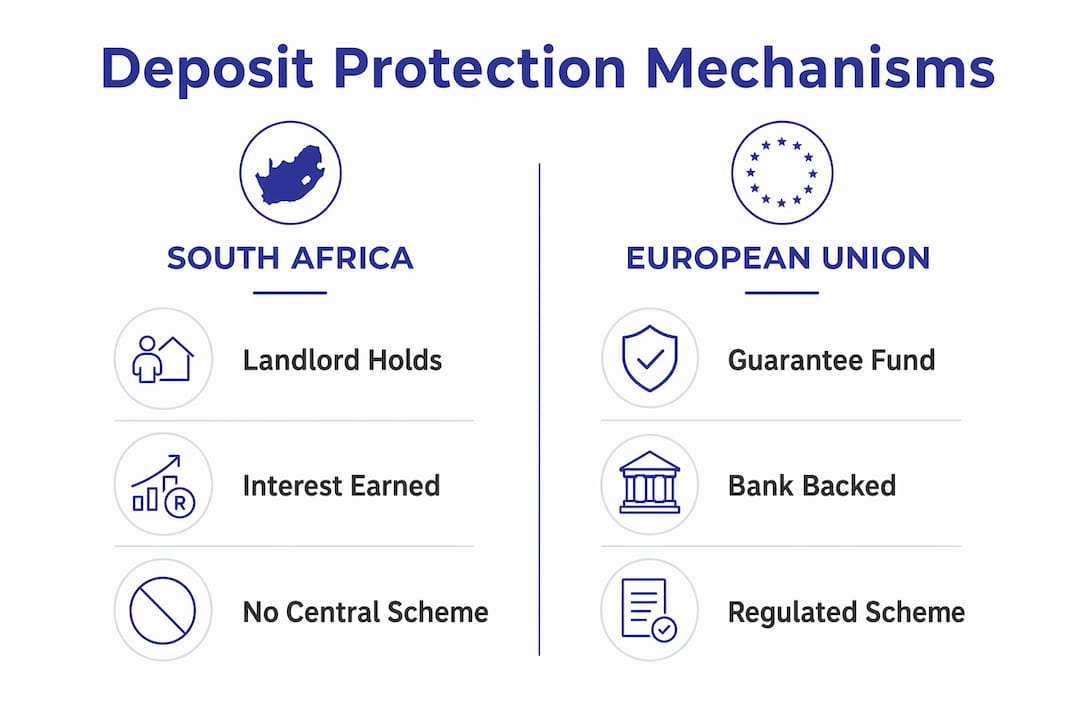
South Africa does not operate a centralised government-backed deposit guarantee scheme for rental deposits in the same way that banking regulators protect savings. The Rental Housing Act governs how landlords must handle tenant deposits. The Act requires that deposits be held in an interest-bearing account for the benefit of the tenant, with interest accruing at the prevailing rate. That interest belongs to the tenant, not the landlord.
The legal framework creates clear obligations. Landlords must invest the deposit in a bank account that earns interest. They must provide proof of that account to the tenant on request. At the end of the tenancy, the landlord has a defined window to carry out an inspection, agree on deductions, and return the balance. Failure to comply exposes the landlord to penalties.

Formal deposit protection insurance services have emerged in South Africa to manage this process on behalf of landlords. These services hold the deposit in a compliant account, manage the documentation, and facilitate dispute resolution. They reduce the administrative burden and lower the risk of a landlord inadvertently breaching the Act.
The contrast with international models is instructive. In the European Union, deposit guarantee schemes protect bank depositors up to €100,000, funded by contributions from banks rather than taxpayers. That model shifts the cost of protection onto the financial sector itself. South Africa’s rental deposit framework places the obligation directly on the landlord, which means compliance is the landlord’s personal responsibility.
The table below compares the key features of South Africa’s rental deposit framework against the EU banking deposit model:
| Feature | SA rental deposit framework | EU banking deposit guarantee |
|---|---|---|
| Who holds the funds | Landlord (in a bank account) | Licensed financial institutions |
| Protection limit | Full deposit amount | Up to €100,000 per depositor |
| Interest earned | Belongs to the tenant | Varies by institution |
| Dispute resolution | Rental Housing Tribunal | National deposit guarantee scheme |
| Funded by | Landlord obligation | Bank contributions |
Pro Tip: Keep a dedicated bank account for each deposit you hold. Mixing deposit funds with your own money is a common compliance error that can result in penalties under the Rental Housing Act.
How does deposit protection compare to rental income insurance?
Deposits and rental income insurance serve different purposes, and understanding the difference protects you from a dangerous assumption: that a deposit alone is enough.
A deposit is finite. Once it is exhausted, the landlord bears all further losses personally. Insurance, by contrast, continues to pay out for as long as the covered event persists, up to the policy limit. The two mechanisms are complementary, not interchangeable.
Here is where deposits fall short on their own:
- Extended non-payment. A two-month deposit covers two months of lost rent. If eviction proceedings take four to six months, the landlord absorbs the difference.
- Legal costs. Eviction in South Africa requires a court order. Legal fees are not covered by the deposit.
- Absconding tenants with no forwarding address. Recovering funds from an absconding tenant through the courts is slow and uncertain. The deposit provides immediate relief, but only up to its value.
- Early termination by a tenant with a long remaining lease. A deposit rarely covers the full income loss from a tenant who leaves six months into a twelve-month lease.
Rental income insurance covers rental income losses when deposits are insufficient or unavailable. Rentalincomeinsurance offers cover specifically designed for South African landlords facing tenant non-payment, early lease termination, and absconding. The deposit handles the immediate shortfall. Insurance handles the sustained loss. Together, they create a layered protection structure that neither provides alone.
Pro Tip: Treat your deposit as your first line of defence and your rental income insurance as your second. Neither replaces the other.
What best practices can landlords follow to maximise deposit protection?
Effective deposit management is a governance responsibility, not an administrative afterthought. Data-driven deposit management stabilises income and reduces disputes. The same principle applies in rental property: structured processes produce better outcomes than informal arrangements.
Follow these steps to manage deposits effectively:
- Collect the deposit before handing over the keys. Never allow a tenant to move in before the deposit clears. A verbal promise is not a deposit.
- Document the property’s condition at the start of the tenancy. A detailed ingoing inspection report, signed by both parties, is your evidence if a dispute arises at the end of the lease. Photographs with timestamps strengthen your position.
- Hold the deposit in a compliant, interest-bearing account. This is a legal requirement under the Rental Housing Act. Keep records of the account details and provide them to the tenant in writing.
- Define deposit deductions clearly in the lease. Your rental contract essentials should specify exactly what the deposit can be used for, including unpaid rent, damage repair, and cleaning costs. Vague clauses invite disputes.
- Conduct a thorough outgoing inspection. Compare the property’s condition against the ingoing report. Document every deduction with invoices or quotes before returning the balance.
- Resolve disputes promptly. The Rental Housing Tribunal offers a free dispute resolution service. Using it early prevents small disagreements from becoming costly legal battles.
- Review your deposit amount annually. Rental values change. A deposit set two years ago may no longer reflect the current monthly rent. Adjust it at lease renewal to maintain adequate cover.
Pro Tip: Review your deposit practices every time you renew a lease. A deposit that was adequate two years ago may leave you underprotected today if rents have risen.
Proper documentation and clear processes reduce landlord-tenant disputes about deposits significantly. The landlord who invests time in documentation at the start of a tenancy saves far more time at the end of it.
Key takeaways
Deposits protect rental income as a first-line financial buffer, but they require legal compliance, clear documentation, and complementary insurance to provide complete protection.
| Point | Details |
|---|---|
| Deposits are a legal obligation | South African landlords must hold deposits in an interest-bearing account under the Rental Housing Act. |
| Deposit size determines cover | A deposit set at two months’ rent provides meaningful cover for short-term defaults and damage. |
| Deposits have a ceiling | Once a deposit is exhausted, the landlord bears all further losses without additional cover. |
| Insurance fills the gap | Rental income insurance covers losses that exceed the deposit, including extended non-payment and legal costs. |
| Documentation prevents disputes | A signed ingoing inspection report and clear lease clauses are the landlord’s strongest tools in a deposit dispute. |
Why deposits alone are not enough in 2026
I have spoken with enough South African landlords over the years to know that the deposit dispute is one of the most common and most avoidable sources of financial pain in the rental market. Landlords collect a deposit, feel protected, and then discover at the end of a difficult tenancy that the deposit covered barely half of what they lost.
The deposit is not a guarantee. It is a starting point. The moral hazard in deposit protection systems is well documented at the banking level: protection can encourage complacency. The same risk exists for landlords. A deposit can create a false sense of security that discourages landlords from taking the additional steps that genuinely protect their income.
The landlords I have seen weather difficult tenancies without lasting financial damage share two habits. They document everything from day one, and they carry rental income insurance alongside their deposit. The deposit handles the immediate problem. The insurance handles the sustained one. That combination is not excessive caution. It is the minimum standard for a landlord who takes their investment seriously.
The rental market in South Africa is not getting simpler. Eviction timelines are long, legal costs are real, and tenant financial stress is a persistent feature of the economy. A deposit collected in good faith can be gone before the eviction order arrives. The landlords who understand this build their protection in layers.
Watch this short overview for more context on how rental income protection works in practice:
— Coert
Rentalincomeinsurance: protection beyond the deposit
Deposits protect you up to a point. Rentalincomeinsurance protects you beyond it.

Rentalincomeinsurance is built specifically for South African landlords, property owners, and rental agents who need cover when a deposit runs out. Whether your tenant stops paying rent, terminates the lease early, or absconds without notice, Rentalincomeinsurance steps in where the deposit stops. Cover includes tenant non-payment, early lease termination, and property damage, giving you a complete protection structure rather than a single financial buffer. If you want to understand exactly what is covered and what is not, the rental income protection exclusions page sets it out clearly. To find out what cover costs for your specific property, request a personalised quote and get a figure based on your actual rental income.
FAQ
What is the role of deposits in protection for landlords?
A tenant deposit is a financial buffer that covers unpaid rent, property damage, and other losses defined in the lease. It is the landlord’s first line of defence against tenant-related financial risk.
How much should a South African landlord collect as a deposit?
Most South African landlords collect one to two months’ rent as a deposit. Two months provides better cover for the gap between a tenant defaulting and a replacement tenant moving in.
Are deposits enough to protect rental income on their own?
Deposits are not sufficient on their own for extended non-payment or significant property damage. Rental income insurance covers losses that exceed the deposit, including legal costs and sustained income gaps.
What happens to a deposit if a tenant disputes the deductions?
Either party can refer a deposit dispute to the Rental Housing Tribunal, which offers free dispute resolution. A signed ingoing inspection report and documented deductions are the landlord’s strongest evidence.
Does South Africa have a formal deposit protection scheme like the EU?
South Africa does not have a centralised rental deposit guarantee scheme. The Rental Housing Act places the obligation on the landlord to hold deposits in a compliant, interest-bearing account and manage returns within the prescribed timeframe.
Recommended
- Key landlord responsibilities: protect your SA rental income – Rental Income Insurance
- Understanding Legal Protection for Landlords in South Africa
- Must-have landlord protections to secure rental income in SA 2026 – Rental Income Insurance
- Deposit protection insurance for South African landlords – Rental Income Insurance