
TL;DR:
- South African landlords with vacation rentals need specialist insurance because standard policies exclude rental income and can void claims.
- Proper documentation and declaration to insurers and SARS are essential to support claims and ensure coverage.
Yes, South African landlords operating income-generating vacation rentals need specialist cover. Your standard home insurance policy almost certainly excludes paying guests. As Wynand van Vuuren of King Price Insurance explains, receiving rental income reclassifies your property as a business risk, and personal lines insurers may reject claims outright if the correct cover is not in place.
Act on these immediately:
- ✅ Contact your insurer and declare that the property generates rental income
- ✅ Check your policy wording for “vacant,” “unoccupied,” or “business use” exclusions
- ✅ Confirm whether loss-of-rent and tenant non-payment cover exists, and note any waiting periods
- ✅ Ask for written endorsement confirming short-term letting is covered
- ✅ Verify your liability limits cover paying guests
Pro Tip: The single most effective evidence item for any claim is a dated, timestamped photo walkthrough taken on move-in and move-out day, paired with a signed inventory. Get written confirmation from your insurer that short-term letting is endorsed before your first guest arrives.
FNB’s buildings insurance terms explicitly exclude cover where a property is let to holidaymakers or via Airbnb unless agreed in advance. That is not an edge case; it is standard wording across many South African insurers.
Table of Contents
- How do you choose the right rental policy in South Africa?
- What evidence do you need to support a valid claim?
- Why platform protections are not enough
- Tax and regulatory obligations when your property earns income
- What does vacation rental property insurance cost in South Africa?
- How long does it take to get cover and process a claim?
- Rentalincomeinsurance: cover built for South African landlords
- Key takeaways
How do you choose the right rental policy in South Africa?
Start with four non-negotiable questions: Does the policy cover tenant non-payment and early lease termination? What is the waiting period before a claim pays out? What is the maximum indemnity period? And what excess applies to loss-of-rent claims?
Red flags to watch for:
- No explicit short-term or holiday-letting endorsement
- Waiting periods for non-payment claims that may delay payouts
- Vacancy clauses that activate between bookings
- Liability limits that may be insufficient for guest injury
Building insurance for rented property can include structural repairs and compensation for lost rental income while the property is unfit to let. Pair that with a dedicated rental income protection policy to close the tenant-default gap. For a side-by-side view of cover types, the landlord insurance comparison on Rentalincomeinsurance is a practical starting point.
What evidence do you need to support a valid claim?
Insurers handling tenant default claims require a specific evidence chain. Missing one item can delay or void a payout.
- Dated move-in walkthrough with timestamped photos of every room
- Signed lease agreement specifying rent amount, payment dates, and duration
- Rent statements showing payment history and the point of default
- Written communication records between you and the tenant regarding arrears
- Eviction documentation confirming formal proceedings have begun or concluded
- Move-out walkthrough with photos showing condition at departure
A lease and pre-occupation walkthrough are your first line of defence, but specialist insurance is the necessary backup when deposits prove insufficient.

Why platform protections are not enough
Platform programmes such as Airbnb’s AirCover are not substitutes for underwritten landlord policies. They carry narrower liability limits, exclude voluntary parting, and do not cover tenant non-payment or loss of rental income during eviction.
Standard household contents policies compound the problem. Most require forcible and violent entry to pay theft claims, which means theft by a guest who had lawful key access is excluded. Standard residential policies may also treat your property as “vacant” between bookings, voiding cover entirely unless you hold an explicit short-term rental endorsement.
Platform protections are limited supplements. They do not replace a locally underwritten, landlord-specific policy. For a clear breakdown of what standard policies leave out, the rental income protection exclusions guide is worth reading before you list your property.
For international context on how host-focused insurance extensions work alongside platform cover, this Airbnb insurance explainer from a European insurance blog illustrates the same platform-cover limitations South African landlords face.
Tax and regulatory obligations when your property earns income
Once your property generates rental income, SARS treats it as taxable. You must declare all rental receipts in your annual income tax return, and you may deduct qualifying expenses such as rates, levies, insurance premiums, and maintenance costs proportionate to the rental period.
If you operate as a short-term holiday let rather than a long-term residential tenancy, your municipality may classify the activity as a guesthouse or bed-and-breakfast, which can trigger separate zoning and business licence requirements. Notify your insurer of the change in use at the same time you notify SARS. Failing to do so risks both a rejected claim and a tax penalty.
This article provides general information only. Confirm your specific tax position and insurance obligations with a qualified tax adviser and your insurer.
What does vacation rental property insurance cost in South Africa?
Published premium benchmarks for specialist short-term rental cover in South Africa are not publicly standardised, so treat any figure you see online as indicative rather than binding. Premiums are calculated on several factors:
- Property value and location: coastal and urban tourist areas typically attract higher premiums
- Occupancy pattern: high-turnover short-term lets carry more risk than long-term tenancies
- Furnished vs unfurnished: furnished properties require higher contents limits
- Claims history: prior claims or gaps in cover raise your risk profile
- Cover scope: adding non-payment, early termination, and liability cover each adds to the base premium
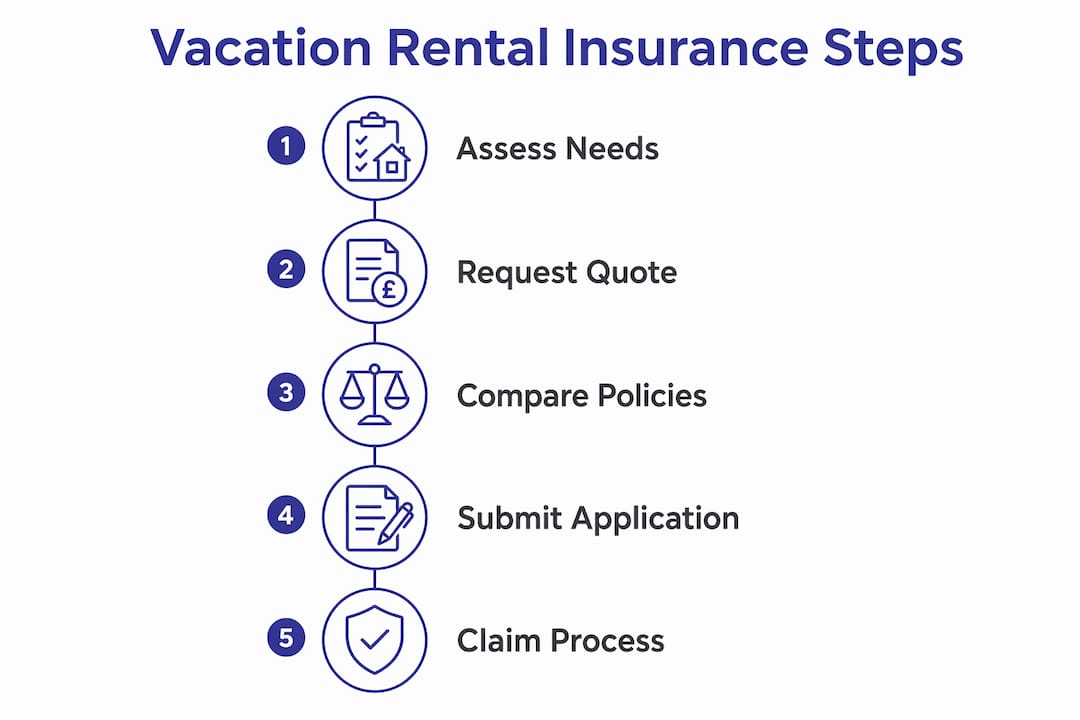
The most reliable way to budget is to request a quote from a specialist provider and compare the indemnity period and excess against the monthly rent you stand to lose.
How long does it take to get cover and process a claim?
Obtaining a specialist rental income policy typically takes two to five business days from submitting your application, provided your documentation is complete. Binding cover for a short-term rental endorsement on an existing policy can sometimes be confirmed within 24–48 hours by written endorsement.
Claim processing timelines vary by insurer and claim complexity. Non-payment claims that include a complete evidence file (lease, rent statements, eviction documentation) are generally assessed within 15–30 business days. Disputed or incomplete claims take longer. Starting the eviction process promptly and maintaining thorough records from day one is the most effective way to keep claim timelines short.
Rentalincomeinsurance: cover built for South African landlords

Rentalincomeinsurance is built specifically for landlords who need protection beyond what a standard home policy provides. Where personal lines cover stops, Rentalincomeinsurance steps in: covering tenant non-payment, early lease termination, absconding tenants, and authorised loss of rent during eviction or repairs.
The policy mechanics are transparent. Waiting periods, maximum payout durations, excesses, and required documentation are set out clearly so you know exactly what to expect before a claim arises. Premiums reflect your occupancy pattern, property type, and location, keeping your cover proportionate to your actual risk.
Getting started takes minutes. Visit the request a quote page, provide your property details, and receive a tailored quote. The team at Rentalincomeinsurance can typically confirm cover within a few business days.
Watch this short overview to see how rental income protection works in practice:
Explore the complete rental income protection guide and the non-payment protection page for full policy details.
Key takeaways
South African landlords operating vacation rentals need specialist rental income insurance because standard home policies exclude income-generating use and can void claims without a written endorsement.
| Point | Details |
|---|---|
| Standard policies exclude paying guests | Personal home insurance typically voids claims when a property generates rental income without a specialist endorsement. |
| Platform cover is not sufficient | Airbnb and similar platform programmes exclude voluntary parting, non-payment, and loss of rent during eviction. |
| Evidence chain is critical | A dated photo walkthrough, signed lease, rent statements, and eviction documentation are required to support a valid claim. |
| Declare income to SARS and your insurer | Rental income is taxable in South Africa; failing to notify your insurer of business use risks both rejected claims and penalties. |
| Rentalincomeinsurance covers the gap | Rentalincomeinsurance provides dedicated cover for non-payment, early termination, and loss of rent for South African landlords. |