
TL;DR:
- Wilful damage involves deliberate and unlawful destruction of property beyond normal wear and tear in South African rentals.
- Landlords must document property conditions thoroughly through signed inspections and photos to prove damage claims legally.
Wilful damage is defined as the intentional and unlawful destruction or impairment of property, going well beyond what the law recognises as fair wear and tear. For South African landlords, understanding what constitutes wilful damage is not just useful knowledge. It is the legal foundation for recovering costs, protecting deposits, and pursuing tenants through the correct channels. The Rental Housing Act 50 of 1999 governs the landlord-tenant relationship in South Africa, and it draws a clear line between damage a landlord must absorb and damage a tenant must pay for. Getting that line wrong costs landlords money and credibility in tribunal hearings.
What legally constitutes wilful damage in SA rentals?
Wilful damage, in the South African legal context, requires two core elements: intent and unlawfulness. The tenant must have deliberately caused the harm, and that harm must go beyond what any reasonable use of the property would produce. This is the definition of wilful damage that courts and the Rental Housing Tribunal apply when adjudicating disputes.
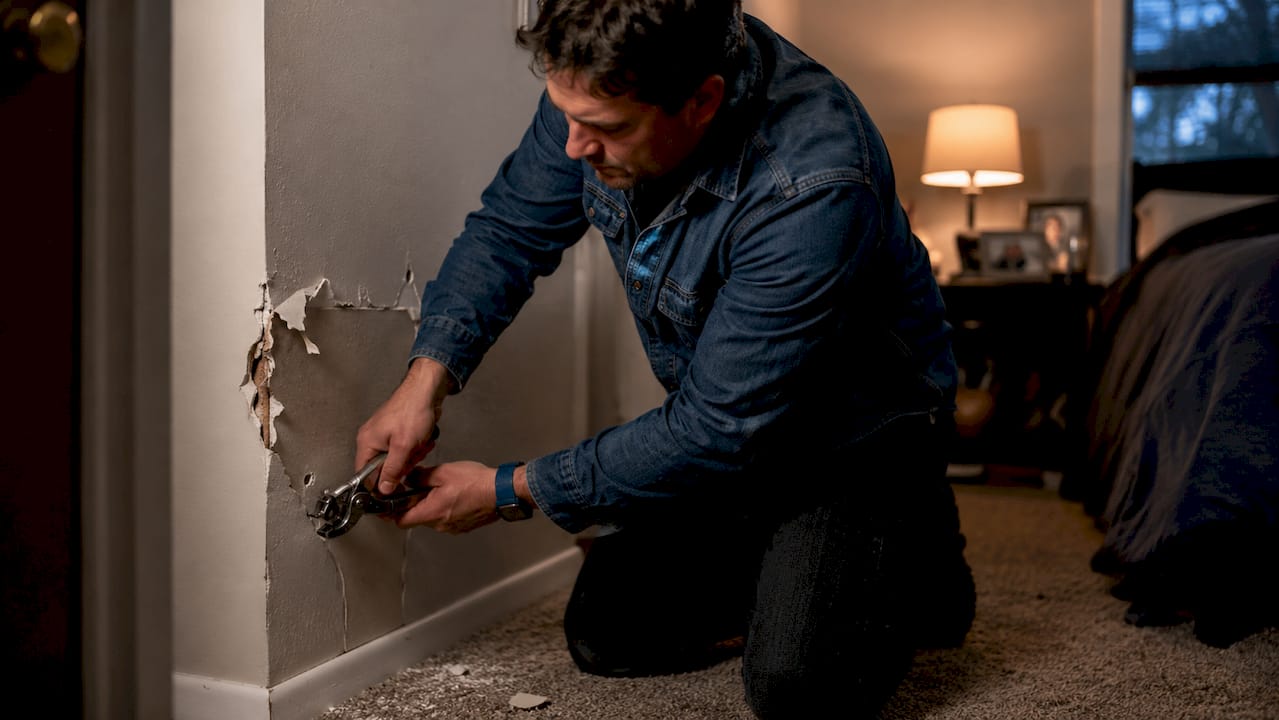
The distinction between wilful damage and fair wear and tear is the most contested point in landlord-tenant disputes. Fair wear and tear refers to natural, unavoidable deterioration from reasonable use. Faded paint, minor scuffs on skirting boards, and small carpet indentations from furniture all fall within this category. Tenants are not liable for these.
Wilful damage looks very different. Common examples include:
- Holes punched or kicked through walls or doors
- Large stains on carpets or flooring from negligent or deliberate acts
- Broken fixtures caused by misuse, such as a towel rail ripped from the wall
- Graffiti or unauthorised painting
- Smashed windows or mirrors
- Removed or damaged built-in cupboard doors
- Deliberate flooding caused by blocked drains
Negligence also falls within recoverable damage territory. A tenant who leaves a tap running and floods a bathroom is not acting with pure intent, but the damage beyond normal use is still the tenant’s liability. South African law does not require proof of malice. Reckless disregard for the property is sufficient to establish liability.
Pro Tip: Document every fixture, fitting, and surface condition at the start of a tenancy with dated photographs. This single step is the difference between winning and losing a damage claim.
How can landlords prove wilful damage?
Proving wilful damage in South Africa depends almost entirely on documentation. Without it, even the most obvious damage becomes legally unrecoverable. The law requires a clear demonstration of the property’s condition at the start and end of the tenancy, and without an ingoing inspection report, claims against tenants for wilful damage often fail.
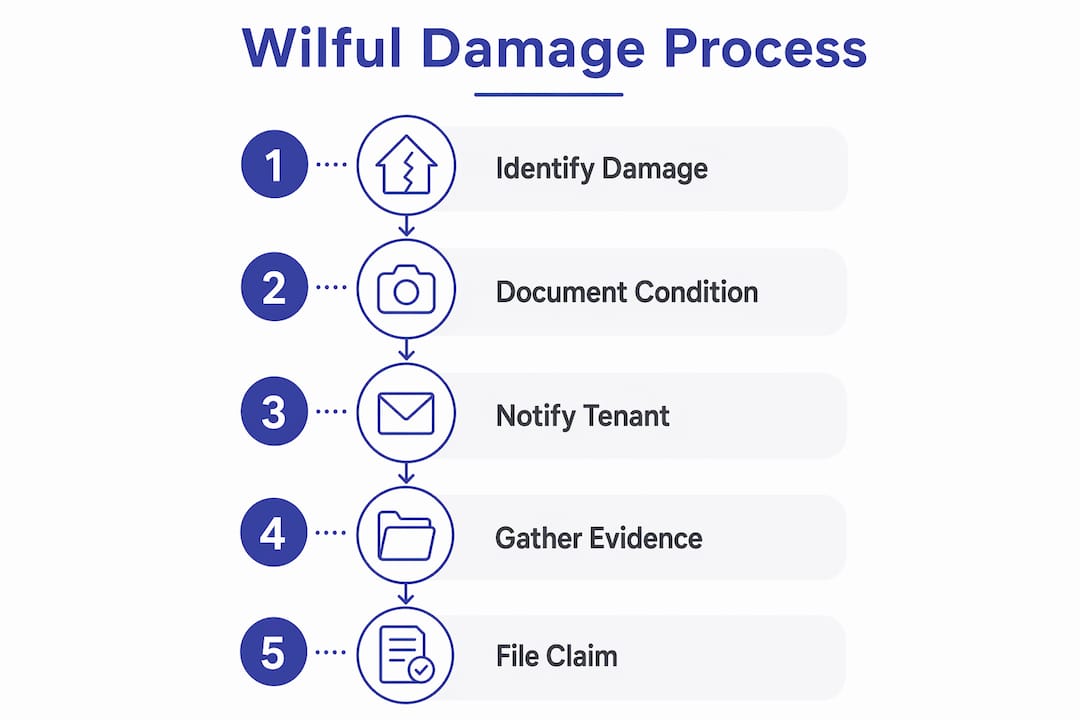
Follow this process to build a watertight case:
- Conduct a joint ingoing inspection. Walk through the property with the tenant before they move in. Record every room’s condition in writing. Both parties must sign the report. This document is your legal baseline.
- Photograph and video everything. Capture walls, floors, ceilings, fixtures, appliances, and garden areas. Use timestamps. Store copies in at least two locations, including cloud storage.
- Conduct a joint outgoing inspection. Repeat the process when the tenant vacates. The majority of deposit dispute failures arise from absent or unsigned joint inspection reports. Invite the tenant in writing and keep proof of that invitation.
- Obtain professional repair quotes. A written quote from a registered contractor carries far more weight than a landlord’s verbal estimate. Get at least two quotes for significant damage.
- Compile a comparison report. Place ingoing and outgoing photographs side by side. Note each item of damage with a corresponding repair cost. This format is exactly what the Rental Housing Tribunal and Small Claims Court expect to see.
Pro Tip: If a tenant refuses to attend the outgoing inspection, send a written notice via registered post or email. Proceed with the inspection regardless, and note the tenant’s absence in the report. Their refusal does not invalidate your claim.
Landlords can also use documented tenant damage evidence to support insurance claims, which makes thorough record-keeping doubly valuable.
What are the legal implications of wilful damage?
The wilful damage legal implications for both landlords and tenants in South Africa are significant. Tenants are liable for all damage that exceeds fair wear and tear, and that liability does not disappear when they vacate.
The security deposit is the first line of recovery. Deposits must be held in interest-bearing accounts, and if no damage occurs, the full deposit plus interest must be returned within the timeframes set by the Rental Housing Act. When damage does occur, the landlord may deduct the cost of repairs from the deposit. The tenant is entitled to a written breakdown of all deductions.
When damage costs exceed the deposit, landlords have three formal routes:
- Rental Housing Tribunal: Free to access, handles disputes under the Rental Housing Act, and can issue binding rulings. Best for disputes where the relationship has broken down entirely.
- Small Claims Court: Handles claims up to R20,000. No legal representation is required, making it accessible and cost-effective for landlords.
- Magistrates’ Court: Appropriate for larger claims. Legal representation is advisable, and success depends on thorough documentation including inspection reports and repair quotes.
One legal risk landlords must understand is the mandament van spolie. This is a South African legal remedy that protects tenants from unlawful dispossession. If a landlord changes locks, removes a tenant’s belongings, or cuts off utilities in response to wilful damage, a court will order immediate restoration of the tenant’s possession. The landlord may also face legal costs. Self-help is never the answer.
“The Rental Housing Act is designed for fairness, protecting tenants from unfair deposit deductions for normal wear, while giving landlords clear recourse for wilful damage.” — Steer Property Group
Landlords should also review their property damage liability obligations carefully, as misclassifying normal ageing as wilful damage can itself trigger a tribunal referral.
How does wilful damage affect insurance claims?
Wilful damage and insurance do not always align neatly. Many standard property insurance policies in South Africa exclude damage caused deliberately by tenants, which surprises landlords who assume all damage is covered. Understanding your policy’s exclusions before a claim arises is not optional.
Insurance claims for wilful damage require thorough documentation, including photographic evidence and repair cost estimates, for successful recovery. Insurers will not pay out on vague descriptions or undocumented losses.
| Coverage Type | Typical Position on Wilful Damage |
|---|---|
| Standard homeowner’s insurance | Often excludes tenant-caused wilful damage |
| Landlord building insurance | May cover structural damage; check policy wording carefully |
| Rental income insurance | Can cover income loss linked to tenant damage and vacancy |
| Specialist tenant damage cover | Designed specifically for landlord-tenant damage scenarios |
The practical steps for filing an insurance claim after wilful damage are straightforward. Report the damage to your insurer immediately. Submit your ingoing and outgoing inspection reports, dated photographs, and at least two repair quotes. Keep all correspondence with the tenant in writing. Delays in reporting or gaps in documentation are the two most common reasons claims are reduced or declined.
Rental income insurance can also safeguard landlords against financial losses from tenant wilful damage and non-payment risks. This type of cover addresses the income gap that arises when a property is uninhabitable due to damage, which standard building insurance rarely covers.
Pro Tip: Read your policy’s definition of “wilful damage” before signing. Some insurers define it narrowly to mean only the tenant’s deliberate act, excluding negligence. Others include reckless behaviour. The wording determines your payout.
Key takeaways
Wilful damage in South African rental properties is legally recoverable, but only when landlords document property condition rigorously from the first day of tenancy.
| Point | Details |
|---|---|
| Legal definition | Wilful damage requires intent or recklessness, going beyond fair wear and tear under the Rental Housing Act. |
| Proof is everything | Signed joint inspection reports and dated photographs are the minimum evidence required to succeed in any claim. |
| Three legal routes | Landlords can pursue recovery via the Rental Housing Tribunal, Small Claims Court, or Magistrates’ Court. |
| Avoid self-help | The mandament van spolie means unlawful eviction or lock changes will result in court-ordered reinstatement and costs. |
| Insurance gaps exist | Many standard policies exclude tenant wilful damage; rental income insurance fills this gap for landlords. |
Why most landlords lose wilful damage claims before they even start
I have seen landlords with legitimate, clear-cut cases of wilful damage walk away with nothing. Not because the damage was not real. Not because the tenant was protected by some obscure legal loophole. But because the landlord could not prove the property’s condition at the start of the tenancy.
The ingoing inspection report is the single most undervalued document in property management. Landlords treat it as a formality. Tenants sometimes refuse to sign it. And then, six months or two years later, when a wall has been punched through or a kitchen has been destroyed, the landlord has no legal baseline to point to. The failure to conduct joint inspections is the most common cause of landlords losing damage claims. That statistic should be alarming.
The second mistake I see constantly is landlords conflating frustration with legal strategy. A tenant causes significant damage, the landlord changes the locks or removes belongings, and suddenly the landlord is the one facing a court order. The mandament van spolie is not a technicality. It is a well-established principle that South African courts enforce without hesitation.
My honest advice: treat every tenancy as if it will end in a dispute. Not because most do, but because the documentation habits that protect you in a dispute are the same habits that make you a professional, credible landlord. Photograph everything. Sign everything. Keep copies of everything. And when damage occurs, follow the legal process through the Rental Housing Tribunal or the courts. The process exists precisely for situations like this, and it works when you use it correctly.
— Coert
Protect your rental income against tenant damage
Wilful damage by tenants is one of the most financially damaging events a landlord can face, particularly when insurance exclusions leave you exposed and legal recovery takes months.

Rentalincomeinsurance exists to close that gap. Whether you are dealing with tenant non-payment, early lease termination, or property damage that leaves your rental uninhabitable, Rentalincomeinsurance provides cover designed specifically for South African landlords. Do not wait until a claim arises to discover your policy does not cover what you assumed it did. Request a quote today and find out exactly what protection is available for your property. You can also explore the full range of landlord coverage options to find the right fit for your portfolio.
FAQ
What is the legal definition of wilful damage in south africa?
Wilful damage is the intentional or reckless destruction of property that goes beyond fair wear and tear. Under the Rental Housing Act 50 of 1999, tenants are liable for all damage exceeding normal deterioration from reasonable use.
What are common examples of wilful damage by tenants?
Common examples include holes in walls, large carpet stains, broken fixtures from misuse, smashed windows, and unauthorised alterations. These differ from fair wear and tear such as faded paint or minor scuffs.
How do i prove wilful damage as a landlord?
Proof requires a signed ingoing inspection report, dated photographs, a signed outgoing inspection report, and written repair quotes from contractors. Without a joint ingoing inspection, claims are extremely difficult to sustain.
Can a landlord deduct wilful damage costs from a deposit?
Yes. A landlord may deduct the cost of repairs for damage beyond fair wear and tear from the security deposit, provided they supply the tenant with a written breakdown of all deductions and supporting evidence.
What can a landlord do if damage costs exceed the deposit?
Landlords can pursue recovery through the Rental Housing Tribunal at no cost, the Small Claims Court for amounts up to R20,000, or the Magistrates’ Court for larger claims. Thorough documentation is required for all three routes.
Want to understand more about protecting your rental investment? Watch this short overview:
Recommended
- How to Manage Property Damages for South African Landlords – Rental Income Insurance
- Property damage liability for South African landlords – Rental Income Insurance
- Malicious damage by tenants: Know your rights – Rental Income Insurance
- Defining Property Damages – Impact on SA Landlords – Rental Income Insurance