
Property damage rental cover pays for landlord losses caused by tenant damage and related lost rent, where the policy terms specify it. Cover typically protects rental income for a set period, often 3 to 6 months’ rent, alongside repair or replacement costs from tenant or covered third-party damage. Payouts depend on your documentation, policy wording and sometimes a statutory or tribunal ruling before insurers release funds.
TL;DR:
- Property damage claims are typically triggered by tenant or third-party vandalism, accidental damage, or neglect, with documentation and legal rulings often delaying payouts.
- Insurers usually limit coverage to repair costs and lost rent for up to six months, with significant claims requiring evidence such as inspection reports and Tribunal rulings.
- Most policies exclude wear and tear, pre-existing damage, landlord neglect, and unauthorized tenant alterations from coverage.
- Preparing thorough tenancy records, photographs, invoices, and lease clauses from the start greatly increases the likelihood of claim success.
- Rental income protection covers three to six months of rent loss, and legal support helps landlords recover unpaid rent through Tribunal or court proceedings.
Table of Contents
- What property damage and rental income elements the cover typically includes
- Who and which events trigger a claim
- How claims work: evidence, documentation and statutory steps
- Typical policy limits and example payouts
- Practical checklist to prepare your paperwork
- Why rental income insurance is a suitable solution
- A practical note on getting your paperwork in order
- How Rental Income Insurance can help
- Sources
- FAQ
What property damage and rental income elements the cover typically includes
Property damage and income loss are two separate risks that often arise from the same event. A tenant who vandalises a unit or causes accidental damage that makes it uninhabitable can trigger both a repair claim and a loss of rent claim at once. Risk guidance for landlords treats these as distinct claim types that a policy must be written to cover deliberately, rather than assumed as a single benefit.
Cover typically includes:
- Repair costs for damaged walls, floors, fittings and appliances.
- Replacement of fixtures such as doors, windows or kitchen units.
- Security measures after a break-in or eviction, including lock changes.
- Remediation work following vandalism, including cleaning and repainting.
Most policies exclude fair wear and tear, damage that existed before the tenancy began, harm caused by the landlord’s own neglect, and unauthorised alterations a tenant made without permission. Reading the exclusions list carefully before you sign matters as much as knowing what is covered, since a claim that falls into one of these categories will usually be declined regardless of the damage’s severity.
Who and which events trigger a claim
Claims usually follow one of a few recognisable patterns, and the identity of who caused the damage shapes how your policy responds.
- Tenant-caused damage. Malicious or deliberate damage, accidental destruction, or a tenant abandoning the property while owing rent are the most common triggers, and absconding often leaves both unpaid rent and property damage to deal with at once.
- Visitors or household members. Most leases hold the tenant responsible for guests and family members living with them, so damage caused by a visitor is generally treated the same as tenant-caused damage under the policy.
- Uninsured third parties. Where an outside party, such as a contractor or an intruder, causes damage and has no insurance of their own, your policy wording determines whether you can claim directly rather than chase the third party for compensation.
Understanding which category an incident falls into early on saves time, because insurers will ask you to identify the responsible party before assessing the claim.
How claims work: evidence, documentation and statutory steps
Once damage occurs, the first hours matter. Secure the property, photograph everything before repairs begin, notify your insurer promptly and keep a written record of every conversation with the tenant.
Insurers will typically ask for:
- Signed entry and exit inspection reports, ideally with time-stamped photographs.
- A copy of the lease agreement and up-to-date rent statements.
- Invoices and receipts for completed or quoted repair work.
- Any Rental Housing Tribunal ruling or court order relevant to the claim.
The Rental Housing Act sets out the process landlords must follow to terminate a lease, repossess a property and claim compensation for tenant-caused damage, and this often runs through the Rental Housing Tribunal before compensation is confirmed. Insurers frequently wait for a Tribunal or court ruling before releasing certain amounts, particularly where unpaid rent is disputed, because the ruling establishes the landlord’s legal right to recover the loss.
Accurate disclosure at the outset protects the claim later. Leaving out a detail about the property or the tenancy, even unintentionally, gives an insurer grounds to query or decline the payout.
Pro Tip: Photograph damage from several angles the same day it is discovered, and email the photos to yourself so the file carries an independent timestamp.

Typical policy limits and example payouts
Most policies work on an indemnity basis: they replace what was lost rather than pay a fixed sum, and they cap that replacement with a monthly rent limit and an overall aggregate limit for the policy period. Rental Income Insurance guidance describes protection typically running for 3 to 6 months’ rent, which sets the upper boundary on how long income replacement continues after a tenant stops paying or absconds.
Two examples illustrate how this plays out. Say a tenant leaves a small hole in a wall and a broken door lock: the repair cost of £150 in South African rand terms is usually settled from the tenant’s deposit, with the policy untouched. Say instead a tenant absconds after causing £3,000 worth of damage and owing three months’ rent at £1,000 a month: the claim covers both the £3,000 repair invoice and the £3,000 in lost rent, minus any excess and minus what the deposit already covers.
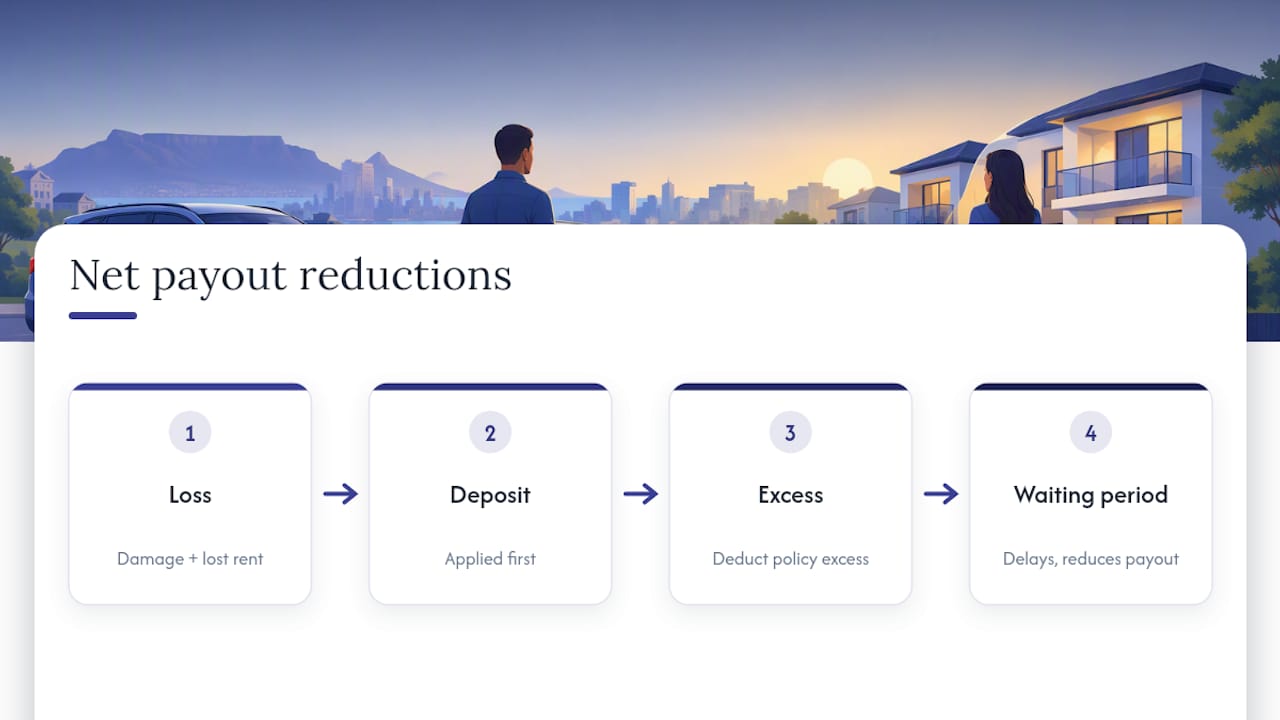
Excesses, waiting periods and the size of the deposit all reduce the net amount paid out, and insurers generally expect the deposit to be applied first before the policy pays the remainder.
Practical checklist to prepare your paperwork
A successful claim is usually decided before any damage happens, in how carefully you documented the tenancy from day one.
- Complete signed entry and exit inspections with dated photographs for every unit, every time a tenant moves in or out.
- Keep rent statements current and save every written communication with the tenant in one place.
- File repair invoices and receipts as soon as work is done, not weeks later.
- Write clear lease clauses covering how tenants must report damage and what they are responsible for regarding visitors.
- Apply for a Tribunal or court order promptly when unpaid rent needs to be recovered, since insurers often require this before settling larger claims.
Why rental income insurance is a suitable solution
Rental Income Insurance builds its products around the exact risks this guide covers: rental income protection, eviction support and property damage liability guidance designed specifically for landlords. The core offering protects rental income for 3 to 6 months, matching the payout shape described above, and pairs that with legal support where an eviction or Rental Housing Tribunal process becomes necessary to recover unpaid rent.
For landlords who have followed the documentation steps in this guide, being signed up with a policy structured this way means the paperwork you have already gathered, inspection reports, lease terms, rent statements, slots directly into the claims process rather than needing to be assembled after the fact.
A practical note on getting your paperwork in order
The landlords who recover the most from a claim are rarely the ones with the most expensive policy. They are the ones who kept inspection reports, rent records and repair invoices in order from the start. If you take one thing from this guide, check your policy wording against your own paperwork now, before a tenant gives you a reason to.
— Coert
How Rental Income Insurance can help
Property damage from a tenant, an absconding renter or an uninsured third party can undo months of rental income in one incident. Rental Income Insurance offers policies built around this exact problem, including Rental Income Insurance, Eviction Insurance and Residential Rental Insurance, each designed to protect landlords facing tenant non-payment, damage or a forced eviction process.

Watch a short explainer here:
- Rental income protection typically covering 3 to 6 months’ rent when a tenant stops paying or absconds.
- Eviction support with legal guidance through the Rental Housing Tribunal process.
- Tailored options for residential, commercial and group landlord situations.
If your current cover leaves gaps in property damage or lost rent protection, request a quote and find a policy suited to your property.
Sources
For readers who want to verify the legal and procedural detail in this guide, the Rental Housing Act sets out landlord and tenant rights and Tribunal procedures. Industry short-term insurance guidance from ASISA explains how claims are settled when policy conditions are met, and its operational risk guideline lists vandalism as a recognised trigger for physical asset damage claims. For a product-level explanation of protection limits, see what property damage liability covers.
FAQ
What does property damage cover typically include for landlords?
It typically covers repair or replacement costs for damage caused by a tenant, their visitors or an uninsured third party, alongside a separate benefit for lost rental income. Cover generally protects 3 to 6 months’ rent when a tenant absconds or defaults after causing damage.
Does the policy pay out if a tenant just stops paying rent?
Loss of rent from non-payment is usually covered separately from property damage, though many landlord policies bundle both. Insurers generally expect documentation such as rent statements and, in some cases, a Rental Housing Tribunal ruling before releasing the full amount.
What documents do I need to make a successful claim?
You typically need signed entry and exit inspection reports with photographs, the lease agreement, rent statements and repair invoices. Where unpaid rent is disputed, insurers may also ask for a Rental Housing Tribunal ruling or court order before paying.
Is wear and tear covered under property damage insurance?
No, fair wear and tear is a standard exclusion across most landlord property damage policies. Cover applies to damage beyond normal use, such as vandalism, deliberate harm or accidental destruction that makes a unit uninhabitable.
How does Rental Income Insurance fit into this type of cover?
Rental Income Insurance offers rental income protection typically covering 3 to 6 months’ rent, alongside eviction support and property damage liability guidance for landlords. Pricing for the core rental income product runs from 3.5% to 5% per month, with other products available on request through a quote request.