
Damage to your rental property’s structure, fixtures, or landlord-owned fittings caused by a vehicle is generally considered property damage under a landlord or buildings policy. That covers a smashed garage door, a flattened boundary wall, or a broken gate. Whether the claim actually pays out depends on your policy wording, whether you declared the property as let, and how well you document the incident.
TL;DR:
- Property damage coverage typically includes structural, boundary, and fixed fixtures but excludes damage to tenant belongings and wear and tear.
- Insurers require specific proof for malicious or negligent damage, such as police reports or inspection records, to approve claims.
- Immediate steps after an incident, like photographing damage and recording details, significantly increase the chances of claim acceptance.
- Loss-of-rent protection applies only when the property is uninhabitable due to damage, with policy limits and waiting periods affecting payout eligibility.
- Proper documentation, timely insurer notification, and declaring letting status prevent claim disputes and ensure smooth processing.
Table of Contents
- What is considered property damage in a car accident on a rental property?
- Wear and tear versus malicious or negligent vehicle damage
- The first 30 minutes after a vehicle hits your property
- How a damage claim affects your rental income
- Deposits or insurance: which route first?
- Exclusions, excesses and pitfalls to watch for
- Treat letting as a business, not a favour to a tenant
- Getting your rental back in order after vehicle damage
- Sources
- FAQ
What is considered property damage in a car accident on a rental property?
For landlords, property damage means physical harm to anything you own and insure as part of the letting, not anything the tenant owns. That distinction matters more than most landlords realise until they file their first claim.
Your insurable property typically includes the building structure, permanent fixtures, fitted appliances, boundary walls, gates, and any fixed installations attached to the land. Building insurance for a rented property usually extends to outbuildings like garages and pool areas too, which is exactly where vehicle damage tends to strike.
Common examples of qualifying damage include:
- A garage door caved in by a reversing car or delivery vehicle
- A boundary wall or perimeter fence knocked down by a vehicle
- A fixed solar panel installation or external geyser struck by a car
- Gates torn off hinges or bent beyond repair
- External paving, driveways, or fixed landscaping cracked or displaced
What falls outside this definition is just as important. A tenant’s own vehicle, furniture, electronics, or any personal belongings damaged in the same incident are not the landlord’s property, and tenant belongings are never covered by the landlord’s policy. That’s a matter for the tenant’s own contents insurance, not yours. Keep that boundary clear from the first phone call, because insurers will ask.
Wear and tear versus malicious or negligent vehicle damage
Insurers draw a hard line between damage that happens gradually through normal use and damage caused by a specific, identifiable event. A vehicle striking your gate is never wear and tear. Faded paint on a garage door or a slightly worn driveway surface, on the other hand, is exactly the kind of gradual deterioration insurers and the law both exclude from claims.
Fair wear and tear is not claimable, whether you’re pursuing an insurance payout or a deduction from a tenant’s deposit. Malicious or negligent damage sits in a different category entirely, and it includes:
- Deliberately reckless driving that damages fixed property
- A tenant’s visitor causing damage through negligence (misjudged reversing, ignoring a marked bay)
- Damage compounded by a failure to report or secure the area afterwards
Insurers expect specific proof before they treat an incident as malicious or negligent rather than accidental wear. That usually means a police case number for deliberate acts, a signed inspection report showing the property’s condition before the incident, and a lease that spells out tenant responsibility for guests and visitors. Some landlord policies offer an optional tenant-damage extension for exactly this scenario, though these extensions often carry a higher excess and stricter evidence requirements than standard buildings cover.
One clause trips up more landlords than any other: declared occupancy. If your policy assumes the property is owner-occupied or vacant when it’s actually tenanted, a claim can be reduced or refused outright regardless of how clear-cut the vehicle damage is.
The first 30 minutes after a vehicle hits your property
What you do in the half hour after the incident often decides whether a claim succeeds. Evidence degrades fast, memories fade, and vehicles drive off.
- Check for injuries and make the area safe before anything else.
- Photograph the damage from wide angles and close up, making sure timestamps are visible or noted separately.
- Record the vehicle’s registration number, make, model, and the driver’s name and contact details if they’re still present.
- Take contact details from any witnesses and a brief note of what they saw.
- Call the police if the damage looks deliberate, if the driver fled the scene, or if it’s required for a later claim, and get a case reference number.
- Contact your insurer or broker the same day, even if you’re still gathering details.
- Keep every receipt for temporary repairs, such as boarding up a broken gate.
- Arrange a professional inspection and get at least one contractor quotation for full repairs.
Your ingoing and outgoing inspection reports, the signed lease, and deposit records all strengthen a claim because they establish what the property looked like before the incident. Rentalincomeinsurance has a full first 30 minutes checklist built specifically for this scenario.
Pro Tip: Save photos to a dated folder immediately, even before you’ve decided whether to claim. Insurers have rejected otherwise valid claims purely because the landlord couldn’t prove when the photos were taken.
How a damage claim affects your rental income
Vehicle damage that makes a property genuinely untenantable, not just cosmetically damaged, is where loss-of-rent cover comes into play. This is a distinct benefit within a landlord policy, and it pays out under different conditions to the buildings repair claim running alongside it.
Three terms decide what you actually recover:
- Indemnity period: the maximum length of time the policy will pay lost rent while repairs are underway, commonly capped at a set number of months.
- Monthly limit: the maximum rand amount paid per month, which needs to match or exceed your actual rent, not just come close.
- Waiting periods: some policies impose a short delay before loss-of-rent payments begin.
Rental income insurance replaces income lost after insured damage, but only when the property is genuinely unfit to occupy because of that damage. It’s a different mechanism entirely from a tenant simply stopping payment, which loss-of-rent cover typically does not address. Check your policy’s monthly limit against your actual rent roll before you need it, not after.
Deposits or insurance: which route first?
Deposits cover damage beyond fair wear and tear, but only with proper documentation behind the deduction. Deducting from a deposit requires evidence such as a joint inspection report and a reasonable contractor quotation, not just your word against the tenant’s.
The sensible order of operations looks like this:
- Secure the site and arrange emergency repairs if the damage is unsafe or worsening
- Get at least one, ideally two, contractor quotations
- Notify your insurer before committing to full repairs
- Lodge the formal claim with photos, quotes, and inspection reports attached
- Keep every receipt in case the insurer requests them later
- Pursue the tenant for the excess or any shortfall only once the insurer’s position is clear
Avoid claiming the same repair cost from both the deposit and the insurer without clear accounting, since that can look like an attempt to recover twice for one loss. For minor damage well under your excess, going straight to the deposit is often faster and cheaper than opening a claim at all.
Exclusions, excesses and pitfalls to watch for
Policies decline or reduce vehicle-damage claims for reasons that have nothing to do with the accident itself. Pre-existing damage not disclosed at policy inception is one common trigger. Failing to declare that the property is let, rather than owner-occupied, is another, and it can void cover entirely regardless of how the damage occurred.
Vacancy clauses catch out landlords between tenants: most policies limit or void cover once a property sits unoccupied beyond 30 to 60 days unless you’ve followed the insurer’s specific conditions, such as regular inspections or shutting off the water mains.
- Confirm your sum insured reflects current rebuild costs, not the original purchase price
- Declare the letting arrangement to your insurer in writing
- Keep inspection records current between tenancies
- Add a clause to the lease making tenants responsible for damage caused by their visitors’ vehicles
Pro Tip: Review your sum insured every renewal, not every five years. Rebuild costs move faster than most landlords expect, and an underinsured claim pays out proportionally less across the whole loss.
Treat letting as a business, not a favour to a tenant
The landlords who sail through vehicle-damage claims aren’t lucky. They run inspections on a schedule, keep a lease that actually addresses visitor liability, and set their sum insured properly rather than guessing. Most disputes I’ve seen traced back come down to a missing ingoing inspection report or a policy that quietly assumed the house was empty.
None of that is complicated, but it has to happen before the accident, not after. Rentalincomeinsurance’s claims process guide and first 30 minutes checklist exist because the gap between a paid claim and a rejected one is almost always preparation, not luck.
— Coert
Getting your rental back in order after vehicle damage
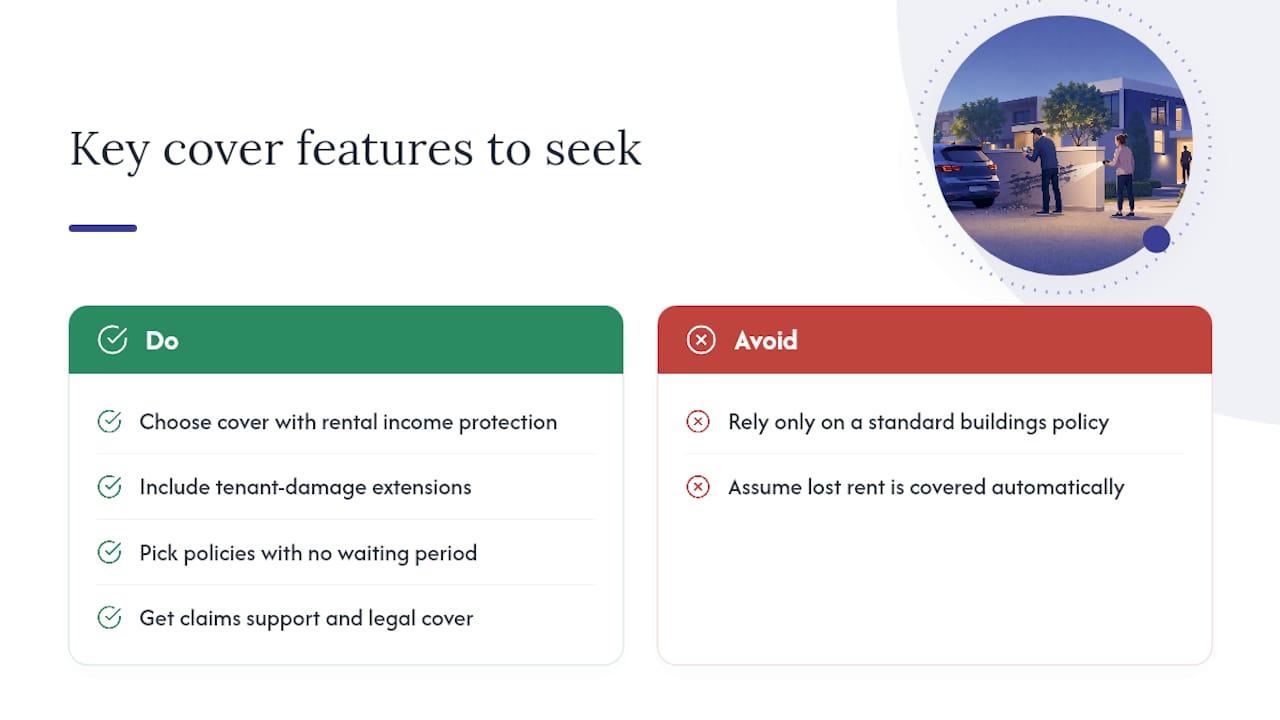
There is a specific gap in the market addressed by cover that responds to the two main issues landlords face after damage like this: the repair bill and lost rent while the property sits empty. Unlike a standard buildings policy, some providers package rental income protection alongside tenant-damage extensions and claims support, with no waiting period on cover taking effect.

That matters most in exactly the scenario this article has walked through. A vehicle hits your gate or boundary wall, repairs take weeks, and the rent stops arriving while your mortgage doesn’t. Our rental income insurance is designed to cover both sides of that problem, with residential and commercial products depending on your portfolio, and legal support if a dispute with a tenant follows the damage claim. If you’re unsure whether your current policy would actually pay out in this exact scenario, that’s worth checking before an incident forces the question. You can request a quote and get a straight answer on what’s covered for your property.
For a broader look at how home and third-party liability policies handle vehicle-related property claims generally, this overview of liability cover is a useful comparison point.
Watch a short breakdown of how rental protection works in practice:
Sources
For the immediate response checklist, see what to do when a vehicle damages your property. For the full claims workflow, read our claims process guide.
This article is general information, not a substitute for advice from a qualified financial advisor. Consult a qualified financial professional about your own circumstances before acting on anything here.
- Landlord Insurance Explained: What Property Investors Actually Need to Cover
- My Tenant Damaged My Property – What Can I Do In South Africa?
- Rental income insurance – protecting your assets and liabilities
FAQ
Is minor damage still considered property damage?
Yes. Even small dents to a gate or hairline cracks in a boundary wall count as property damage if a vehicle caused them, though minor repairs are sometimes cheaper to handle through the tenant deposit than through a formal insurance claim.
What’s the difference between bodily injury and property damage in this context?
Bodily injury refers to harm to a person, while property damage refers to physical harm to the building, fixtures, or landlord-owned fittings; a single vehicle incident can involve both, but they’re claimed separately.
Does landlord insurance cover a tenant’s damaged car?
No. A tenant’s vehicle is their personal property, not the landlord’s, so it falls outside a landlord or rental income policy and would need to be claimed under the tenant’s own motor insurance.
How much does Rentalincomeinsurance’s rental income cover cost?
Rental Income Insurance is priced at 3.5 to 5% per month; other products such as eviction insurance and tenant-damage extensions don’t have a published price and are quoted individually, so it’s worth requesting a quote for your specific property.
Will a vehicle-damage claim raise my future premiums?
It can, particularly if you claim frequently or the damage stemmed from a vacancy or occupancy breach, so accurate declarations and solid documentation at claim time help keep your renewal terms favourable.