
Property damage is any physical harm to someone’s tangible property, whether a building, its fixtures or movable belongings, that needs repair, replacement, or leaves the owner unable to use it. That single sentence covers most of what people mean when they ask what is considered property damage, but two separate systems decide what happens next.
- Legally, damage must be unlawful, intentional (or in some cases reckless) and more than trivial before it becomes a criminal matter.
- For insurance, damage must fall within a specific policy’s covered perils and exceed the “cost to restore” threshold insurers use to assess claims.
Minor scuffs and negligible marks usually fail both tests under the de minimis principle, meaning small stuff typically doesn’t trigger a police case or a payout.
Table of Contents
- What is considered property damage under the law and your policy?
- How South African law defines malicious damage to property
- How insurers define and value property damage
- Real-world examples of property damage
- What usually doesn’t count as property damage
- What to do immediately after property damage occurs
- What landlords and tenants each need to cover
- Property damage risk isn’t optional for South African landlords
- Why the standard advice on property damage misses the point
- Frequently asked questions about property damage
- Sources
What is considered property damage under the law and your policy?
Property damage always involves corporeal property, something physical you can touch, as opposed to intangible losses like reputation or lost opportunity. Corporeal property splits into two broad categories, and knowing which one you’re dealing with shapes everything that follows.
- Immovable property covers buildings, fixed structures and permanent fixtures such as built-in cupboards, roofing and plumbing.
- Movable property covers furniture, appliances, vehicles and personal belongings that aren’t attached to the structure.
Within those categories, damage tends to fall into four practical buckets: structural or physical damage (a cracked wall, a collapsed ceiling), contents damage (a burnt sofa, a broken television), loss of use (you can’t live in or rent out the space while repairs happen), and diminished value (the property is fixed but worth less because of its damage history).
Both courts and insurers lean on a similar practical test: does the harm require meaningful cost or effort to restore the item to its original condition? If yes, it counts as damage in the ordinary sense. If the mark wipes off with a cloth or the item still functions exactly as before, it usually doesn’t meet the threshold, regardless of how annoying it looks.
How South African law defines malicious damage to property
South African common law treats malicious damage to property as a distinct crime, and understanding its elements tells you when a situation belongs with the police rather than your insurer. The offence requires three things: unlawful conduct, actual damage to another person’s corporeal property, and intention, whether direct, indirect, or dolus eventualis (where the person foresaw the harm as a possibility and proceeded anyway). Trivial damage generally falls outside this because the law follows the de minimis non curat lex principle, meaning courts don’t concern themselves with negligible harm.
Arson sits alongside this as a related but separate offence, and it becomes more complicated when someone damages their own property. Legal scholarship on the criminalisation of damage to property under South African common law notes that courts have extended liability where a person’s own-property damage endangered others or was intended to defraud an insurer.
The label “malicious” has drawn academic criticism for adding confusion rather than clarity. What actually matters to a court is intention and foreseeability, not the emotive word attached to the charge.
Pro Tip: If damage looks deliberate, get a police case number before you contact your insurer. Most insurers require it for malicious damage claims, and it protects your position if the matter later goes to court.
How insurers define and value property damage
Insurers split cover along asset lines, and mixing these up is one of the most common reasons a claim gets rejected. Buildings insurance protects the physical structure, fixtures and permanent fittings, while contents insurance covers the movable belongings inside. In a rented property, the landlord typically insures the structure and the tenant insures their own contents, a distinction the fanews guide to buildings versus contents cover sets out clearly.
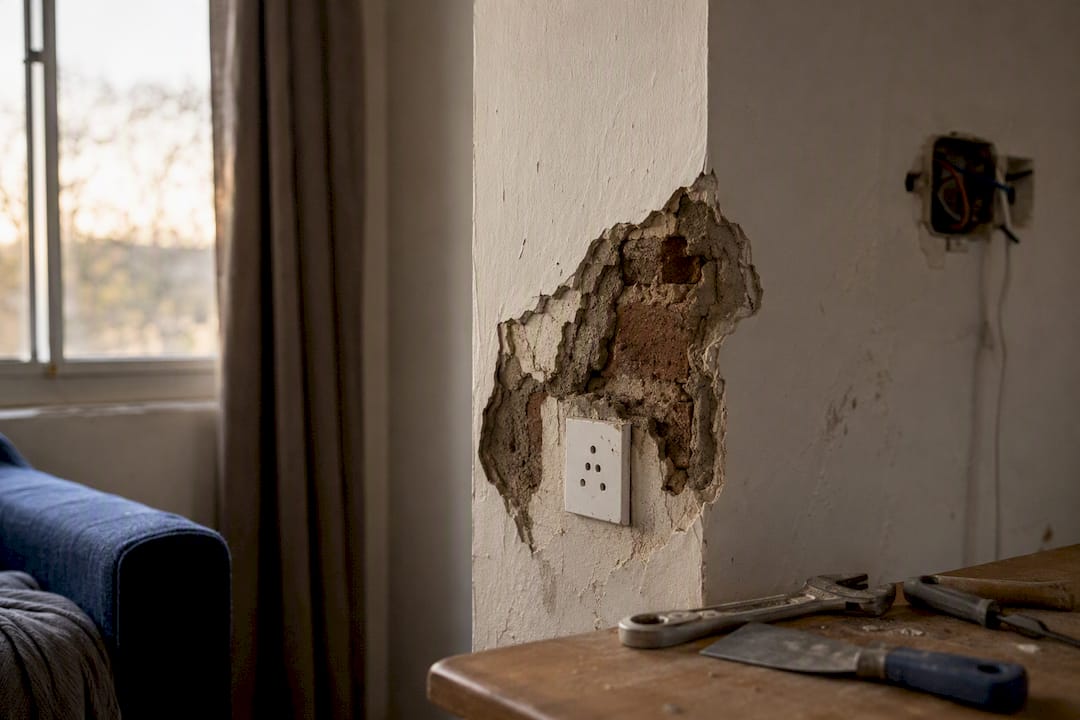
Almost 40% of South African landlords face unexpected property damage or tenant disputes annually, often because their cover doesn’t match their actual exposure.
Once damage happens, insurers assess it against the cause (the “peril”), the valuation method (replacement cost versus actual cash value after depreciation), and your duty to mitigate further loss and notify them promptly. Watch for these common exclusions:
- Gradual wear and tear from ordinary ageing.
- Damage caused by poor maintenance or neglect.
- Certain construction defects present before the policy began.
- Civil unrest and riot damage, which usually needs separate SASRIA cover rather than a standard policy.
Policy wording decides all of this, so read the schedule of exclusions before you assume a loss is covered.
Real-world examples of property damage
Some incidents are unambiguous. Others sit in a grey zone that trips up even experienced landlords.
- Storm-damaged roof: usually insurable under buildings cover, rarely criminal.
- Burst-pipe water damage: typically insurable, though sudden versus gradual leaks are assessed differently.
- Smashed windows from vandalism: insurable and potentially criminal if the culprit is identified.
- A car hitting a garden wall: covered under the wall owner’s buildings policy, with the driver’s motor insurer often liable too.
- Fire damage: almost always insurable; arson investigations run in parallel if intent is suspected.
- Theft-related damage (a forced door or broken lock): usually insurable and reportable to police as a criminal matter.
- Superficial scuffs, small stains or pre-existing defects: typically excluded from both criminal charges and insurance payouts because they fail the restoration-cost threshold.
What usually doesn’t count as property damage
Insurers and courts both draw firm lines around certain categories, and knowing them saves you from lodging a claim that never had a chance. Gradual wear and tear, such as fading paint or ageing carpets, isn’t damage in the insurable or legal sense; it’s expected deterioration.
- Lack of routine maintenance that leads to decay is treated as an owner responsibility, not an insured event.
- Construction defects present from the build are typically excluded, since they predate any covered peril.
- Intangible losses (stress, inconvenience) aren’t property damage, though loss of use following genuine damage often is.
Always check your specific policy wording. Exclusion lists vary between insurers, and assuming standard terms apply can leave you underinsured.
What to do immediately after property damage occurs
- Check for danger first. Call emergency services for anything involving fire, structural collapse, or exposed electrics.
- Document everything. Take time-stamped photos and video from multiple angles, and note any witnesses.
- Mitigate further loss. Arrange temporary repairs, such as boarding a broken window, and keep every receipt.
- Report criminal damage to the police and get a case number, particularly for vandalism, theft, or suspected arson.
- Notify your insurer promptly. Most policies set strict reporting windows, and delay can weaken or void a claim.
- Get repair quotes from at least two contractors to support your claim’s valuation.
Pro Tip: Keep a folder, digital or physical, with your lease, inspection reports and photos before anything goes wrong. Insurers processing tenant-damage claims often ask for an inspection report, the lease, photographic evidence and a case number, and having it ready cuts weeks off the process.
What landlords and tenants each need to cover
Landlords typically insure the building structure, while tenants are responsible for insuring their own contents, mirroring the general buildings-versus-contents split. Where it gets more nuanced for landlords is the malicious or accidental tenant damage extension, an optional add-on that covers harm caused by tenants specifically, alongside loss-of-rent cover for when insured damage makes a unit genuinely untenantable. That’s a different exposure entirely from tenant non-payment, which sits under rent-guarantee style protection rather than damage cover.
Prevention still beats any claim. Thorough entry and exit inspection reports, dated photographs and careful tenant vetting remain the strongest defence landlords have, with insurance as the last-resort safety net behind them.
Property damage risk isn’t optional for South African landlords
Property damage sits at the intersection of law and insurance, and the single biggest determinant of a good outcome is documentation gathered before and immediately after the incident occurs.
| Point | Details |
|---|---|
| Definition threshold | Damage must be corporeal and require real repair cost or effort to count legally or under a policy. |
| Legal test | Malicious damage needs unlawful conduct, actual harm and intention; trivial marks are usually not actionable. |
| Insurance split | Buildings cover protects structure and fixtures; contents cover protects movable belongings. |
| Common exclusions | Wear and tear, poor maintenance, pre-existing defects and civil unrest usually fall outside standard cover. |
| Prevention first | Inspection reports, photographs and tenant vetting reduce claims more reliably than insurance alone. |
Why the standard advice on property damage misses the point
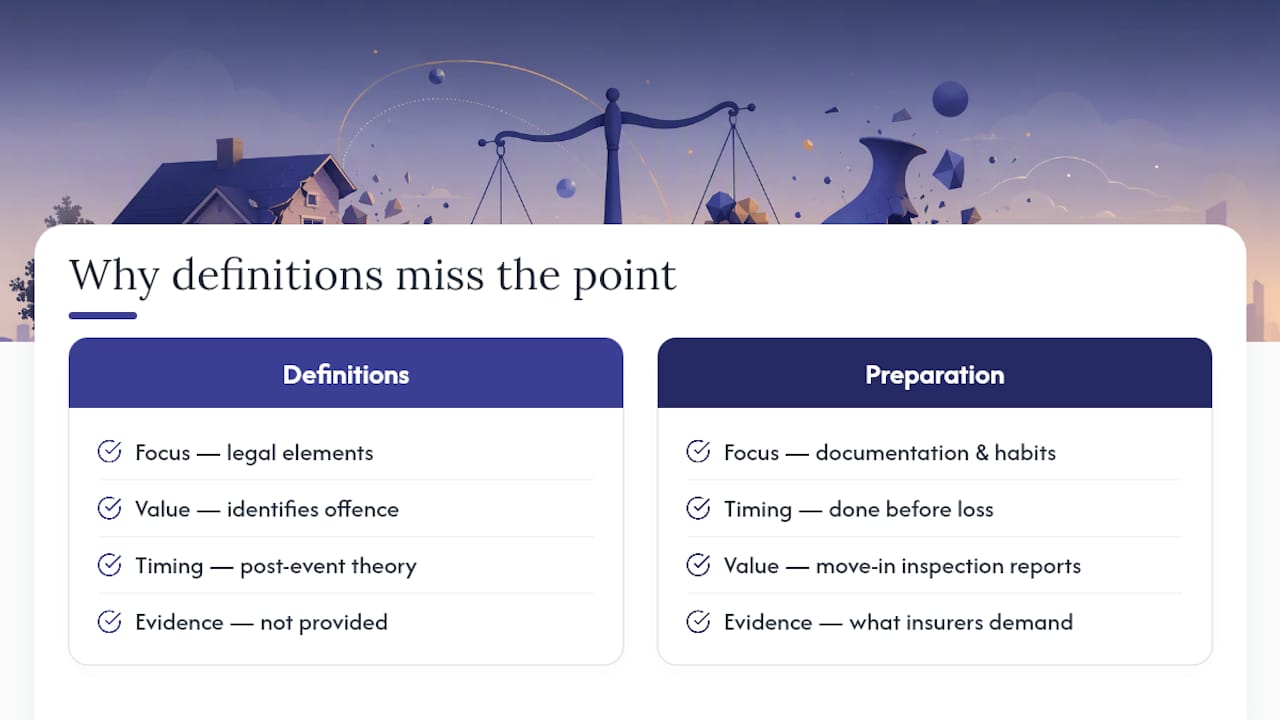
Most explainers stop at definitions. They tell you damage must be “significant” or “unlawful and intentional” and leave it there, as though knowing the legal elements solves anything for a landlord staring at a broken window at 11pm on a Sunday.
It doesn’t. The gap between knowing what property damage is and actually recovering from it comes down to preparation done weeks or months earlier, not the moment damage happens. An inspection report you took on move-in day is worth more to a claim than any amount of legal theory learned afterwards. Insurers ask for evidence, not definitions, and the documentation requirements they set are unforgiving of gaps.
The other overlooked point is how often landlords confuse damage cover with non-payment protection, treating them as one problem when insurers structure them as entirely separate products with separate triggers. Get the categories right first. Then build your paperwork habits around whichever category you’re actually exposed to, because that discipline, not a deeper grasp of legal terminology, is what determines whether a claim gets paid.
For landlords who want their cover matched to real exposure rather than guesswork, Rentalincomeinsurance structures landlord policies around buildings damage, tenant damage extensions and loss-of-rent scenarios so you’re not left improvising after the fact. You can also see what a typical landlord policy includes before requesting a quote.
For a closer look at how landlord insurance fits into a broader risk strategy, watch this short explainer:
Frequently asked questions about property damage
Is cosmetic damage considered property damage?
Usually not. Superficial scuffs, faded paint or minor stains typically fail the restoration-cost threshold that both courts and insurers use, so they’re rarely actionable or claimable.
What is property damage in a car accident?
It’s harm to a vehicle, another person’s car, or fixed property like a wall or fence, caused by the collision. Liability and valuation usually run through the at-fault driver’s motor insurer.
How long do I have to report property damage to my insurer?
Policies vary, but most insurers expect notification within days of discovering the damage. Delay can weaken your claim, so report as soon as it’s safe to do so.
Can I claim for damage caused by wear and tear?
No. Gradual deterioration from normal ageing is a standard exclusion across virtually all buildings and contents policies.
What’s the difference between damage and loss of use?
Damage is the physical harm itself. Loss of use is the knock-on consequence, such as being unable to live in or rent out a property while repairs happen, and it’s often covered when it follows genuinely insured damage.
This article is general information, not a substitute for advice from a qualified lawyer. Consult a qualified legal professional about your own circumstances before acting on anything here.
Sources
- Building insurance vs home contents insurance: where does your cover stop?
- Landlord insurance explained: what property investors actually need to cover