
TL;DR:
- Rent receivable is earned rental income not yet collected, recorded as a current asset on a landlord’s balance sheet. Managing it actively with aging reports and understanding deferred rent receivable are essential to maintain cash flow and accurate financial reporting. Ignoring rent receivable risks phantom profits, property deterioration, and compliance penalties.
Rent receivable is defined as rental income a landlord has earned but not yet collected from tenants, recorded as a current asset in accounting records. The standard industry term is accrued rent receivable, and understanding it is non-negotiable for any South African landlord or property manager who wants accurate books and healthy cash flow. Rent receivable sits on your balance sheet the moment a tenant occupies your property, regardless of whether they have paid. Misreading it as actual cash in hand is one of the most common and costly mistakes landlords make. This guide explains the definition of rent receivable, how to account for it correctly, and what happens when you ignore it.
What is rent receivable in South African property accounting?
Rent receivable is recognised in the period occupancy occurs, not when cash arrives. This is the accrual accounting principle, and it applies whether you own one flat in Cape Town or a portfolio of commercial units in Johannesburg.

Under accrual accounting, you record rental income as earned the moment your tenant has the right to occupy the property. The corresponding entry sits in your accounts receivable until the tenant pays. At that point, the receivable clears and cash increases. The two figures, earned income and collected cash, are not the same thing, and confusing them distorts your financial picture.
On a South African landlord’s balance sheet, rent receivable appears under current assets because it is expected to settle within 12 months. That classification matters for lenders, investors, and the South African Revenue Service (SARS), all of whom read your balance sheet to assess financial health.
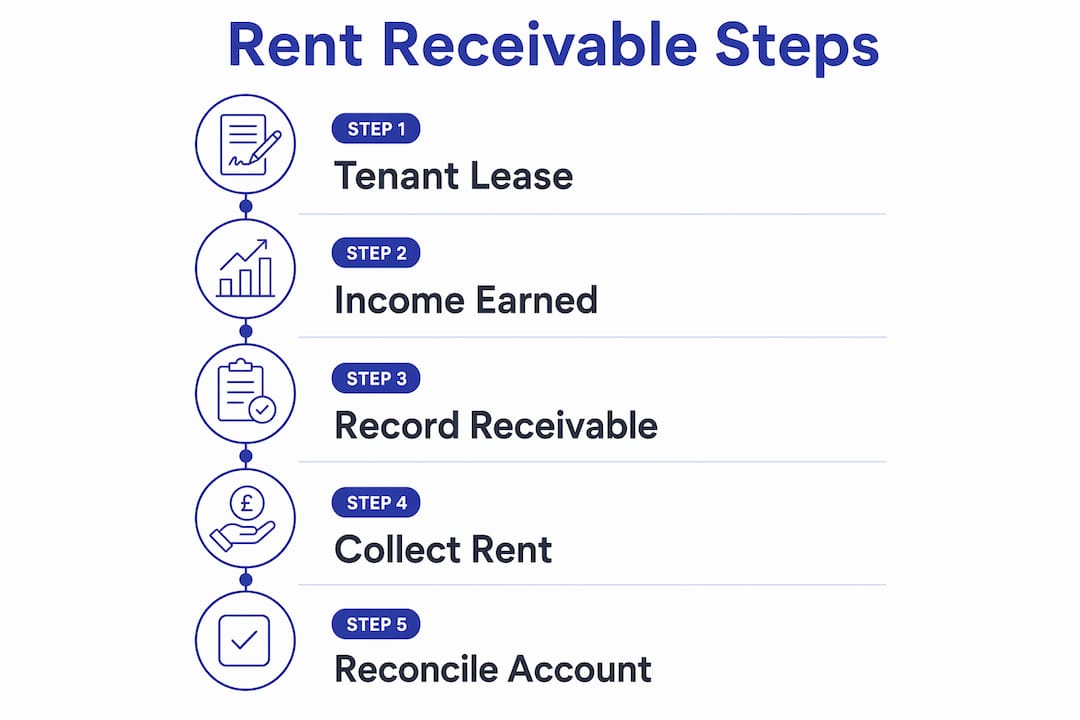
How to account for rent receivable step by step
- Record the income. At the end of each month, debit rent receivable and credit rental income for the amount owed by each tenant.
- Record the receipt. When the tenant pays, debit cash and credit rent receivable to clear the balance.
- Review for doubtful accounts. If a tenant is consistently late or in dispute, create an allowance for doubtful accounts. This reduces the net receivable on your balance sheet to a realistic figure.
- Reconcile monthly. Compare your rent roll against your bank statement. Any gap is your outstanding rent receivable balance.
Pro Tip: Set up a separate ledger account for each tenant. Mixing receivables into one account makes it nearly impossible to spot which tenant is driving your overdue balance.
What is deferred rent receivable and why does it matter?
Deferred rent receivable is a separate concept that trips up even experienced landlords. It arises when rental income recognised on a straight-line basis exceeds the actual cash payments received, typically because of rent escalation clauses or rent-free periods at the start of a lease.
When deferred rent receivable appears
Consider a five-year commercial lease in Pretoria where the tenant pays no rent for the first two months as an incentive. Under straight-line accounting, you spread the total lease income evenly across all 60 months. The difference between what you recognise and what you actually receive in those early months becomes deferred rent receivable on your balance sheet.
This matters for three reasons:
- Income recognition accuracy. Straight-line accounting matches income to the period it is earned, not just when cash arrives. This gives a truer picture of your property’s financial performance.
- Tax filing compliance. SARS requires accurate income reporting. Failing to distinguish deferred rent from overdue rent skews your taxable income and complicates assessments.
- Investment assessments. A property with a large deferred rent receivable balance looks more profitable than it is in cash terms. Investors and lenders who do not understand this distinction will misread your financials.
| Scenario | Rent receivable type | Cash impact |
|---|---|---|
| Tenant owes this month’s rent | Accrued rent receivable | No cash received yet |
| Rent-free period at lease start | Deferred rent receivable | No cash, income spread over lease |
| Escalating rent clause | Deferred rent receivable | Cash lags behind recognised income |
Pro Tip: Label deferred rent receivable and accrued rent receivable as separate line items in your accounts. Combining them is one of the most common errors that complicates tax filings and investment reviews.
How can landlords manage rent receivable to protect cash flow?
Active management of rent receivable is what separates landlords who stay solvent from those who face cash shortages despite strong rental income on paper. The core tool is an accounts receivable statement that categorises outstanding rent by aging, typically across three bands: 0–30 days, 31–60 days, and over 60 days overdue.
Practical steps for South African landlords
- Run aging reports monthly. A tenant in the 31–60 day band needs a phone call. A tenant over 60 days needs a formal letter of demand and a review of your legal options under the Rental Housing Act.
- Track Days Sales Outstanding (DSO). DSO measures average collection time across your portfolio. A rising DSO signals that tenants are taking longer to pay, even if your total rental income looks healthy. Calculate it monthly.
- Intervene early. Consistent monitoring with aging reports prevents small delays from becoming defaults. A tenant who is two weeks late is far easier to recover from than one who is three months behind.
- Communicate in writing. Send payment reminders on the first day rent is overdue. Written records protect you in any subsequent legal or insurance claim.
- Review your lease clauses. Leases that specify late payment penalties and escalation terms give you stronger grounds for action. Clear lease clauses for reliable income reduce the frequency of disputes.
High rent receivable balances mean you are effectively operating on credit, exposed to the risk of being unable to cover property expenses even when your income statement looks profitable. Maintenance costs, bond repayments, and rates do not wait for tenants to pay.
What are the financial risks of ignoring rent receivable?
Poor rent receivable management creates risks that go well beyond a single missed payment. The consequences compound quickly.
- Phantom profits. Ignoring aging receivables produces a situation where your income statement shows strong rental revenue but your bank account cannot cover routine expenses. The books look healthy; the cash position is not.
- Property degradation. Delayed maintenance caused by cash shortages reduces property value and tenant satisfaction. A landlord who cannot pay for repairs because rent is outstanding loses twice: once on the unpaid rent and again on the declining asset.
- Tax and compliance risk. SARS assessments rely on accurate income figures. Unrecognised or misclassified receivables distort your taxable income and can trigger penalties.
- Loan covenant breaches. Many South African property bonds include financial covenants. A balance sheet inflated by uncollected receivables can breach those covenants if a lender looks closely.
- Weakened negotiating position. When you approach a bank for refinancing or a new bond, a high receivable balance with no allowance for doubtful accounts signals poor financial management.
“Landlords often confuse profitable rental income with liquid cash, leading to underestimating risks when rent receivable is high.” — Property Management Accounting
The solution is not complicated. Accounts receivable statements reveal tenant payment behaviour early enough to act. The landlords who use them consistently are the ones who avoid the cash crises that catch others off guard.
Key takeaways
Rent receivable is a current asset representing earned but uncollected rental income, and managing it accurately is the single most important accounting discipline for South African landlords.
| Point | Details |
|---|---|
| Definition of rent receivable | Earned but unpaid rent recorded as a current asset, recognised when occupancy occurs. |
| Deferred rent receivable | Arises from straight-line income recognition on leases with rent-free periods or escalations. |
| Aging reports are non-negotiable | Categorise overdue rent into 0–30, 31–60, and over 60 day bands and review monthly. |
| DSO signals cash flow health | A rising Days Sales Outstanding figure warns of collection problems before they become crises. |
| Misclassification carries real costs | Confusing deferred and accrued receivables distorts tax filings and investment assessments. |
What I have learned from watching South African landlords get this wrong
I have spent years working alongside South African property owners, and the pattern I see most often is this: a landlord with a full rent roll and a profitable income statement who cannot pay their plumber. The rent is on the books. The cash is not in the account.
The misconception runs deep. Landlords treat a signed lease as guaranteed income. They see the monthly rental figure and assume it equals monthly cash. When three tenants are two weeks late simultaneously, the shortfall hits hard and fast.
What actually works is treating rent receivable like a live dashboard, not a historical record. The landlords I have seen manage this well run their aging report every week, not every quarter. They know exactly which tenant is in which band. They pick up the phone on day two of a missed payment, not day thirty.
The deferred rent piece catches people out even more. A commercial landlord who gave a tenant a two-month rent-free period often does not realise they have a deferred receivable building on their balance sheet. When their accountant flags it at year-end, it feels like a surprise. It should not be. Understanding rental income protection as a financial discipline, not just an insurance product, changes how you read your own numbers.
My honest recommendation: if you are not calculating DSO monthly and running aging reports at least fortnightly, you are flying blind. The numbers are there. You just have to look at them.
— Coert
How Rentalincomeinsurance helps when receivables become shortfalls
Accurate accounting tells you what you are owed. It does not guarantee you will receive it. When a tenant stops paying, the receivable sits on your balance sheet while your bond repayment, rates, and maintenance costs continue without pause.

Rentalincomeinsurance covers South African landlords against tenant non-payment, early lease termination, and absconding tenants. When your rent receivable balance grows because a tenant has defaulted, a policy from Rentalincomeinsurance replaces that lost income so your cash flow does not collapse. You can request a quote directly on the website and find out exactly what your rental income is worth protecting. For a full picture of how coverage works, the rental income protection guide is a practical starting point.
FAQ
What is rent receivable in simple terms?
Rent receivable is rental income a landlord has earned but not yet collected from a tenant. It is recorded as a current asset on the balance sheet until the tenant pays.
How does rent receivable differ from rental income?
Rental income is the total amount earned over a period. Rent receivable is the portion of that income not yet received as cash. The two figures only match when all tenants pay on time.
What is deferred rent receivable?
Deferred rent receivable arises when straight-line income recognition produces more recognised income than actual cash received, typically due to rent-free periods or escalating lease terms.
Why does rent receivable matter for South African tax purposes?
SARS requires accurate income reporting. Misclassifying or ignoring rent receivable distorts your taxable income and can result in penalties or complications during an assessment.
How often should landlords review their rent receivable balance?
Review your aging report at least monthly, and calculate Days Sales Outstanding monthly as well. Larger portfolios benefit from weekly reviews to catch payment delays before they escalate.
Recommended
- What is rent default? South African landlord guide – Rental Income Insurance
- Rental Income Recovery Process: South African Landlords Guide – Rental Income Insurance
- Rent default management guide for South African landlords 2026 – Rental Income Insurance
- Rental arrears definitions: essential guide for SA landlords – Rental Income Insurance