
“Renters” here means rental income insurance, a policy that replaces a landlord’s lost rent and covers related costs when specified policy triggers occur. It has nothing to do with the contents insurance a tenant buys for their own belongings. For property owners, it exists to protect the income the property generates, not the property itself.
Three protections matter most to landlords when they look at this cover:
- Lost rent when a tenant stops paying and a defined trigger is met
- Eviction and legal fees incurred while removing a non paying tenant
- Early lease termination or absconding cover when a tenant breaks the lease or vanishes owing rent
We’ll walk through how each of these works, what claims actually look like in practice, and how to size a policy so it does not fall short when you need it.
Key Takeaways
Rental income insurance pays a landlord for lost rent and related costs when a policy trigger, not physical damage, causes the interruption.
| Point | Details |
|---|---|
| Core definition | Rental income insurance replaces lost rent and covers eviction costs when specific triggers occur, unlike tenant contents cover. |
| Claims need evidence | Insurers typically require a lease, arrears ledger, and letter of demand before paying a non payment claim. |
| Size for worst case | Match cover caps to realistic eviction timelines and fixed costs, not optimistic best case scenarios. |
| Watch the exclusions | Ordinary vacancy, wear and tear, and short period caps are the most common reasons claims fall short. |
| Rentalincomeinsurance fits landlords | Covers non payment, eviction fees, early termination, and absconding in one policy for SA property owners. |
Table of Contents
- What does rental income insurance cover?
- How rental income cover differs from building and homeowners insurance
- How does a rental income insurance claim actually work?
- How to choose and size rental income cover
- Where landlords get caught out: exclusions and underinsurance
- Why trust this guide on rental income insurance
- Our take: what the market data actually tells landlords
- Get rental income cover built around real South African claims data
- Sources
What does rental income insurance cover?
A typical policy responds to a defined loss, not just “the tenant stopped paying.” The core benefit is lost rent, paid once a policy trigger applies. Restoration periods vary by insurer, but the principle is the same: you’re compensated for the income you can prove you lost, for as long as the policy defines that loss as ongoing, up to its cap.
Non payment cover usually asks for evidence before it pays out. That means a signed lease, an arrears ledger showing the missed payments, and a letter of demand sent to the tenant. Insurers use this paperwork to confirm a genuine default rather than a landlord simply choosing not to renew.
Eviction and legal fees form a second, distinct layer. Market examples show eviction cost cover ranging from roughly R10,000 to R40,000, reflecting how expensive a contested eviction through the courts can become.
One industry example shows cover paying up to three months’ rent for tenant default, with premiums starting from around 5% of monthly rental income in typical product structures.
Early termination and absconding cover fills a different gap again. If a tenant breaks the lease early or disappears owing rent, the policy pays out the shortfall between what was owed and what you can recover, usually capped at a set number of months. Here’s how the pieces typically stack up:
- Lost rent during the policy’s defined restoration period
- Non payment cover, subject to lease and arrears evidence
- Eviction and legal fee reimbursement within stated limits
- Early termination or absconding shortfall, capped by month or total amount
How rental income cover differs from building and homeowners insurance
Standard building or homeowners policies are built around physical damage: fire, storm, burst pipes. They were never designed to answer the question “what happens when my tenant stops paying?” That’s precisely why relying on a personal building policy for a tenanted property is a common and costly mistake landlords make.
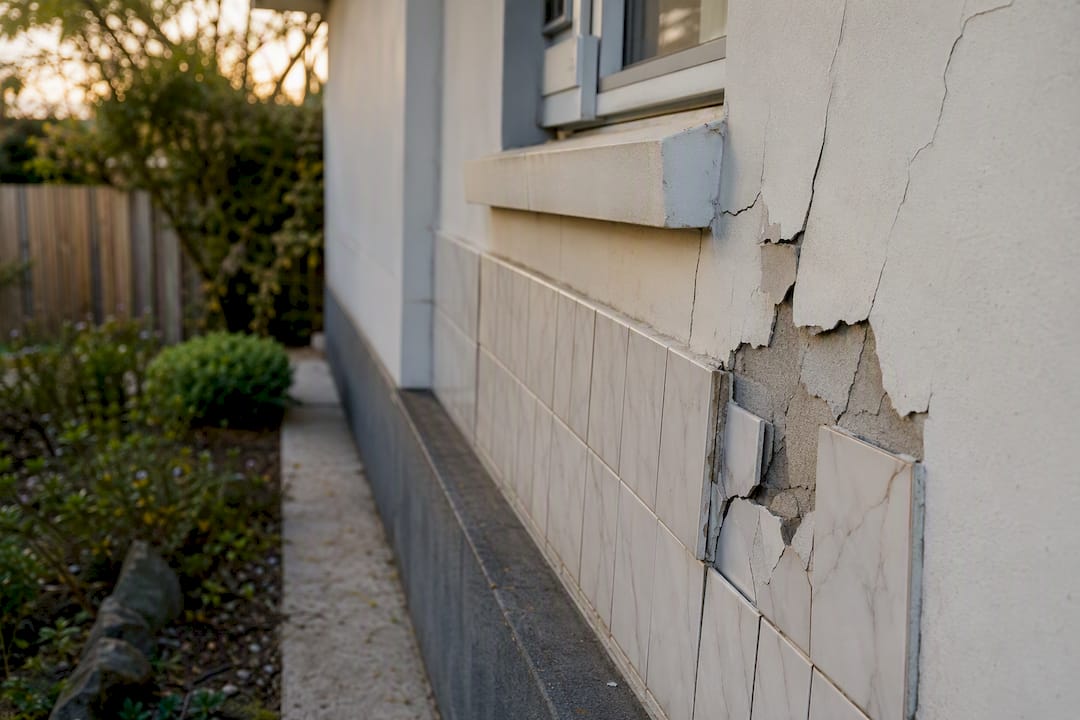
Loss of rents cover, sometimes bundled into building insurance, only responds when a covered physical event makes the property untenantable. A burst geyser that floods the flat and forces the tenant out qualifies. A tenant who simply refuses to pay does not, because there’s no physical loss driving the interruption.
Adding paying tenants changes how an insurer views the risk on a property, and personal building insurance often proves insufficient once that risk shifts. The distinction in practice:
- Loss of rents: property is damaged and uninhabitable, rent stops as a result
- Rental income insurance: property is fine, but the tenant defaults, breaks the lease, or absconds
- Ordinary vacancy: nobody is even renting the unit, which neither product covers
Landlords who only hold building cover discover the gap at the worst possible moment, usually mid eviction.
How does a rental income insurance claim actually work?
Claims run on evidence and timing, not just a phone call to your insurer. You’ll typically need a signed lease agreement, an arrears ledger tracking exactly when payments stopped, and a formal letter of demand sent to the tenant. Court notices matter too if the matter has already moved toward eviction.
Timing rules vary between insurers, but one common market structure allows claims to be lodged from the second consecutive month of arrears, once a letter of demand has been issued. That single month of grace exists because insurers want to see a genuine default pattern, not a one off late payment.
Tenant arrears reached 18.4% in PayProp’s 2023 Q2 Rental Index, the highest level recorded since late 2021, a figure that explains why insurers built these evidence and timing rules so tightly.
The claims sequence generally follows this order:
- Arrears build for two consecutive months and a letter of demand is issued
- You lodge the claim with lease, ledger, and demand letter attached
- The insurer assesses against the policy’s period of restoration
- Payment is made for lost rent within the defined limit
- If you later recover the outstanding rent from the tenant, you generally repay the insurer that recovered amount
That last step surprises some landlords, but it exists for a simple reason: you cannot be paid twice for the same lost rent. The insurer’s recovery right prevents double dipping while still letting you pursue the tenant for what’s owed.
How to choose and size rental income cover
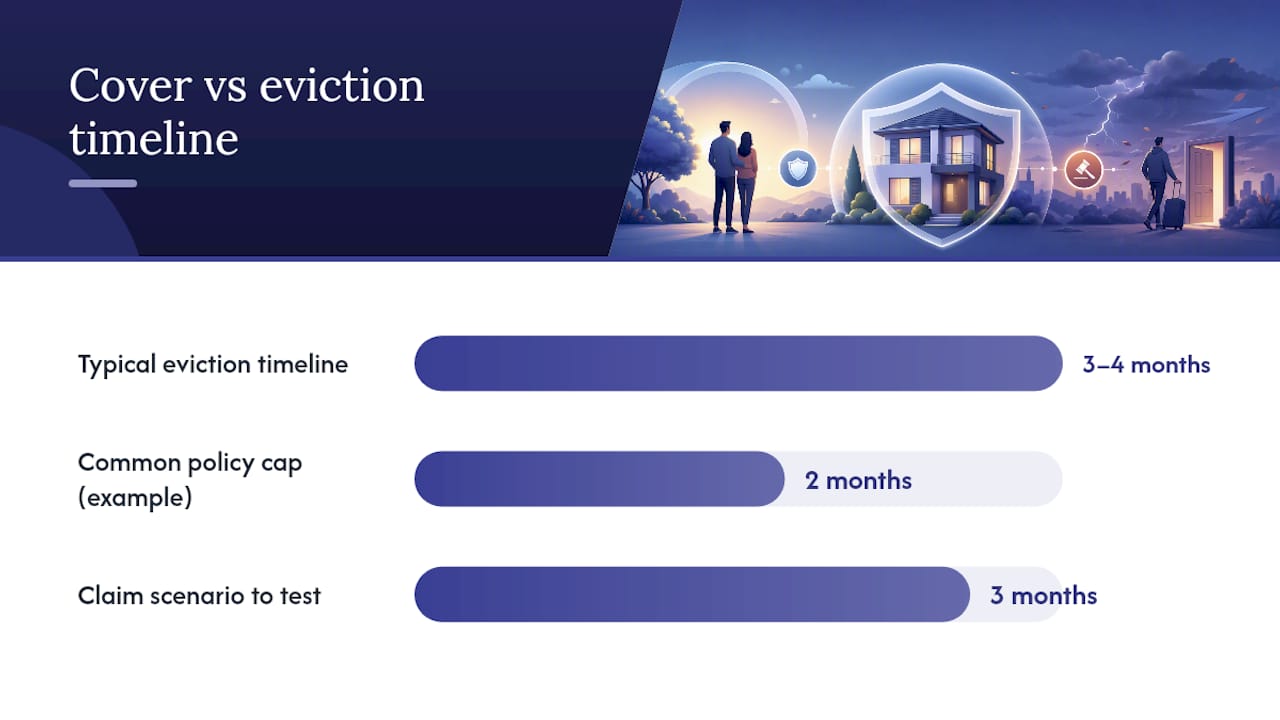
Picking a policy starts with an honest look at your worst case, not your best case. If eviction typically takes three to four months in your area once legal proceedings begin, a policy capped at two months of lost rent will leave you exposed for the gap. Size the lost rent benefit to match a realistic restoration timeline, factoring in court backlogs and the practical delays that come with removing a non paying tenant.
Fixed costs don’t pause just because your tenant has stopped paying. Your mortgage, rates, levies, and insurance premiums keep coming due, so the monthly or aggregate cap you choose needs to cover those fixed obligations, not just a rough estimate of rent.
Before signing anything, run through this checklist:
- Confirm the waiting period before a claim becomes valid
- Read the exact wording of the non payment trigger, not just the marketing summary
- Check exclusions for ordinary vacancy and named perils
- Understand the insurer’s recovery rights if you later collect arrears yourself
- Ask whether limits are period based (months of cover), a monetary cap, or both
Pro Tip: Ask your broker to walk through a real claim scenario with actual numbers before you buy. If they can’t explain how a three month vacancy would pay out under your specific policy, that’s a red flag worth pursuing elsewhere.
Watch for vague trigger language and undisclosed co-insurance clauses buried in the fine print. A policy that sounds comprehensive in the brochure can still leave a gap if the definitions section quietly narrows what counts as a valid claim. For readers weighing the full range of product structures, comparing rental insurance options side by side is worth the half hour it takes.
Where landlords get caught out: exclusions and underinsurance
Most disappointed claims trace back to the same handful of mistakes. Policies routinely exclude ordinary vacancy, meaning a unit that sits empty because you haven’t found a tenant yet, and fair wear and tear, which is treated as maintenance rather than an insurable loss.
Caps written as short periods, often just one to three months, are the second trap. If your local eviction process regularly takes longer than that, a three month cap leaves you self-funding the remainder.
- Confirm your cap matches realistic eviction and repair timelines, not the average case
- Update your insured rent figure whenever you raise rent, since an outdated figure can under-pay a claim
- Read exclusion clauses for perils and vacancy language before you need to rely on them
- Resist the urge to trim the lost rent limit just to shave a few rand off the premium
Premium pressure is understandable, but the limit you cut to save money is usually the one you need most when a tenant actually defaults.
Why trust this guide on rental income insurance
Rentalincomeinsurance builds its guidance around how South African rental claims actually play out, not generic insurance theory.
- Full policy wording and cover details sit on the main landing page
- A deeper breakdown of what counts as tenant non payment is covered in this guide for SA landlords
- For a walkthrough of the product in plain terms, watch
Our take: what the market data actually tells landlords
The 18.4% arrears figure from PayProp’s Q2 2023 Rental Index should reframe how landlords think about this cover. That’s not a rare edge case. It means roughly one in five tenants nationally was behind on rent, which makes rental income insurance closer to a standard risk management tool than a niche add on for nervous landlords.
Where conventional advice falls short is treating this as a binary choice: insured or not. The real decision is about sizing, and most landlords under-buy the eviction timeline rather than the rent amount. A three month cap sounds generous until you’re four months into a contested eviction with no income and mounting legal bills.
Prioritise the trigger wording and the cap length before you even look at premium cost. A cheaper policy with a two month cap in a market where evictions average four months isn’t a bargain, it’s a gap dressed up as cover. Read the restoration period clause twice before you sign anything.
— Coert
Get rental income cover built around real South African claims data
Generic building insurance was never built to handle a defaulting tenant, and cobbling together a homeowners policy with hope is not a strategy. Rentalincomeinsurance is the alternative built specifically for landlords managing tenanted risk, covering non payment, eviction legal costs, early termination, and absconding under one policy rather than leaving you to patch gaps between products that don’t talk to each other.

Cover suits residential and commercial property owners alike, whether you manage one flat or a portfolio through a body corporate. If you’ve read this far, you already understand the trigger structures and caps that matter, so the next step is straightforward. Request a quote and get a policy sized to your actual eviction timeline and fixed costs, not a generic template. For landlords wanting the full policy detail first, the rental income protection guide covers variants and wording in more depth. Tax treatment of rental income also affects your bottom line, and this UK landlord tax guide is a useful reference for the broader financial picture.
Sources
- Property Rental Insurance: insuring rental income against risk of tenant default | Insurance Biz
- Rental income insurance – protecting your assets and liabilities – bbrief
- Business Income and Rental Value Coverage, Explained for Landlords – Vantage Point Risk