
TL;DR:
- Verbal rental agreements are legally risky and difficult to enforce in South Africa.
- Written leases protect landlords’ income, insurance, and legal rights throughout tenancy.
- Proper documentation is essential for legal compliance and securing insurance claims.
Many South African landlords still rely on a handshake, a quick WhatsApp message, or simply a verbal understanding when renting out their properties. It feels easier, especially when the tenant is a friend, a colleague, or someone who comes highly recommended. But this approach carries serious financial and legal risk. A formal, written rental agreement is not just a formality. It is the document that protects your income, supports your insurance claims, and gives you a fighting chance in court if things go wrong. This guide explains exactly why documentation matters and what it means for you as a landlord.
Table of Contents
- The dangers of informal or verbal rental agreements
- Key benefits of documenting rental agreements
- Legal requirements for rental agreements in South Africa
- How proper documentation strengthens your insurance protection
- Why the ‘gentleman’s agreement’ approach doesn’t work anymore
- Secure your rental income with the right agreements and insurance
- Frequently asked questions
Key Takeaways
| Point | Details |
|---|---|
| Written agreements are essential | Without a written lease, you risk legal, financial, and insurance headaches as a landlord. |
| Legal requirements differ by landlord type | South African laws demand written agreements for nearly all landlords, but business and private leases may have different rules. |
| Insurance relies on proper documentation | Landlords usually need fully documented leases to make successful insurance claims and protect rental income. |
| Don’t rely on verbal terms | Verbal or informal agreements are almost impossible to enforce and can cost you if things go wrong. |
The dangers of informal or verbal rental agreements
A handshake deal might feel like a sign of trust, but in the South African rental market, it is a liability. When a dispute arises, whether over unpaid rent, property damage, or early termination, the first thing any attorney, tribunal, or insurer will ask for is your written agreement. If you cannot produce one, your position is immediately weakened.
Verbal agreements often fail to hold up legally, leaving landlords vulnerable when they need protection most. Courts and rental housing tribunals rely heavily on documented evidence. Without a written lease, you are essentially asking a judge to take your word against your tenant’s, and that rarely ends well.
Here are the most common risks landlords face without a written agreement:
- Non-payment of rent: Without documented terms, a tenant can dispute the agreed amount or claim payment was never due.
- Property damage: No written inventory or damage clause means no enforceable basis for claiming repair costs.
- Eviction hurdles: The PIE Act requires a court order regardless, but without a lease, your eviction application becomes far more complicated.
- Insurance denial: Many policies require a formal written lease as a condition of cover. Missing rental insurance exclusions are often traced back to informal agreements.
Consider a real scenario. Your tenant stops paying rent in month three. You have no paper trail, no signed agreement, and all communication happened via WhatsApp voice notes. You cannot prove the agreed rental amount. You cannot prove the deposit was paid. You cannot even confirm the start date of the tenancy. Every step of the recovery process becomes an uphill battle.
“A verbal agreement may be legally valid in theory, but without written evidence, it is nearly impossible to enforce the specific terms you agreed to. The absence of documentation is one of the most preventable causes of landlord losses in South Africa.”
Pro Tip: Always get everything in writing, even if the tenant is a family member or close friend. Personal relationships do not make informal agreements safer. In many cases, they make disputes harder to resolve because emotions are involved.
Key benefits of documenting rental agreements
A written rental agreement does far more than record what was agreed. It actively works in your favour throughout the entire tenancy.
Here are the core benefits every landlord should understand:
- Enforceability: You can hold a tenant to specific terms, whether that is the monthly rental amount, annual increases, or who is responsible for garden maintenance.
- Insurance eligibility: Most rental income insurance products require a signed lease before they will cover you. Following rental agreement protection steps ensures you meet these requirements from day one.
- Dispute clarity: A well-drafted agreement removes ambiguity. When both parties have signed the same document, there is far less room for “I never agreed to that.”
- Faster legal proceedings: Courts and tribunals process applications more efficiently when you can present a clear, signed agreement alongside your evidence.
- Deposit protection: A written lease spells out deposit terms, which protects you from claims that the deposit was never paid or was promised back under conditions you did not agree to.
Documented agreements contain all the information required to assert your rights under South African law. This is not just good practice. It is often the legal minimum needed to take any enforcement action.

One often-overlooked benefit is the ability to include insurance clauses directly in your lease. Specifying that the property is covered by insurance in lease agreements and what that means for both parties can prevent disputes later.
Pro Tip: Include a specific clause in your lease that outlines your rental income insurance cover and what happens in the event of a claim. This sets expectations clearly and protects you if a tenant challenges your right to claim.
Legal requirements for rental agreements in South Africa
South African landlords operate within a framework of several important laws. Understanding which ones apply to you is essential before you draft any agreement.
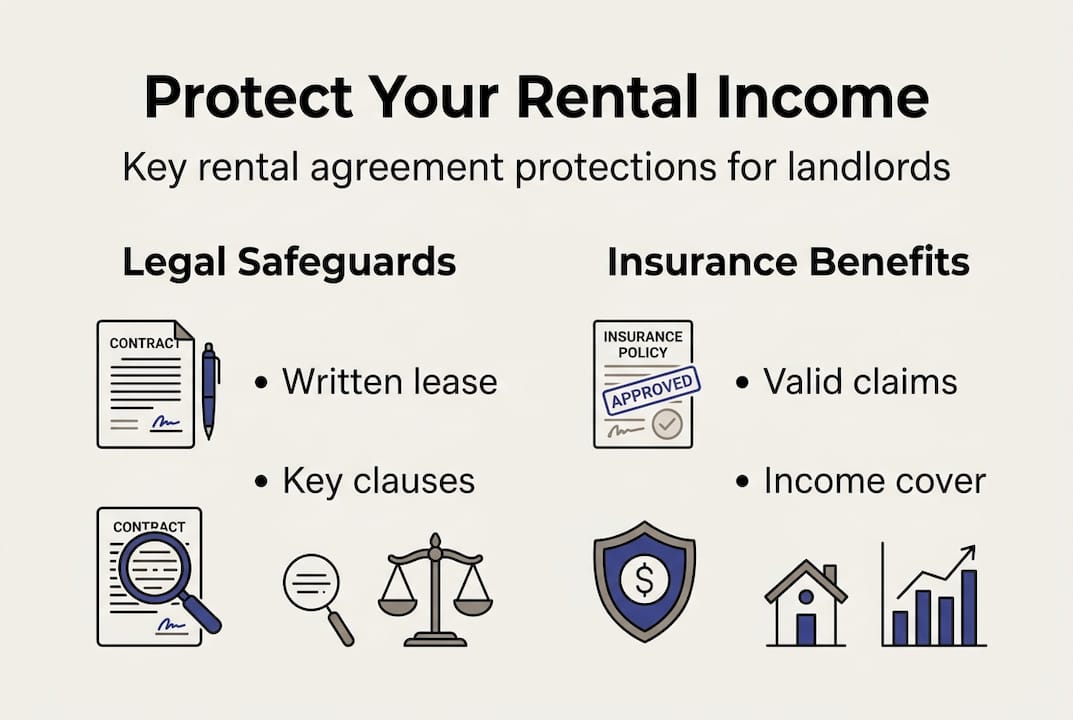
The Rental Housing Act (RHA) sets the baseline for all residential leases. It requires that certain details always be in writing, including the names of both parties, the rental amount, the payment date, the duration of the lease, and any obligations relating to maintenance and utilities.
The Consumer Protection Act (CPA) adds another layer, but not for everyone. CPA applies only to landlords in the ordinary course of business, and certain fixed-term provisions may be invalid for private, once-off landlords. This distinction matters. If you own one property and rent it out occasionally, the CPA may not apply to you in the same way it does to a property management company.
The PIE Act (Prevention of Illegal Eviction) applies universally. You cannot remove a tenant without a court order, regardless of whether you have a written lease or not. Without documentation, however, your court application becomes slower, more expensive, and less certain.
| Law | Who it applies to | Written agreement required? |
|---|---|---|
| Rental Housing Act | All residential landlords | Yes, for key terms |
| Consumer Protection Act | Business landlords only | Yes, with specific clauses |
| PIE Act | All landlords | Court order always required |
The consequences of ignoring these requirements are serious:
- Clauses not captured in writing may be deemed unenforceable.
- Eviction proceedings can be delayed by months without a valid lease.
- You may forfeit your right to insurance exclusions for informal leases cover if your documentation does not meet policy requirements.
The law does not simply reward landlords who trust their tenants. It rewards those who prepare properly.
How proper documentation strengthens your insurance protection
Insurance is only as strong as the documentation behind it. When you submit a rental income insurance claim, the insurer will want to see your written lease, proof of the agreed rental amount, evidence of non-payment or damage, and your communication history with the tenant.
Without a formal lease, many claims simply do not succeed. Certain insurance policies may refuse claims if agreements are verbal or missing mandatory clauses. This is not a technicality. It is a genuine condition of cover that most landlords only discover when they try to claim.
| Claim scenario | With written agreement | Without written agreement |
|---|---|---|
| Tenant non-payment | Claim supported, income replaced | Claim denied, income lost |
| Property damage | Clause enforced, costs recovered | No enforceable basis for claim |
| Early lease termination | Penalty clause triggered | Dispute without resolution |
| Tenant absconding | Documented terms support recovery | No evidence to support action |
Insurers typically ask for the following when processing a claim:
- A fully signed lease agreement with all parties’ details
- Proof of the agreed monthly rental and payment history
- Written communication showing the tenant was notified of default
- A copy of any legal proceedings already initiated
For a thorough understanding of what is covered and what is not, reading through a rental income protection guide before you finalise your lease is a smart move. Many common exclusions link directly to missing or informal documentation. Understanding insurance policy requirements before a problem arises means you are never caught off guard.
Pro Tip: Review your insurance policy requirements before signing your lease. Some insurers specify exact clauses that must appear in your agreement. Getting these right from the start prevents claim rejections later.
Why the ‘gentleman’s agreement’ approach doesn’t work anymore
There is a reason so many South African landlords still rely on informal arrangements. Property has traditionally been a relationship-driven business. You knew your tenant. You trusted them. A piece of paper felt like an insult to that trust.
But the rental landscape has changed significantly. Tenant protections have increased. Insurance requirements have become more specific. And the financial exposure of a single bad tenancy, think six months of unpaid rent plus legal fees and repair costs, can run into tens of thousands of rands.
Private, one-off landlord leases may skip some CPA limits, but PIE and insurance requirements still apply. That means even the most informal landlord still faces a court process for eviction and still needs documentation to claim insurance. The “we’ll sort it out” approach no longer holds up.
The uncomfortable truth is this: you cannot rebuild trust after it breaks, and you cannot recover losses without paperwork. Documentation is not a sign of distrust. It is a sign that you take your investment seriously. Every landlord who learns this lesson the hard way will tell you the same thing: the agreement you skip is the one that costs you the most.
Secure your rental income with the right agreements and insurance
Getting your rental agreement right is the foundation of protecting your income. A signed, legally compliant lease gives you the basis to enforce your terms, access insurance cover, and take legal action when necessary.
But a written agreement alone is not always enough. Tenants default, leave early, or cause damage that exceeds their deposit. That is where rental income insurance steps in to complete your protection. Whether you need a request a rental income insurance quote or simply want to understand how cover works, we are here to help. Visit our protect your rental income page to learn how tailored insurance cover can work alongside your rental agreement to keep your income secure, no matter what happens.
Frequently asked questions
Is a verbal rental agreement legally binding in South Africa?
Yes, verbal agreements can be legally valid but are very difficult to enforce. Verbal agreements often fail to hold up legally and typically do not meet insurance or tribunal requirements.
Which parts of a rental agreement are mandatory by South African law?
The Rental Housing Act requires that names of both parties, the rental amount, payment terms, property description, and duration of the lease all be documented in writing. RHA mandates key clauses and proper documentation for lease validation.
Will my insurance claim be refused without a written rental agreement?
Most insurers will deny a claim if you cannot produce a formal written lease. Certain insurance policies refuse claims where agreements are verbal or missing required clauses.
Does the Consumer Protection Act apply to all residential leases?
No. CPA applies only to landlords renting in the ordinary course of business, not to private or once-off rental arrangements. However, the RHA and PIE Act still apply to all landlords regardless.
Recommended
- Effective Rental Agreement Protection Steps for Landlords – Rental Income Insurance
- Essential Rental Income Protection Checklist for Landlords
- 7 Key Rental Investment Protection Strategies for Landlords – Rental Income Insurance
- Rental Income Security Checklist for Landlords
- Office Rental Agreement in Malta – Offices in Malta To Let & For Sale