
TL;DR:
- Maintaining an accurate and organized insurance portfolio is essential to prevent underinsurance penalties and ensure optimal premiums. Regular reviews, thorough documentation, and timely updates are crucial for protecting rental income and managing risk across multiple properties. Proper portfolio management reduces administrative burdens and enhances financial resilience in a volatile market.
An insured portfolio is defined as the complete, actively managed collection of insurance policies, property valuations, schedules, and compliance documents covering all properties a landlord owns. Maintaining it accurately is not optional. Outdated portfolio data prevents brokers from presenting precise risk information to underwriters, which leads directly to higher premiums and renewal delays. For landlords managing two properties or twenty, the financial consequences of a poorly maintained portfolio range from reduced claim payouts to complete coverage lapses. This guide explains exactly what is at stake and how to keep your portfolio working in your favour.
Why maintain an insured portfolio to avoid underinsurance penalties
Underinsurance is the single most expensive mistake a landlord can make, and it happens quietly. Most property owners assume that holding a policy is sufficient. The reality is that most commercial buildings are underinsured by an average of 25 to 35%, which means that when a claim arises, the payout falls significantly short of the actual loss.

The mechanism behind this shortfall is the coinsurance clause. Insurers typically require that a property be insured to between 80% and 100% of its full replacement cost. If your insured value falls below that threshold, the insurer applies a proportional penalty to any partial loss claim. In practical terms, if your property should be insured for R2 million but you have only R1.4 million of cover, a R500,000 partial loss claim will not be paid in full. The insurer calculates the ratio of your actual cover to the required cover and pays only that fraction of the claim. Coinsurance penalties apply regardless of how long you have held the policy or how faithfully you have paid premiums.
The choice between replacement cost and actual cash value coverage compounds this risk. Replacement cost coverage tends to produce greater claim settlements than actual cash value, but only if the insured value is kept current. A replacement cost policy with a valuation that is five years out of date offers far less protection than it appears to on paper.
Key triggers for underinsurance in a rental portfolio include:
- Renovations or extensions that increase the rebuild value without a corresponding policy update
- Rising construction costs that outpace the original valuation
- Acquisitions added to a portfolio without a formal valuation
- Policies renewed year after year without a replacement cost review
Pro Tip: Commission a professional rebuild valuation every two to three years, not just at inception. Construction costs in South Africa have risen sharply, and the gap between your insured value and actual replacement cost widens every year you delay.
What are the operational benefits of portfolio insurance for landlords?
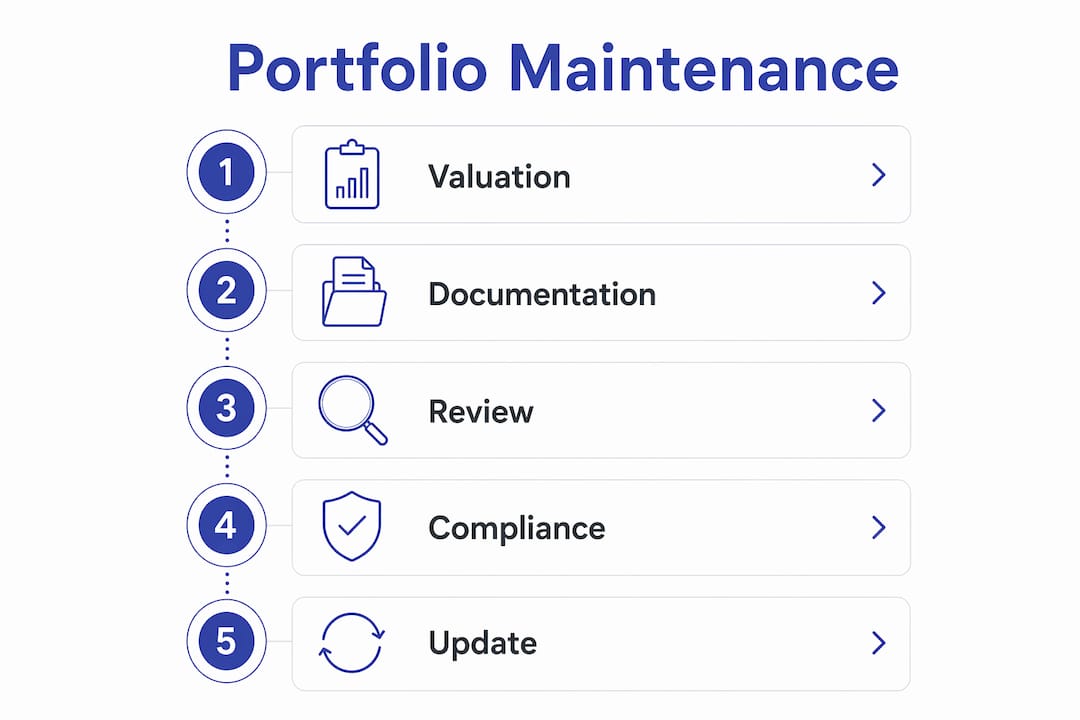
For landlords with multiple properties, the administrative burden of managing separate policies for each property is substantial. Individual policies mean multiple renewal dates, multiple insurers, multiple premium payments, and multiple claims processes. A single missed renewal on one property creates a coverage lapse that can void a claim entirely.
Portfolio landlord insurance, sometimes called a block policy, consolidates all properties under a single policy framework. Portfolio cover can deliver savings of 15 to 30% compared with individual policies, alongside a single renewal date and a unified claims process. That saving is not trivial across a portfolio of five or ten properties.
The table below compares the two approaches directly:
| Feature | Individual policies | Portfolio policy |
|---|---|---|
| Renewal dates | Multiple, staggered | Single annual date |
| Premium cost | Standard market rate | 15 to 30% volume discount |
| Claims process | Separate per property | Single process, one insurer |
| Coverage consistency | Varies by property | Uniform terms across portfolio |
| Claims history impact | Isolated per property | Unified history affects all properties |
| Administration | High, multiple documents | Lower, centralised management |
The unified claims history is the one genuine trade-off. A significant claim on one property sits on the portfolio record and can affect renewal terms for all properties. This is why maintaining accurate documentation and proactive risk management matters even more under a portfolio policy. A well-managed portfolio with clean records commands better renewal terms than a disorganised one with gaps.
Renewal reminders and per-property insurance data stored in a central system reduce the risk of lapses and speed up the renewal process considerably. The operational advantage of a portfolio policy is only realised if the underlying data is current and accessible.
Why is accurate documentation critical for your insurance portfolio?
Documentation is where most landlord portfolios break down. A policy that exists but cannot be located quickly is functionally useless during a claim or renewal. A portfolio that is not organised can break audit workflows if a document cannot be found within 30 seconds. That is not an exaggeration. Underwriters and brokers work under time pressure, and delays in producing documents translate directly into higher quotes or declined renewals.
An effective insured portfolio packet for each property should contain the following, maintained in date order:
- Current policy schedule with accurate property values and cover limits
- Loss run history for the past three to five years
- Property condition reports and any recent valuation certificates
- Compliance certificates including gas safety, electrical, and Energy Performance Certificates
- Correspondence logs with your broker and insurer, including any endorsements or amendments
Portfolio maintenance increasingly includes compliance certificate tracking, such as gas safety records and EPC ratings, because regulatory non-compliance can trigger coverage lapses. An insurer who discovers at claim stage that a required certificate had lapsed may decline the claim on those grounds. The benefits of EPC compliance extend beyond energy ratings. They form part of the documentary evidence that your property was properly managed at the time of a loss.
Manual data entry of exposure information wastes hours and introduces errors. Property management platforms and insurance-specific software now automate data extraction from PDFs and flag missing information before it becomes a problem. Tools like Latch integrate property data with insurance records, reducing the administrative overhead of keeping a multi-property portfolio current.
Pro Tip: Implement a strict filing convention: organise documents by property address, then document type, then date. Use version control so that superseded schedules are archived rather than deleted. This protects you in disputes about what cover was in place at a specific date.
How does ongoing portfolio review build financial resilience?
Insurance is not an add-on to a financial plan. It is the foundation of financial resilience, and it requires active management to remain effective. A policy taken out three years ago reflects the risk profile of your portfolio three years ago. If your circumstances have changed, your cover may no longer match your exposure.
The factors that should trigger an immediate portfolio review include:
- Acquisition of a new property, which must be added to the schedule before the first tenant moves in
- Completion of renovations or extensions that increase rebuild value
- Change in tenancy type, such as moving from residential to short-term letting, which alters the risk profile
- Regulatory changes affecting compliance requirements
- Significant movement in local construction costs or property values
Beyond event-driven reviews, quarterly reviews for high-value accounts and annual reviews for smaller portfolios are the standard recommended by portfolio management specialists. Annual reviews prevent the last-minute scramble that leads to rushed renewals and premium miscalculations. Quarterly reviews for larger portfolios catch valuation drift before it becomes a coinsurance problem.
The financial resilience argument for regular reviews is straightforward. A landlord whose portfolio is accurately insured, well-documented, and reviewed on schedule presents a lower risk to underwriters. Lower perceived risk translates to more competitive premiums. The importance of insured portfolios is therefore both protective and commercial. You are not just guarding against loss. You are actively managing the cost of your cover.
Market conditions in 2026 reinforce this point. Construction costs remain elevated, and replacement cost valuations that were accurate in 2023 are likely to be materially short today. Landlords who have not reviewed their rebuild values in the past two years are almost certainly underinsured, whether they know it or not.
Key takeaways
Maintaining an insured portfolio requires accurate valuations, organised documentation, and scheduled reviews to prevent underinsurance penalties and ensure competitive premiums across all properties.
| Point | Details |
|---|---|
| Underinsurance is costly | Insured values below 80% of replacement cost trigger proportional claim reductions under coinsurance clauses. |
| Portfolio policies save money | A single block policy can reduce premiums by 15 to 30% compared with individual property policies. |
| Documentation prevents disputes | Schedules, compliance certificates, and correspondence logs must be current and retrievable within seconds. |
| Reviews must be scheduled | High-value portfolios need quarterly reviews; smaller portfolios need at least one annual valuation check. |
| Insurance is a financial foundation | Active portfolio management lowers perceived risk and produces more competitive renewal premiums. |
What I have learned from managing landlord portfolios
The landlords who suffer the worst claim outcomes are rarely the ones with the worst properties. They are the ones with the most disorganised paperwork. I have seen portfolios where the most recent schedule on file was four years old, where compliance certificates had lapsed without anyone noticing, and where the insured value had not been reviewed since the property was purchased. When a claim arrived, the shortfall was devastating and entirely avoidable.
The conventional advice is to “review your insurance annually.” That is true but insufficient. What actually works is treating your insurance portfolio the way you treat your rental income records: as a live document that reflects current reality. Every acquisition, every renovation, every change in tenancy type should trigger an immediate update. Not at renewal. Immediately.
I am also sceptical of landlords who manage everything manually. Spreadsheets fail. Files get lost. Renewal dates get missed. The risk of missed renewals is real and the consequences are severe. Property management software that integrates with insurance records is no longer a luxury for large portfolios. It is the baseline for anyone serious about protecting their investment.
The most important shift in mindset is this: insurance is not a cost to be minimised. It is the mechanism by which your rental income survives the unexpected. Manage it accordingly.
— Coert
Protect your rental income with Rentalincomeinsurance
Rentalincomeinsurance specialises in helping South African landlords protect what matters most: their rental income. Whether you own one property or a growing portfolio, Rentalincomeinsurance provides cover against tenant non-payment, early lease termination, and property damage, with multi-property policies designed to simplify your administration and reduce your exposure. Keeping your portfolio insured and current is the foundation of income stability. Take the first step by requesting a tailored quote through Rentalincomeinsurance and find out exactly what cover your portfolio needs in 2026.
Watch this short overview to see how rental income protection works in practice:
https://youtu.be/ej04S_af4qM
FAQ
What does it mean to maintain an insured portfolio?
Maintaining an insured portfolio means keeping all property valuations, policy schedules, compliance certificates, and insurance documents current and accurate across every property you own. It requires scheduled reviews and immediate updates whenever your portfolio or risk profile changes.
How does underinsurance affect a landlord’s claim payout?
If your insured value falls below the insurer’s required threshold, typically 80 to 100% of replacement cost, the insurer applies a coinsurance penalty that reduces your partial loss payout proportionally. A property insured at 70% of its required value may receive only 70% of any partial claim.
Is a portfolio policy better than individual policies for landlords?
For landlords with two or more properties, a portfolio policy typically offers 15 to 30% premium savings, a single renewal date, and a unified claims process. The trade-off is that a significant claim on one property affects the claims history for the entire portfolio.
How often should a landlord review their insurance portfolio?
High-value portfolios benefit from quarterly reviews, while smaller portfolios should be reviewed at least annually. Any acquisition, renovation, or change in tenancy type should also trigger an immediate review, regardless of the scheduled cycle.
What documents should be in a landlord’s insurance portfolio?
A complete portfolio packet includes current policy schedules, loss run histories, property condition reports, compliance certificates such as gas safety and EPC records, and correspondence logs with brokers and insurers. All documents should be organised by property and date, with version control applied to superseded schedules.