
TL;DR:
- Rental disputes in South Africa can be efficiently resolved through free mediation provided by the Rental Housing Tribunal, which handles a wide range of residential issues. Mediation promotes cooperative solutions, preserves landlord-tenant relationships, and is enforceable through courts if necessary. Combining mediation with rental income insurance offers comprehensive protection, ensuring landlords maintain cash flow even during disputes.
Rental disputes are one of the most stressful realities of owning property in South Africa. Whether a tenant stops paying rent, refuses to vacate, or disputes a deposit deduction, many landlords feel trapped between costly legal action and doing nothing at all. What most landlords do not realise is that the Rental Housing Act 50 of 1999 established a provincial statutory body that handles residential rental disputes entirely free of charge, covering everything from non-payment of rent to maintenance failures, deposit disputes, unfair practices, and evictions. This guide explains exactly how mediation works, when to use it, and how to pair it with rental income insurance to genuinely protect what you have built.
Table of Contents
- Understanding mediation and its purpose in rental disputes
- The Rental Housing Tribunal: scope, process and real outcomes
- How mediation works in practice: step-by-step for landlords
- Protecting your rental income: mediation and insurance working together
- What most landlords miss about mediation
- How to safeguard your rental income beyond mediation
- Frequently asked questions
Key Takeaways
| Point | Details |
|---|---|
| Mediation is accessible | Landlords across South Africa can access free mediation for most rental disputes via the Rental Housing Tribunal. |
| Speeds up resolutions | Mediation saves time compared to lengthy court battles, protecting landlord cash flow and relationships. |
| Supports income protection | Using mediation alongside rental income insurance strengthens overall risk management for property owners. |
| Not for commercial leases | Commercial rental disputes are excluded from Tribunal mediation and must go through the courts. |
Understanding mediation and its purpose in rental disputes
Mediation is a structured process in which a neutral third party helps two disputing parties reach a voluntary agreement. In the rental context, this means a trained mediator sits between you and your tenant, facilitates honest dialogue, and works toward a practical solution that both sides can accept. It is not arbitration, where someone decides the outcome for you. It is not litigation, where lawyers argue your case before a judge over months or years. Mediation is collaborative by design, and that distinction matters enormously for landlords.
Litigation is expensive, slow, and adversarial. Even when you win in court, a tenant who is emotionally cornered may drag out compliance, appeal the ruling, or simply disappear. Mediation, by contrast, keeps communication open. When both parties have agreed to a solution rather than having it imposed upon them, the chance of compliance is significantly higher.
The Rental Housing Act 50 of 1999 specifically enables the Rental Housing Tribunal (RHT) to mediate and adjudicate residential disputes at no cost to either party. This is a remarkable resource that thousands of South African landlords simply do not use, often because they do not know it exists.
Mediation through the RHT can address a wide range of common disputes:
- Non-payment or late payment of rent
- Failure to carry out agreed maintenance or repairs
- Unjustified deductions from or non-return of security deposits
- Unlawful lease terminations or evictions
- Harassment or unfair practices by either party
- Disputes about lease terms and conditions
One significant benefit is the preservation of the landlord-tenant relationship. Not every difficult tenant situation warrants a nuclear response. Sometimes a tenant is genuinely struggling, and a mediated payment arrangement protects your income while keeping a reliable long-term tenant in the property. The role of insurance in tenant relations is closely linked here because both tools prioritise stable, predictable income over reactive conflict.
“Mediation is not a sign of weakness. It is a strategic choice that costs less, resolves faster, and preserves relationships that courts routinely destroy.”
If mediation fails or is rejected by one party, the Tribunal can escalate to a formal adjudication hearing, and any ruling it issues can be taken to the Magistrates’ Court for enforcement if necessary. That legal backstop means mediation is not a soft option with no teeth.
The Rental Housing Tribunal: scope, process and real outcomes
The Rental Housing Tribunal operates in every South African province and is mandated to deal exclusively with residential tenancy matters. Commercial leases, holiday rentals, and student accommodation agreements with corporate bodies fall outside its scope. For private residential landlords, however, the RHT is a powerful ally.
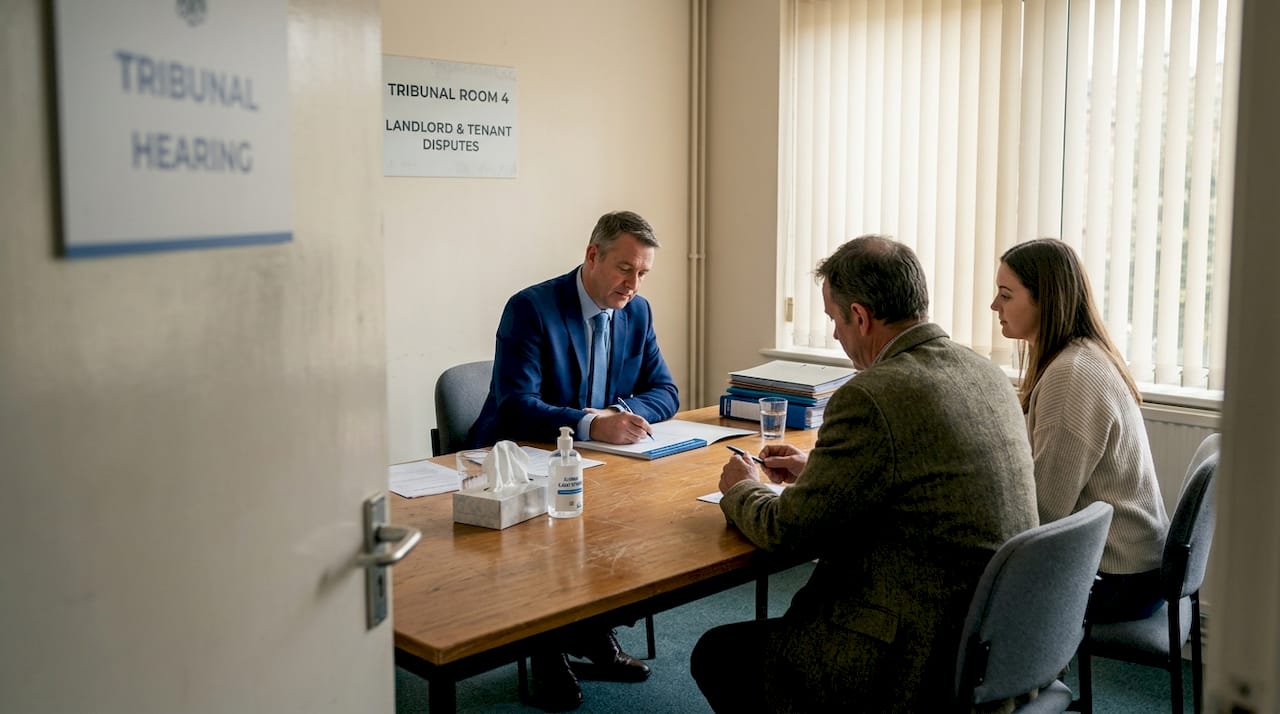
Each provincial RHT operates slightly differently in terms of administrative processes and waiting times, but the core mandate is consistent across the country. Disputes must involve a residential dwelling and a landlord-tenant relationship governed by the Rental Housing Act.
The results speak for themselves. The Western Cape RHT assisted 35,000 parties between 2000 and 2020 and dramatically reduced its case backlog from 2,000 cases down to just 300 by adopting technology-driven processes. That is a substantive track record, not a theoretical promise.
| Dispute type | RHT handles? | Notes |
|---|---|---|
| Non-payment of rent | Yes | Most common case type |
| Deposit disputes | Yes | Includes unlawful deductions |
| Maintenance failures | Yes | Both landlord and tenant obligations |
| Eviction orders | Yes (with limitations) | Urgent evictions still go to court |
| Lease term disputes | Yes | Covers early termination |
| Commercial leases | No | Referred to Magistrates’ Court |
| Student housing (corporate) | No | Outside Act’s scope |
Understanding which disputes fall within the RHT’s scope before you file saves time and avoids frustration. The key test is simple: residential property, private landlord, and a dispute arising under the Rental Housing Act.
Pro Tip: Before attending any RHT session, gather every piece of documentation you have. This includes the signed lease agreement, all rent receipts and payment records, written communication with the tenant (text messages and emails count), photographs of the property, and any maintenance requests or repair invoices. The more organised your evidence, the stronger your position.
When filing a complaint, you submit it to your provincial RHT office. The Tribunal will contact both parties, attempt mediation first, and only proceed to a formal hearing if mediation does not produce an agreement. For landlords who are simultaneously managing insurance claims, understanding the step-by-step rental insurance claims process is equally important, and rental agent claims support can make both processes smoother when you have professional management in place.
How mediation works in practice: step-by-step for landlords
Understanding the theory is one thing. Knowing exactly what to expect when you engage the process is what actually reduces anxiety and prepares you to participate effectively. Here is how the mediation process typically unfolds through the RHT under the Rental Housing Act 50 of 1999.
-
File your complaint. Submit a formal complaint form to your provincial RHT. You will need to describe the dispute clearly, identify the property and parties, and attach supporting documentation. Many provincial offices now accept digital submissions.
-
Acknowledgement and notification. The RHT acknowledges your complaint and formally notifies the other party. Both parties are given the opportunity to respond in writing before any session is scheduled.
-
Mediation session scheduled. The Tribunal arranges a mediation session and notifies both parties of the date, time, and venue (or virtual link). Attendance is expected. Non-attendance without valid reason can count against the absent party.
-
The mediation session itself. A neutral mediator facilitates the discussion. Each party presents their version of events and what outcome they are seeking. The mediator explores common ground, asks clarifying questions, and encourages both parties to find a workable solution. Sessions can last several hours.
-
Written agreement or referral. If both parties agree, the outcome is documented in a written agreement signed by both. This document carries legal weight. If no agreement is reached, the matter proceeds to a formal adjudication hearing where the Tribunal issues a binding ruling.
-
Enforcement if needed. A Tribunal ruling or mediated agreement that is breached can be enforced through the Magistrates’ Court without the need to restart legal proceedings from scratch.
Timeframes vary between provinces and depend on the complexity of the dispute, but many matters are resolved within four to eight weeks. That is significantly faster than civil litigation, which can take twelve months or longer.
Pro Tip: One of the most common mistakes landlords make entering formal mediation is arriving unprepared to negotiate. Mediation is not about winning every point. Arrive with a clear sense of your minimum acceptable outcome and which concessions you are genuinely willing to make. Flexibility on minor issues often unlocks agreement on the major ones.
When mediation does not resolve your dispute, do not panic. You still have escalation options through the Tribunal and the courts. In the meantime, explore how insurance mitigates risk during contested periods, and compare rental insurance options to make sure you are not carrying financial exposure that a policy could cover.
Protecting your rental income: mediation and insurance working together
Mediation resolves disputes. Insurance protects your cash flow while disputes unfold. These are not competing tools. They are complementary layers of protection that, when used together, give South African landlords a genuinely robust defence against financial loss.
Consider a realistic scenario. A tenant stops paying rent in month three of a 12-month lease. You file a complaint with the RHT while simultaneously lodging a claim with your rental income insurer. The insurer covers your lost rental income during the dispute period, meaning your bond repayments and property expenses continue to be met. The Tribunal mediates a payment arrangement or, if the tenant refuses, issues a ruling. You emerge from the dispute without a financial hole in your accounts.
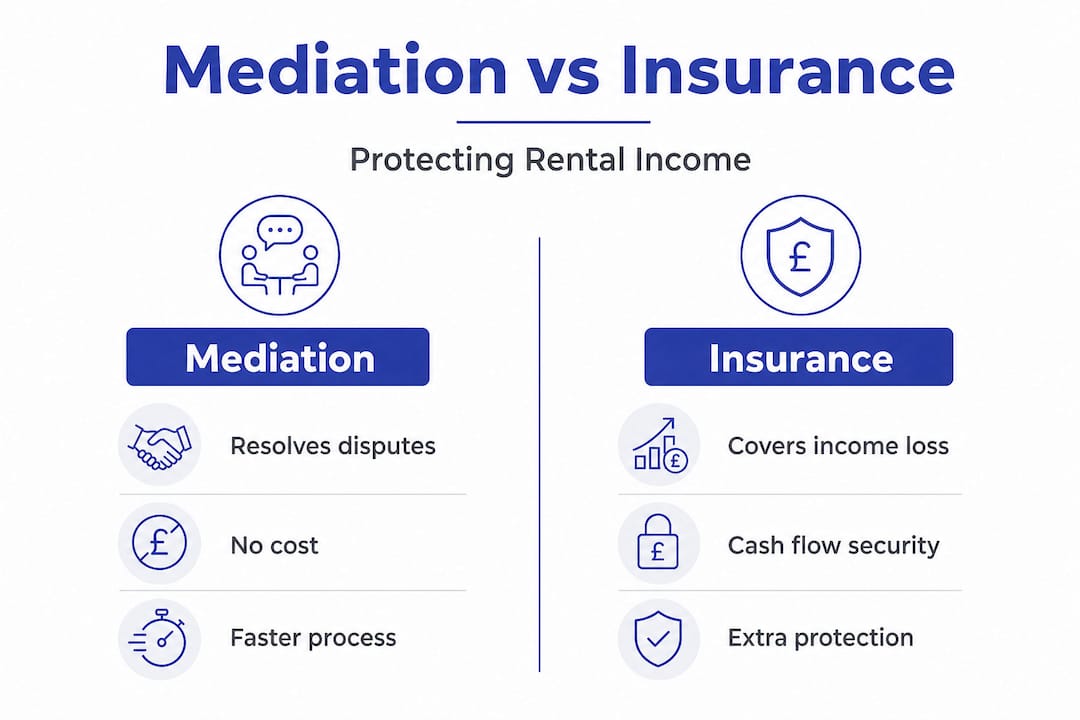
Without insurance, the same scenario leaves you funding the property out of your own pocket for two to four months while the process runs its course. That is a real cost that many landlords only calculate after it happens.
| Scenario | Mediation alone | Insurance alone | Both together |
|---|---|---|---|
| Tenant stops paying rent | Resolves the dispute, no income replacement | Covers lost income, dispute unresolved | Income replaced while dispute is resolved |
| Tenant abandons property | Can address unfair lease termination | Covers income gap from absconding | Full protection: income covered and legal recourse supported |
| Maintenance dispute escalates | Mediator clarifies obligations | Not directly applicable | Mediation resolves obligation; insurance covers related losses |
| Deposit not returned | RHT orders return | Not applicable | Documentation from mediation strengthens any follow-up claim |
The Rental Housing Act 50 of 1999 is clear that rulings are enforceable via the Magistrates’ Court if breached, and that commercial leases fall outside the Tribunal’s scope entirely. For residential landlords, this means the system is designed around your needs. Still, enforcement takes time, and that gap is exactly where insurance earns its keep.
Practical steps to speed up your risk recovery when a dispute arises:
- Notify your insurer at the first sign of non-payment, not after two months of hoping the situation resolves itself
- File with the RHT simultaneously rather than waiting for informal resolution to fail
- Keep a running log of all communications with the tenant, dated and timestamped
- Photograph the property at the start and end of each lease with the tenant present if possible
- Use a professional lease agreement that clearly sets out obligations on both sides
Exploring your comparing insurance options for residential properties helps you match the right level of cover to your portfolio’s risk profile. Understanding the underwriters’ role in risk assessment also helps you choose a policy that will perform when you need it most.
What most landlords miss about mediation
Here is an honest perspective shaped by working closely with South African property owners across a wide range of dispute scenarios. Most landlords approach a difficult tenant situation in one of two ways: they either escalate immediately to a lawyer or an eviction notice, or they avoid the situation for months hoping it will self-correct. Both responses are understandable. Neither is optimal.
The escalation response burns money and goodwill. Legal fees accumulate fast, and an adversarial approach often pushes a tenant into a defensive stance that makes practical resolution harder. The avoidance response, meanwhile, bleeds income quietly. Every month you wait without acting is a month of rent you will likely never recover.
Mediation sits in the space between these two extremes, and that middle ground is where the real opportunity lies. Early action, ideally at the first missed payment or the first disputed repair request, changes the dynamic entirely. A tenant who receives a professionally mediated conversation at month one is far more likely to engage constructively than one who receives a legal summons at month four.
The contrarian insight here is this: mediation is not just a dispute resolution tool. It is a portfolio management strategy. Landlords who use it proactively, alongside top rental insurance options that cover income gaps, report lower stress levels, better tenant retention, and more predictable cash flow. The landlords who treat every problem as a fight to be won often win individual battles while losing the financial war through legal costs, vacancy periods, and property damage.
There is also a documentation benefit that most landlords overlook entirely. A formal mediation process, even one that does not fully resolve the dispute, creates a documented record of the dispute, what was communicated, and what was offered and refused. That record is valuable evidence if the matter proceeds to adjudication or if you need to support an insurance claim later.
How to safeguard your rental income beyond mediation
Mediation and the Rental Housing Tribunal give you a powerful, cost-free route to resolving disputes. But knowledge of the process is only the starting point. The landlords who truly protect their investment combine dispute resolution skills with financial protection that covers the income gaps that inevitably appear when tenants default, abandon the property, or dispute their obligations.

Rental income insurance is designed specifically for scenarios like these. Whether you are dealing with a tenant who has simply stopped paying, one who has walked away from a lease early, or a situation where damage has left the property temporarily unlettable, a good policy keeps your income stable while you work through the resolution process. You can get a rental insurance quote tailored to your portfolio, explore what rental income insurance actually covers in detail, and review your non-payment protection options so you are never left funding a disputed tenancy from your own savings. The combination of mediation knowledge and insurance protection is the most practical framework available to South African landlords today.
Frequently asked questions
What types of rental disputes can the Tribunal mediate?
The Tribunal mediates residential disputes including non-payment of rent, maintenance issues, deposit disputes, unfair practices, and eviction matters, all covered under the Rental Housing Act 50 of 1999 at no cost to either party.
Can a mediation decision by the Tribunal be enforced by law?
Yes. If a party does not comply with a Tribunal ruling, the award can be made enforceable through the Magistrates’ Court under the Rental Housing Act 50 of 1999, without needing to restart litigation from the beginning.
Does the Tribunal deal with commercial rental disputes?
No. Commercial leases are excluded from the Tribunal’s scope and must be settled through the courts, so commercial landlords need to plan accordingly from the outset.
Does going to mediation affect my ability to claim rental income insurance?
Seeking mediation does not affect your insurance claim and can actually strengthen your documentation, as the formal record of the dispute provides clear evidence of the circumstances and your efforts to resolve the matter.
How long does it usually take to resolve a dispute through mediation?
Resolution through the Tribunal mediation process is usually much faster than court proceedings, often concluded within weeks. The Western Cape RHT significantly reduced its case backlog through technology-driven processes, demonstrating that the system can move efficiently when properly resourced.
Recommended
- How to Protect Rental Income: Secure Your Earnings Now – Rental Income Insurance
- Essential Steps to Safeguard Rental Income Effectively – Rental Income Insurance
- Effective Rental Agreement Protection Steps for Landlords – Rental Income Insurance
- How to Secure Rent Payments and Protect Your Income – Rental Income Insurance